


Your shoulder is cooked. Maybe it popped during a set, or maybe it’s been quietly complaining for weeks, and you finally listened. Either way, you are now in the market for a shoulder brace, and the name Bauerfeind keeps showing up everywhere you look.
But then you see the price tag: $99 to $179 for gear you are going to sweat through, wash, and wear under a rashguard three times a week.
The reality is that nearly 1 in 4 athletes report shoulder pain during their career, and the best shoulder brace for your situation is rarely the most expensive one. The best shoulder braces in 2026 are evaluated on clinical efficacy, material durability, patient compliance, and anatomical accuracy.
This guide gives you the full breakdown so you can get the right support, skip the sticker shock, and get back to training.
Key Takeaways
-
The Bauerfeind OmoTrain offers premium medical-grade support and anatomical fit, but can feel bulky and expensive for grapplers training multiple times weekly.
-
DonJoy Sully and Breg Shoulder Stabilizer are among the best shoulder brace options for scenarios requiring maximum multidirectional stability, such as labral tears, recurrent instability, and intense grappling or contact sports, as they balance stabilization with controlled movement.
-
Budget-friendly options like Copper Compression and Sparthos deliver lightweight, odor-resistant support suitable for mild rotator cuff strains and daily wear, making them the best shoulder brace choices for those seeking low-profile support without restricting movement.
-
The top shoulder braces for 2026 offer high-performance stabilization for rotator cuff tears and dislocations.
-
Choosing the right shoulder brace depends on your injury type, training frequency, and preference for bulk versus mobility. Brace use should complement active rehab, not replace it.
The Top 5 Bauerfeind Alternative Shoulder Braces in 2026
Here are the top 5 shoulder braces and shoulder support picks that compete directly with Bauerfeind products in 2026:
-
Anaconda Shoulder Brace: Best all-around shoulder brace for active athletes.
-
DonJoy Sully Shoulder Brace: Best shoulder brace for multi-directional instability and labrum protection.
-
Shock Doctor Ultra Shoulder Support: Best for MMA, collision sports, and high-impact training.
-
Copper Compression Recovery Shoulder Brace: Best budget shoulder brace for daily training.
-
Breg Shoulder Stabilizer: Best shoulder support for heavy lifting, wrestling, and explosive takedowns.
Why Look Beyond Bauerfeind for Shoulder Support in 2026?
Bauerfeind products are genuinely good.
Their German engineering and patented flat-knit technology deliver medical-grade quality support through breathable, moisture-wicking fabric, giving a more precise anatomical fit than most neoprene options.
Orthopedic surgeons and sports medicine professionals have recommended Bauerfeind for years. That reputation, earned years ago through peer-reviewed research, is deserved.
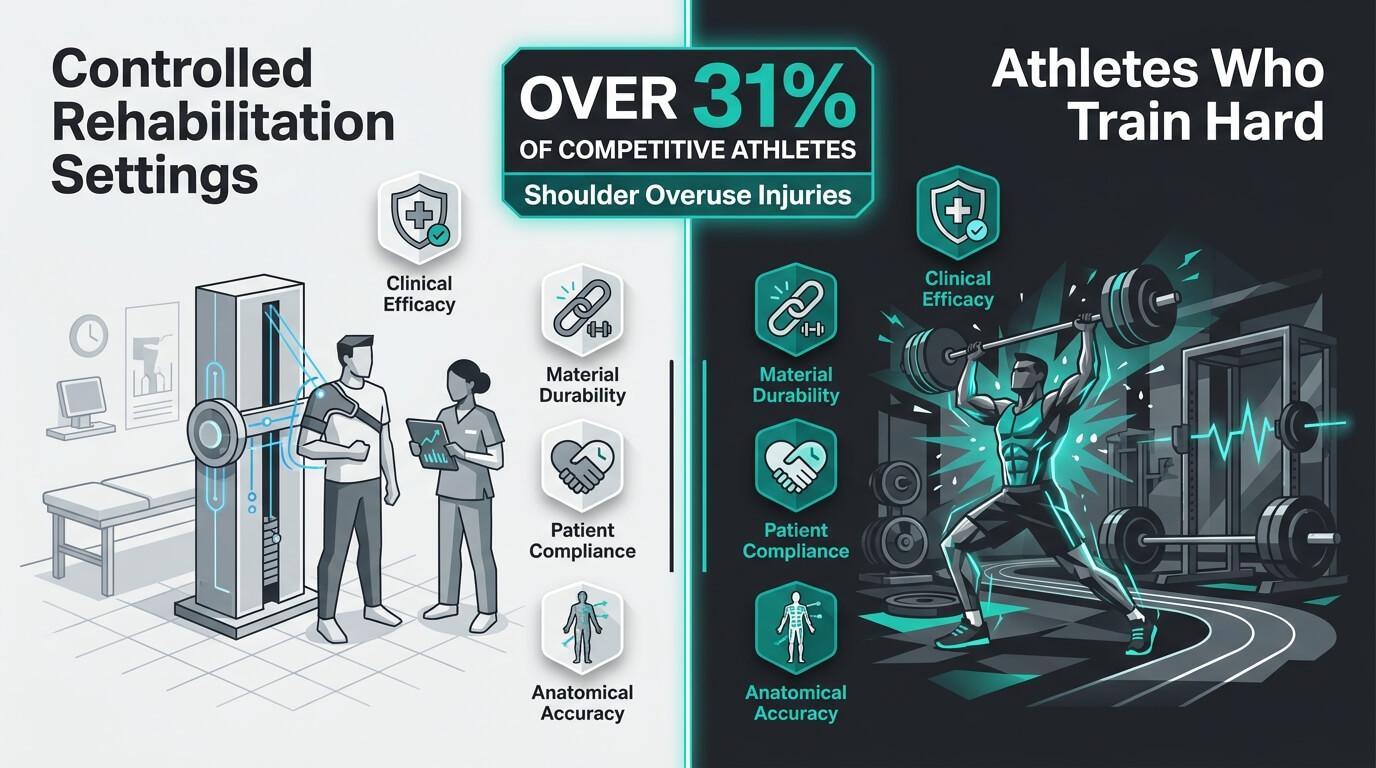
But here’s the thing: Bauerfeind braces were designed for controlled rehabilitation settings, not for athletes who train hard, sweat hard, and wash their gear twice a week.
Shoulder overuse injuries affect over 31% of competitive athletes across overhead sports. You need a brace that fits your life, not just a clinic.
Reliable support that holds through real training matters more than clinical prestige. Each shoulder brace pick below is evaluated on clinical efficacy, material durability, patient compliance, and anatomical accuracy, and every single one clears that bar.
Bauerfeind OmoTrain at a Glance: The Benchmark
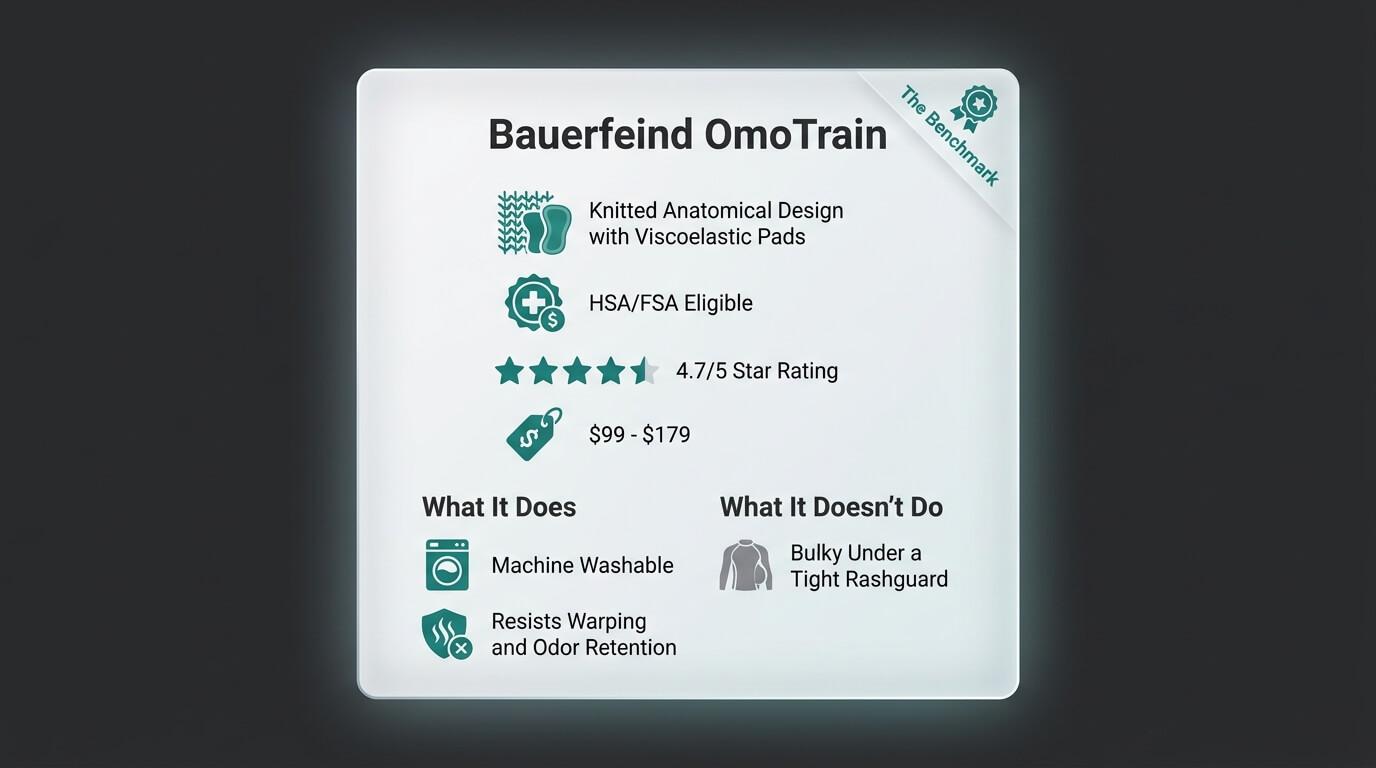
Before we dive into the alternatives, let’s cover what you’re comparing them against. The OmoTrain uses knitted anatomical design with viscoelastic pads, is HSA/FSA eligible, and earns a consistent 4.7/5 quality rating. Bauerfeind makes no exaggerated quality claims.
Years ago, their reputation was built on clinical validation. Their braces maintain their shape over time, the knit fabric is machine washable, and it resists warping and odor retention in ways cheaper neoprene doesn’t. In 2026, the retail price ranges from $99 to $179.
What the OmoTrain doesn’t do: Tolerate being grabbed, yanked, and rolled on. It feels bulky under a tight rashguard, and sizing gets finicky as body composition shifts.
If you want to know exactly how long a shoulder injury takes to heal and which support phase each brace serves best, the gap between clinical design and training reality becomes clear fast. The top 5 alternatives below fill that gap.
1. DonJoy Sully Shoulder Brace: Best for Instability and Labrum Issues
Best for: Athletes with labrum tears, recurrent dislocations, and AC separations who need mechanical stabilization during collision sports and intense grappling.
The DonJoy Sully stands as the most mechanically robust shoulder brace on this list. If your joint has a habit of popping out in specific positions, this is the option that physically stops it from going there. US sports medicine clinics have recommended it for years, and it has a long-standing track record as the go-to choice for instability cases.
Its perforated neoprene vest and elastic strap system mechanically retract the humeral head into the glenoid socket, limiting the specific ranges of motion (abduction and external rotation) that trigger subluxation and labrum stress.
The vest-style base resists rotation under direct grip pressure. That matters when someone grabs your arm at a bad angle.
Here is how the Sully breaks down:

Pros:
-
Mechanical joint support limits the exact motion that causes instability and re-injury
-
Vest base resists rotation under load and stays in place during scrambles and takedowns
-
Trusted by sports medicine professionals for years for return-to-sport cases
-
Configurable strap tension lets you dial in the protection level by session type
Cons:
-
Neoprene runs hot and is not ideal for long hours in warm training environments
-
Bulkier than compression sleeves and less comfortable for daily wear
2. Anaconda Shoulder Brace: Best All-Around Shoulder Brace for Active Athletes
Best for: Active athletes, grapplers, and gym-goers managing rotator cuff strains, shoulder soreness, and joint instability across training sessions and regular movement.
If you want medical-grade support at a price that doesn’t make you wince every time you throw it in the wash, this is your pick. The Anaconda Shoulder Brace was built around one simple principle: support that works when you’re actually moving, not just sitting in a physio chair.
This brace uses 3D-padded support with gel padding and an adjustable chest strap that locks the joint in place, preventing it from sliding during movement.
The anatomical fit keeps the shoulder centered while still allowing the range of motion you need for pressing, pulling, and overhead work. Durable materials and moisture-wicking fabric handle repeated washing without losing shape. Over 400,000 athletes use our gear, and it's earned their continued trust.
Here is how the Anaconda shoulder brace stacks up:

Pros:
-
Targeted support for rotator cuff injuries and shoulder soreness during grappling and gym training
-
Anatomical fit with an adjustable strap stays in place through extended activity
-
Breathable fabric reduces odor and discomfort during intense sports and training
-
Half the price of Bauerfeind for the same 4.7/5 rating
-
Designed to manage swelling and support recovery without restricting functional movement
Cons:
-
Not a rigid immobilizer. Athletes with recurrent full dislocation may need a more mechanical brace.
3. Shock Doctor Ultra Shoulder Support: Best for MMA and High-Impact Training
Best for: MMA athletes, wrestlers, and collision sport competitors dealing with rotator cuff strains, discomfort, and dislocations during high-impact training.
If the DonJoy Sully is a fortress, the Shock Doctor shoulder support Ultra is a well-armored tank. It moves with you. Healthcare professionals working with collision athletes recommend it alongside the Sully because it prioritizes impact resistance over clinical precision, which is exactly what MMA and wrestling demand.
The Shock Doctor shoulder support is built around a neoprene base with an adjustable support strap across the chest and upper arm. It delivers support through shots, clinch work, scrambles, and strikes without slipping.
The anatomical cut sits low-profile enough to wear under a rashguard or loose shirt. Durable materials and robust stitching survive the wash-and-repeat demands of training three to four times weekly. That kind of durability matters when your gear takes a beating.
The Shock Doctor sits in the moderate support category.

Pros:
-
Low-profile compression wear sits cleanly under rashguards without major bulk
-
Durable materials and stitching hold up through months of repeated washing and hard use
-
Lower price point makes it practical for athletes who need to replace gear regularly
-
Good fit under training gear and rashguards without major bulk
Cons:
-
Neoprene traps heat, and some athletes prefer to limit use to drilling only
-
Less anatomical precision than medical-grade flat-knit alternatives like Bauerfeind
4. Copper Compression Shoulder Brace: Best Budget Daily-Training Option
Best for: Athletes managing mild rotator cuff soreness and overuse who need affordable support with good odor resistance.
Not every shoulder issue needs a mechanical fortress. Sometimes, you just need something to remind the joint to behave during a light session or physical therapy. The Copper Compression brace was Walmart.com's top seller in its category in April 2026, and that’s not by accident.
Its copper-infused nylon construction is thinner and more breathable than standard neoprene, making it one of the better compression sleeves for extended activity without discomfort.
Shoulder pain prevalence ranges from 12 to 57% in adolescent athletes. A significant portion of those cases involve overuse and low-grade irritation that responds well to light compression.
Clinical research also indicates that wearing a brace during activity reduces movement anxiety during the healing process, which is a real benefit even at this support level.
If your issue is ongoing aches rather than structural instability, this brace and a solid shoulder exercise program will do more for you than a $150 knit sleeve.

Pros:
-
Slim enough for daily wear under clothing without bulk. Lightweight materials keep it comfortable throughout the day.
-
Odor-resistant, breathable fabric manages sweat better than standard neoprene compression sleeves
-
Good budget option for athletes in rehabilitation who need low-level stabilization. Good for everyday wear during physical therapy between training sessions.
-
Latex-free design suits athletes with skin sensitivity
Cons:
-
Not suitable for recurrent dislocation or high-grade labrum tears as the support level is too light
-
Straps can loosen during intense training; resecure before live rounds
-
Note: copper aids odor control, though research does not validate claims that it accelerates tissue healing
5. Breg Shoulder Stabilizer: Best for Heavy Lifting and Explosive Takedowns
Best for: Weightlifters, wrestlers, and rugby players who need firm mechanical limits on abduction and external rotation during explosive, high-load movements.
The Breg Shoulder Stabilizer is the top pick for athletes who have a very specific problem: The shoulder is fine right up until it goes somewhere it hasn't been before, and then it’s not fine anymore. That is subluxation territory, and Breg is built to stop you from going there.
It’s recommended by sports medicine specialists for athletes who need assertive joint control, not just a sleeve.
It's heavy-duty neoprene with a harness and multiple adjustable straps that cap exactly how far the arm travels overhead or backward. Set loose for drilling, set tighter for competition or heavy barbell sessions.
Risk factors for shoulder injuries consistently include previous injury and rotator cuff weakness (both isometric and isokinetic). That makes a mechanical brace like Breg a legitimate tool for athletes managing documented instability during high-load work.

Pros:
-
Hard stop on risky ranges of motion prevents the joint from entering subluxation territory
-
Durable materials handle the demands of barbell training and collision sports over months of use
-
Adjustable straps allow different restriction settings for drilling versus competition
-
Recommended by healthcare professionals for athletes with documented instability patterns
Cons:
-
Bulkier than tight compression wear. Better suited to nogi or loose rashguards than a gi.
-
Higher price than lighter compression options for what is primarily a mechanical restraint device
How All 5 Stack Up Against Bauerfeind OmoTrain
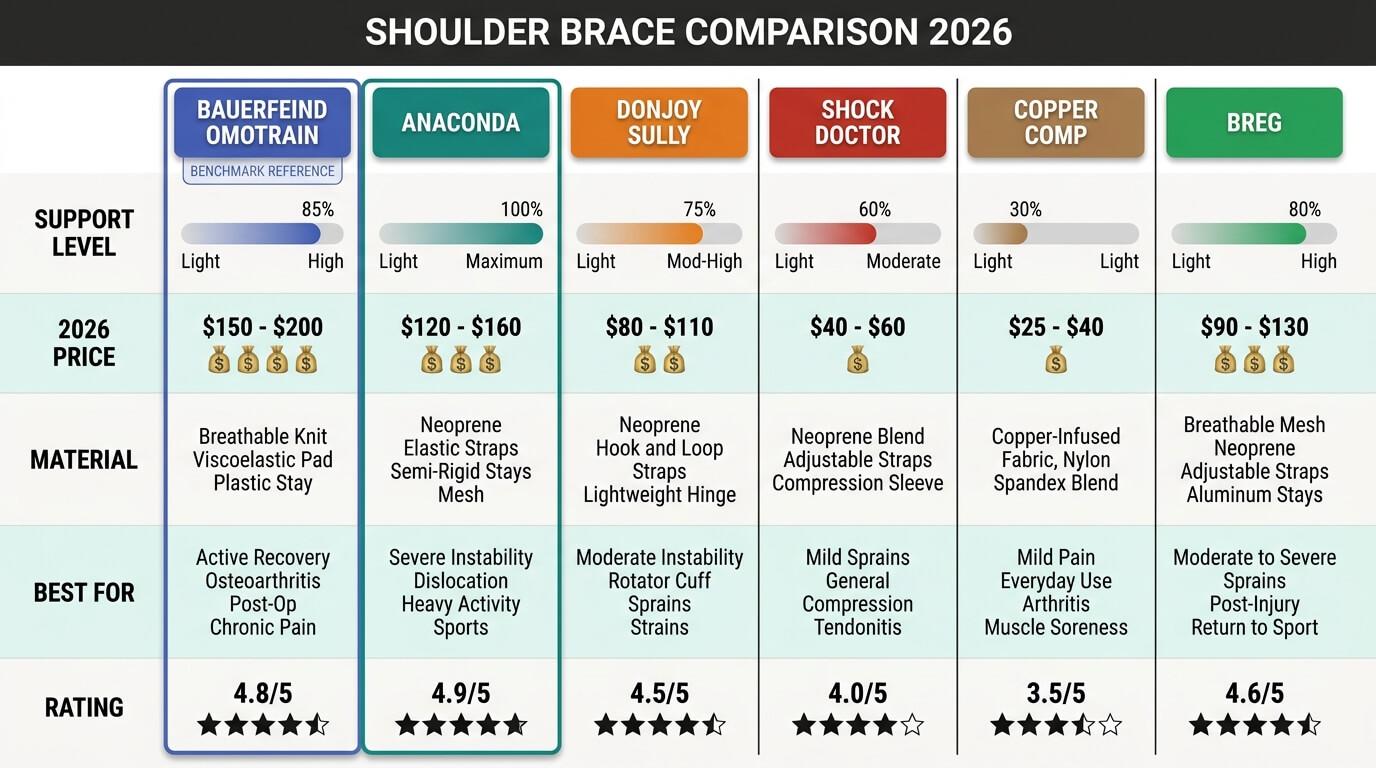
Here is a side-by-side of all 5 picks against the Bauerfeind OmoTrain benchmark, covering the parameters that matter most for real athletes:

How to Choose the Right Bauerfeind Alternative
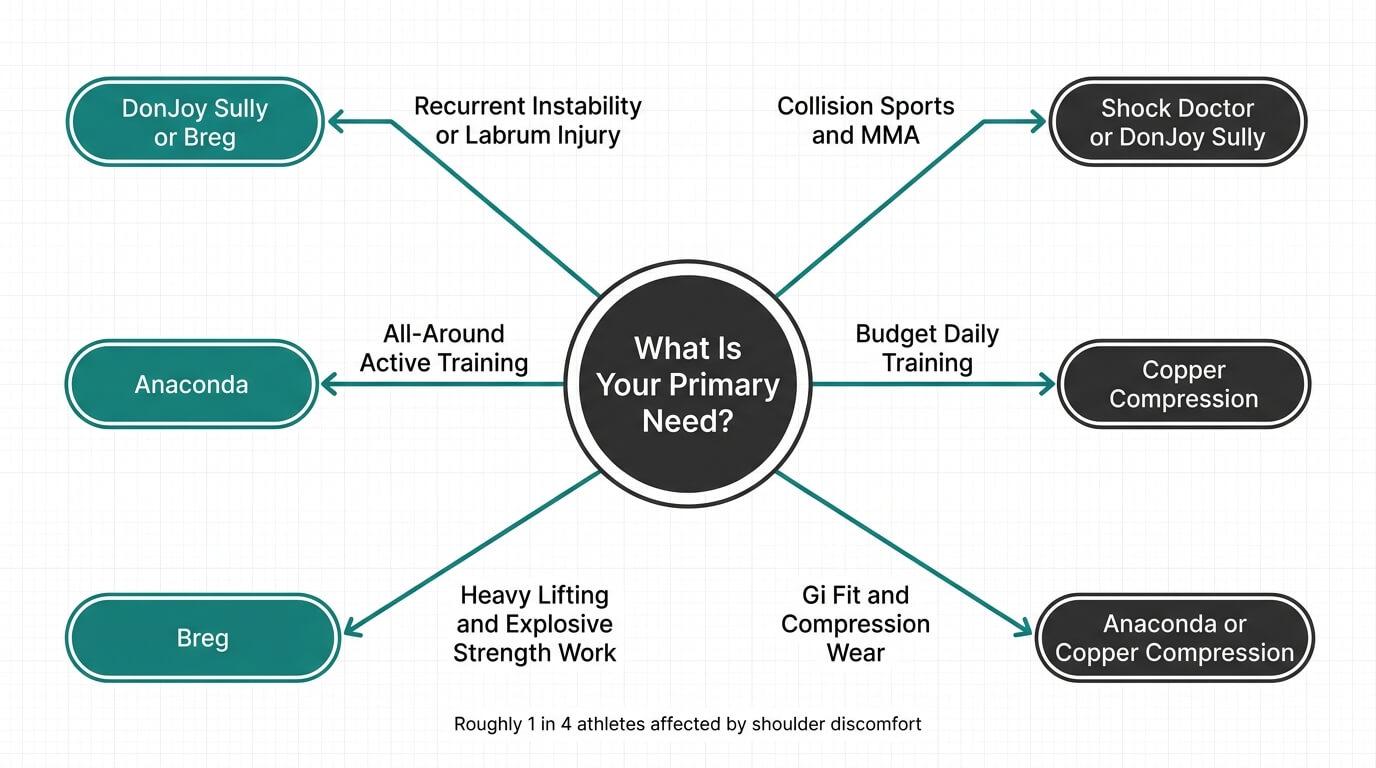
The right best shoulder brace is the one that matches your injury, not your ego. Here is the fastest way to figure out which pick belongs on your shoulder:
-
Recurrent instability or labrum injury: DonJoy Sully or Breg. Both offer mechanical stabilization that compression sleeves cannot match.
-
Collision sports and MMA: Shock Doctor shoulder support or DonJoy Sully, as both are designed for impact and scramble movement.
-
All-around active training and the best shoulder support for daily use: Anaconda Shoulder Brace. Targeted support, anatomical fit, breathable build, and priced for real training frequency.
-
Budget best shoulder brace for daily training: Copper Compression. A solid graduated compression sleeve option for mild pain and physical therapy work.
-
Heavy lifting and explosive strength work: Breg. The best pick if you need a configurable hard-stop stabilization for maximal effort movement patterns.
-
Compression wear and gi fit: Slimmer compression wear options like Anaconda or Copper Compression offer better wear under a gi; bulkier stabilizers suit nogi or loose rashguards.
Shoulder discomfort affects roughly 1 in 4 athletes, and prior injury significantly increases the risk of re-injury. Pair any of these picks with active rehab, not just passive support.
Compared to other braces on the market and to other braces in the compression wear category, the top 5 options here are specifically chosen for athlete use cases. No brace replaces the work. Scapular control, rotator cuff loading, and smart training modifications are what keep you out of this situation long term.
Safety Notes: When a Brace Helps and When It’s Not Enough
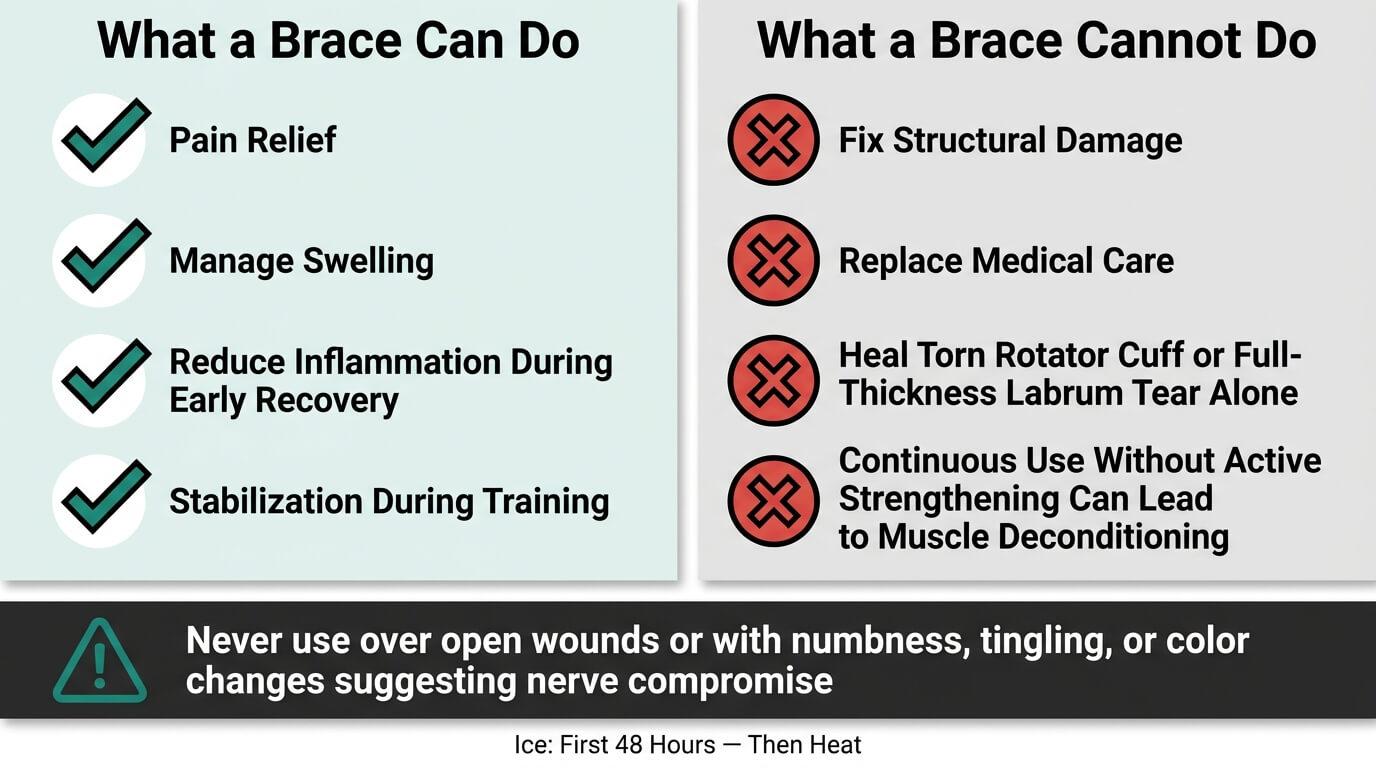
These shoulder braces can deliver pain relief, manage swelling, reduce inflammation during early recovery, and provide stabilization during training. They cannot fix structural damage or replace medical care. Here are the hard limits:
-
A torn rotator cuff or full-thickness labrum tear will not heal from bracing alone. Bracing manages symptoms; surgery and rehabilitation address the root cause.
-
Continuous use for several months without active strengthening can lead to muscle deconditioning. Taper brace use improves stability.
-
Neoprene may irritate sensitive skin with prolonged contact. Discontinue if redness appears.
-
Manage inflammation actively with ice in the first 48 hours after an injury, then heat afterward. Braces support this process but do not replace it. Never use a brace over open wounds or with numbness, tingling, or color changes suggesting nerve compromise.
If discomfort spikes, range of motion drops sharply, or instability worsens despite bracing, stop self-managing and get a professional assessment from a healthcare provider or orthopedic surgeon.
Final Thoughts
You do not need Bauerfeind pricing to get solid shoulder support. Every pick on this list clears the 2026 evaluation bar for clinical efficacy, durability, and anatomical fit. Each manufacturer on this list has years of documented athletic use, and buying from the manufacturer directly gets you warranty coverage.
Match the brace to your injury, not your budget. The right choice keeps you on the floor longer and out of the rehab clinic.
If you want the best all-around option without compromise, explore the Anaconda Shoulder Brace. It delivers medical-grade support, a perfect fit, and a 4.7/5 rating from 400,000+ athletes. It’s the shoulder brace that’s built for training and real recovery, not a physio chair.
Frequently Asked Questions
Here are the most common questions athletes ask before choosing a quality shoulder brace.
Are Bauerfeind shoulder braces worth the higher price for active athletes?
Bauerfeind braces are worth the price for clinical rehab and post-surgical recovery. For athletes who train hard and wash their gear constantly, the alternatives on this list deliver the same structural support at a fraction of the cost.
Which shoulder brace is best for labrum tears and recurrent instability?
The best shoulder brace for labrum tears and recurrent instability is the DonJoy Sully. Its mechanical strap system blocks the exact ranges of motion that trigger subluxation, and the Breg Stabilizer is a close second for high-load work.
Can I use budget braces like Copper Compression for serious shoulder injuries?
Budget brace options like Copper Compression are suitable for mild rotator cuff soreness and general overuse, but not for serious shoulder injuries. For recurrent dislocation, high-grade labrum tears, or post-surgical recovery, you need a more structured stabilizer.


