


If you've torn your rotator cuff, there’s only one thing you’re looking for: a straight answer on when you'll be back in action.
The frustrating truth is that recovery timelines vary widely, from four months for a small partial tear to well over a year for a massive one.
What most online sources skip is the why behind that range, and what you can actually do to stay on track.
At Anaconda, we built our shoulder support line for athletes who refuse to sit on the sidelines. Whether you're managing a non-operative tear or working through post-surgical rehab, our shoulder braces are designed to keep you moving with confidence, not hold you back.
Key Takeaways
-
Tendon-to-bone healing has a hard biological floor of six to eight weeks; no shortcut overrides it.
-
Full functional recovery ranges from four months to 12+ months, depending on tear size and treatment path.
-
Feeling better is not the same as being healed. Most re-tears happen because athletes return too soon.
-
Physical therapy compliance is the single most controllable factor in your recovery outcome.
-
Return to sport and return to full performance are two separate milestones planned for both.
-
Factors like age, diabetes, and smoking can extend your timeline and increase re-tear risk.
Why Rotator Cuff Recovery Takes Longer Than You Think
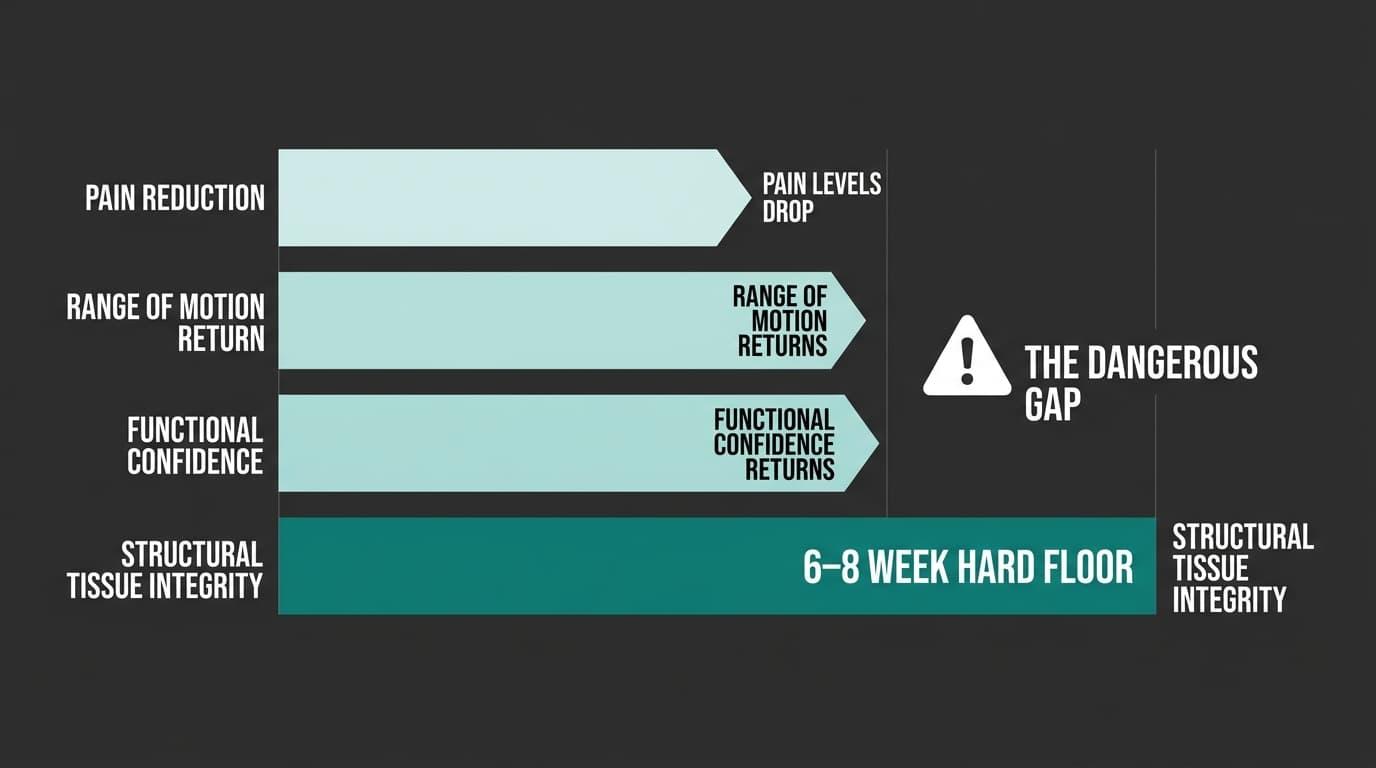
The reason recovery is measured in months, not weeks, comes down to a process called osteotendinous integration.
That's the biological mechanism by which tendon tissue reattaches and fuses to bone after a tear or surgical repair.
This process has a hard floor of six to eight weeks, regardless of how quickly your pain fades, how clean the surgery was, or how dedicated you are to your rehab protocol.
What makes this window non-negotiable is tendon vascularity. Tendons have significantly less blood supply than muscle tissue, which means cellular repair happens at a slower structural pace. No training mindset can accelerate that timeline.
This creates a dangerous gap that catches many athletes off guard. Three things return before the tissue is actually ready:
-
Pain levels drop before full tissue integration is complete.
-
Range of motion comes back before load tolerance is restored.
-
Functional confidence returns weeks before structural integrity does.
Feeling better is not the same as being healed. Returning to full training before the tissue is ready is the most common driver of re-tear after rotator cuff repair, and it sends you back to square one.
Surgical vs. Non-Operative: What Actually Changes
Arthroscopic surgery doesn't override biology.
The tendon still needs the same healing window whether a surgeon reattached it or not. What surgery changes is the structural starting point, not the timeline of osteotendinous integration.
For non-operative cases, the path depends heavily on tear classification.
Partial tears with preserved strength can reach functional recovery in six to 12 weeks with structured physical therapy.
Massive tears managed without surgery follow a different protocol entirely, one focused on compensation mechanics and pain reduction rather than full tissue restoration.
One finding worth knowing: A 2024 systematic review on rehabilitation timing after arthroscopic rotator cuff repair found no clinically significant difference in functional outcomes between early and delayed rehab protocols. That means rushing the early phase isn't backed by evidence. Consistency over time matters more than speed out of the gate.
Rotator Cuff Recovery Timelines by Tear Size and Treatment Type
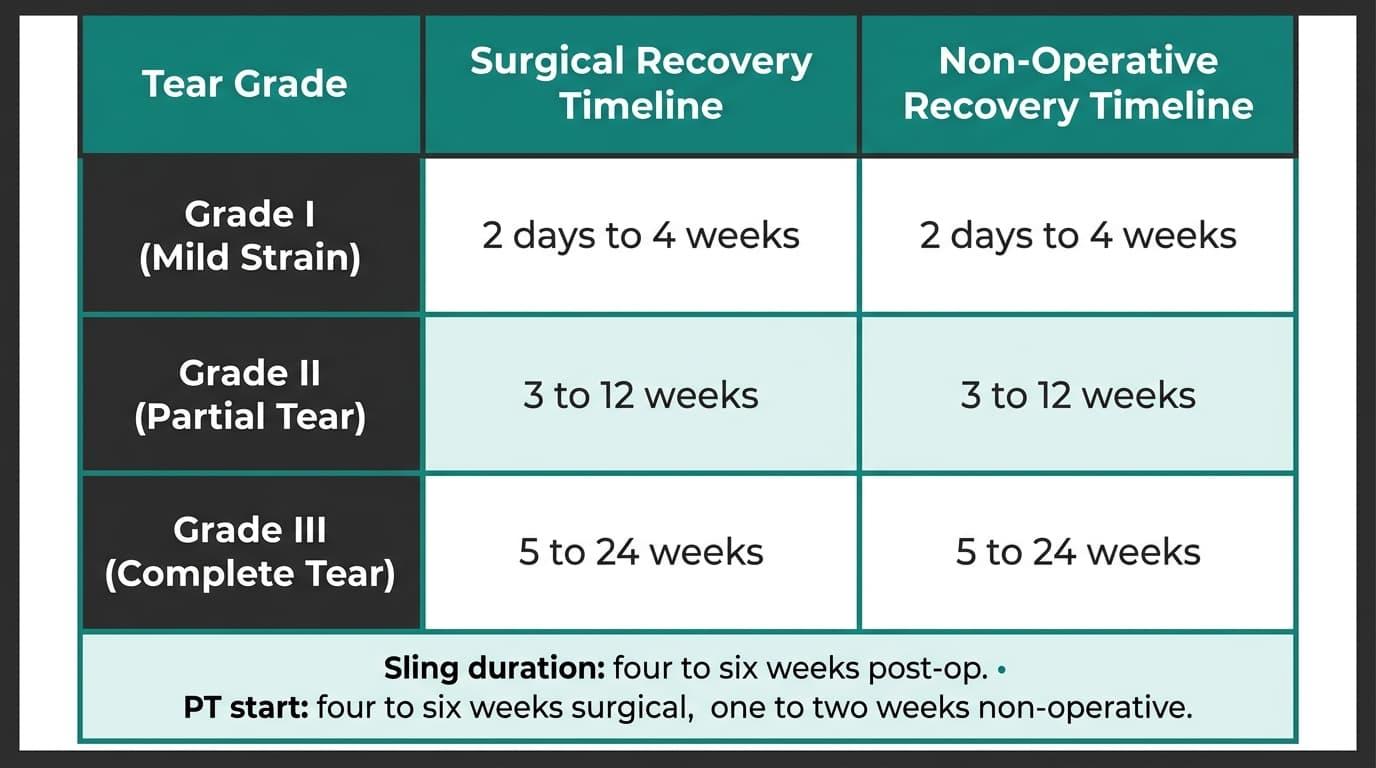
Recovery timelines vary significantly based on two factors: How severe the tear is and whether you pursue surgery or a non-operative path. Rotator cuff injuries, including a torn rotator cuff, are often grouped into three grades: Grade I (mild strain), Grade II (partial tear), and Grade III (complete tear).
In general, recovery can range from about 2 days to 4 weeks for Grade I injuries, 3 to 12 weeks for Grade II injuries, and 5 to 24 weeks for Grade III injuries, depending on severity. The ranges below give you the core milestones to plan around.
Small or Partial Tear
Surgical recovery for a small or partial tear typically reaches full function within four to six months. Non-operative management can achieve functional goals in six to 12 weeks with structured physical therapy, making this the most favorable category for non-surgical recovery.
Large Tear
Surgical recovery extends to six to nine months for large tears. Non-operative management is not always viable at this size; outcomes depend heavily on physical therapy consistency and the degree of remaining muscle function.
Massive Tear
A massive tear requires nine to 12+ months of surgical recovery before full function is restored. For non-operative management, the realistic goal shifts to functional improvement, not full tissue restoration, with progress typically visible within three to six months.
Post-Surgical Milestones
Two additional milestones apply to every surgical case, and surgical timelines are commonly created around a recovery window of about 16 weeks to 9 months depending on tear extent and the rehab protocol:
-
Sling duration: Typically four to six weeks post-op to protect the repair while healing begins.
-
Physical therapy starts: Four to six weeks post-op for surgical cases; within the first one to two weeks for non-operative management.
Age, tissue quality, tear location, and how consistently you engage with physical therapy all determine where you land within these ranges.
The Four Phases of Rotator Cuff Physical Therapy Rehabilitation
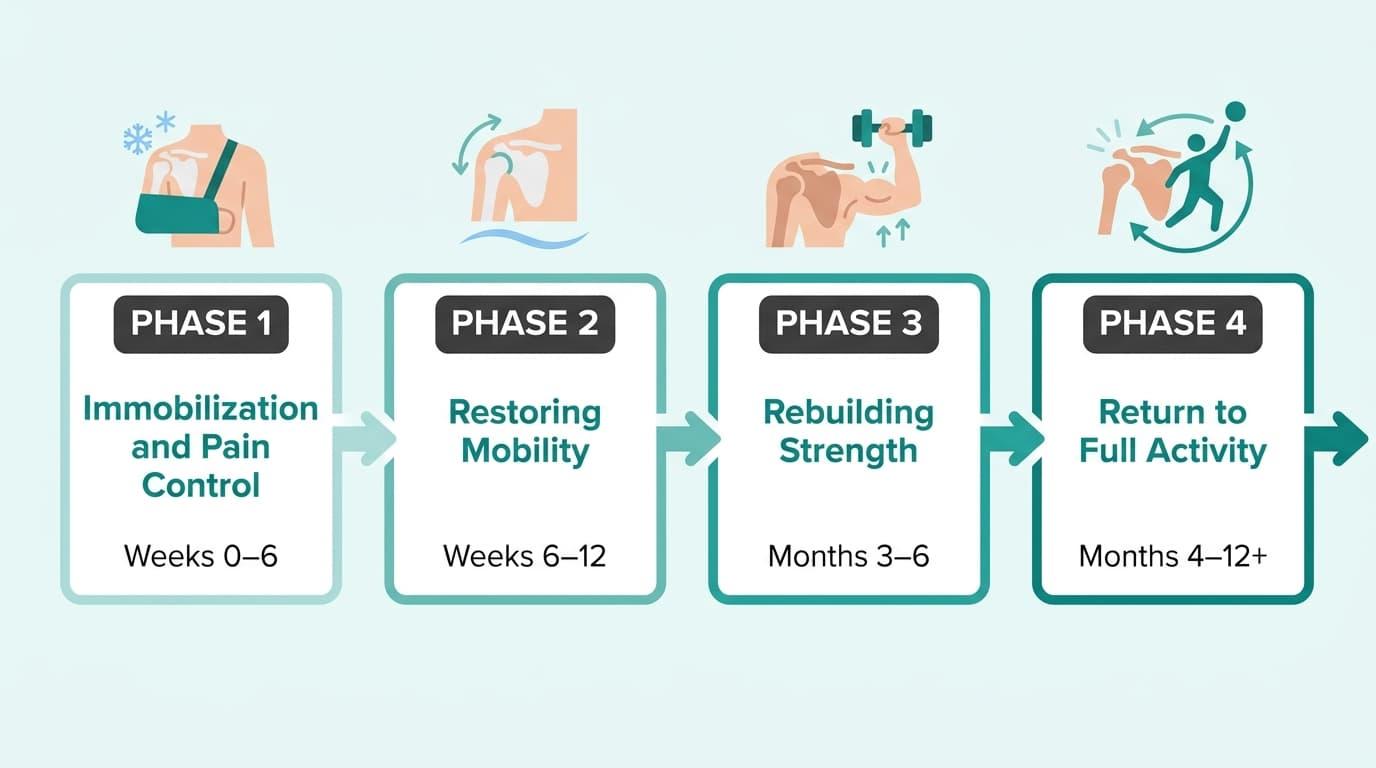
Recovery from a rotator cuff repair doesn't happen in a straight line. The rehabilitation program is typically structured into four phases, beginning with protecting the repair and then progressing range of motion and strength over time. Always confirm your specific phasing with your orthopedic surgeon for accurate information.
Phase 1: Immobilization and Pain Control (Weeks 0–6)
The sling is non-negotiable in this phase. Phase 1 typically runs from 0 to 6 weeks and focuses on protecting the repair, reducing pain and inflammation, and maintaining good shoulder posture. The goal here is not progress, it's protection.
Typical restrictions during Phase 1 include the following:
-
Sling removal: Only permitted for hygiene and prescribed exercises.
-
Driving: Restricted for the full sling duration.
-
Desk work: Often cleared at two to four weeks, depending on arm position demands.
-
Exercise: Gentle pendulum movements only, no active shoulder engagement.
Pain management and swelling reduction are the primary focus throughout this phase. Gentle pendulum exercises keep the joint from stiffening without placing any load on the repair, while the sling helps support the healing tissues and the rest of the body so shoulder posture is preserved.
Phase 2: Restoring Mobility (Weeks 6–12)
Physical therapy clearance to begin Phase 2, which spans 6 to 12 weeks, typically comes around week six, focusing on allowing soft tissue healing while restoring passive and active-assisted range of motion. A physical therapist guides this phase carefully.
Passive motion means the therapist or a pulley system moves the arm, and active-assisted range of motion (AAROM) adds light help from the other arm or a device rather than the rotator cuff muscles doing the work.
Active motion is introduced gradually as tissue tolerance improves. Some discomfort during stretching is expected, but sharp pain is a signal to stop and reassess.
Phase 3: Rebuilding Strength (Months 3–6)
Phase 3 typically runs from 12 to 16 weeks and focuses on full active range of motion, dynamic shoulder stability, and the gradual restoration of shoulder strength, power, and endurance, with strengthening exercises beginning with isometric contractions before progressing to isotonic loading.
The rotator cuff and scapular stabilizers are the primary targets, and the shoulder rotates through controlled strengthening only after active motion is established. Overhead lifting remains restricted until strength symmetry is confirmed. Patience here directly protects the progress made in the earlier phases.
Phase 4: Return to Full Activity (Months 4–12+)
Return to sports and return-to-work clearance depend on job type, sport demands, and strength testing, and this final phase typically lasts from 16 weeks to 9 months, focusing on maintaining full non-painful AROM, improving muscular strength, and returning gradually to full functional activity. Sport-specific training reintroduces load progressively, with recreational play also added back gradually when cleared. Full activity requires both surgeon clearance and demonstrated strength symmetry in the shoulder.
What Actually Slows Down Your Recovery
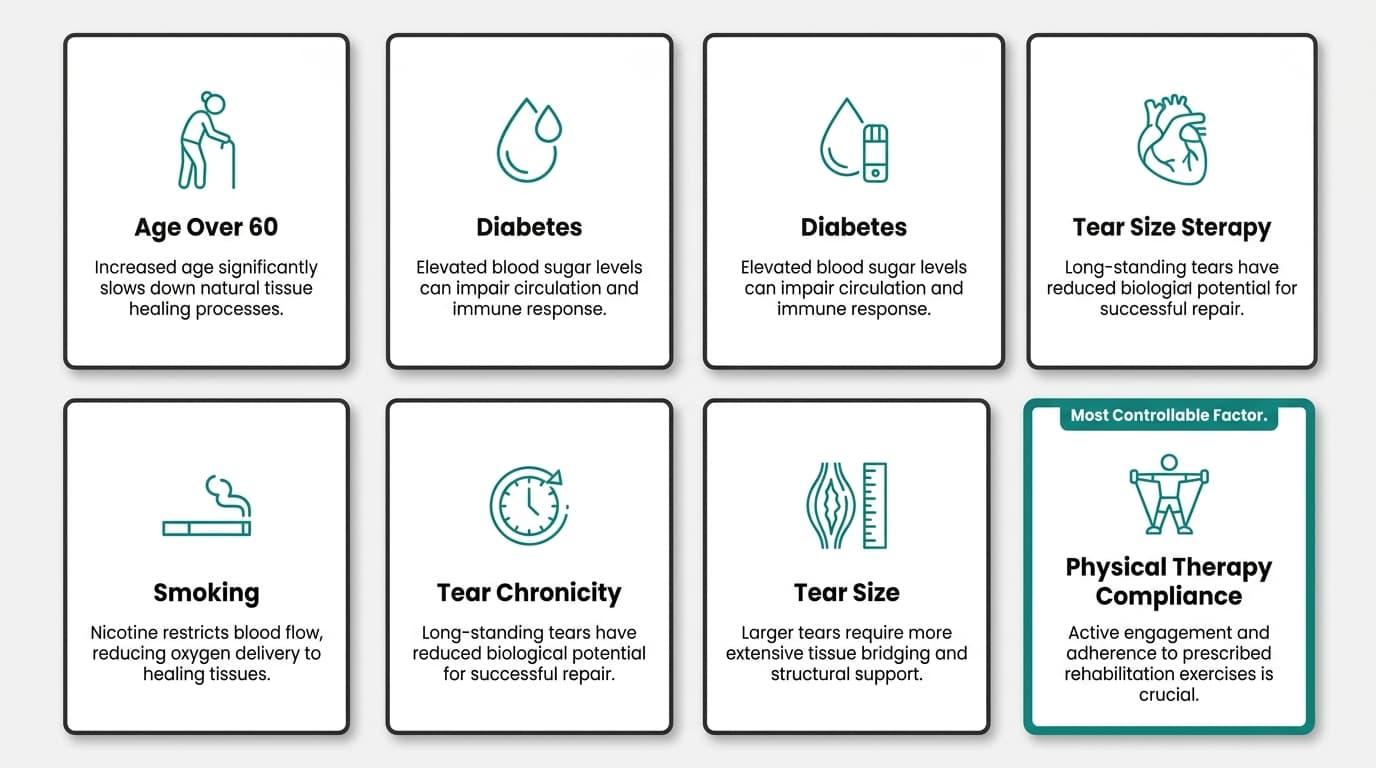
Two patients with identical tears can have dramatically different outcomes based on factors that have nothing to do with the quality of their surgery.
To understand these differences, younger patients, especially those without pre-existing shoulder stiffness, typically recover faster than older adults. Understanding these variables adjusts your expectations and helps you plan more honestly.
The most clinically significant risk factors for delayed rotator cuff recovery include the following:
-
Age over 60: Tendon vascularity and tissue quality decline with age, leading to statistically lower tendon-to-bone healing rates and longer functional recovery windows.
-
Diabetes: Impairs cellular repair mechanisms at the tissue level. Research consistently shows higher re-tear rates in diabetic patients following rotator cuff repair.
-
Smoking: Reduces blood flow to tendons directly, resulting in slower healing timelines and meaningfully higher surgical failure rates compared to non-smokers.
-
Tear chronicity: Older, retracted tears often involve muscle atrophy and fatty infiltration of the rotator cuff, which reduces healing potential and worsens long-term outcomes.
-
Tear size: Massive tears carry lower structural healing rates even after technically successful surgery, and full recovery timelines extend accordingly.
-
Physical therapy compliance: The most controllable factor on this list. Skipping sessions, rushing progressions, or returning to load too early is strongly associated with re-tear. Non-compliance doesn't just slow recovery, it reverses it.
None of these factors makes a full recovery impossible. They shift timelines and require adjusted expectations, not abandoned goals.
Return to Work and Sport: Realistic Milestones
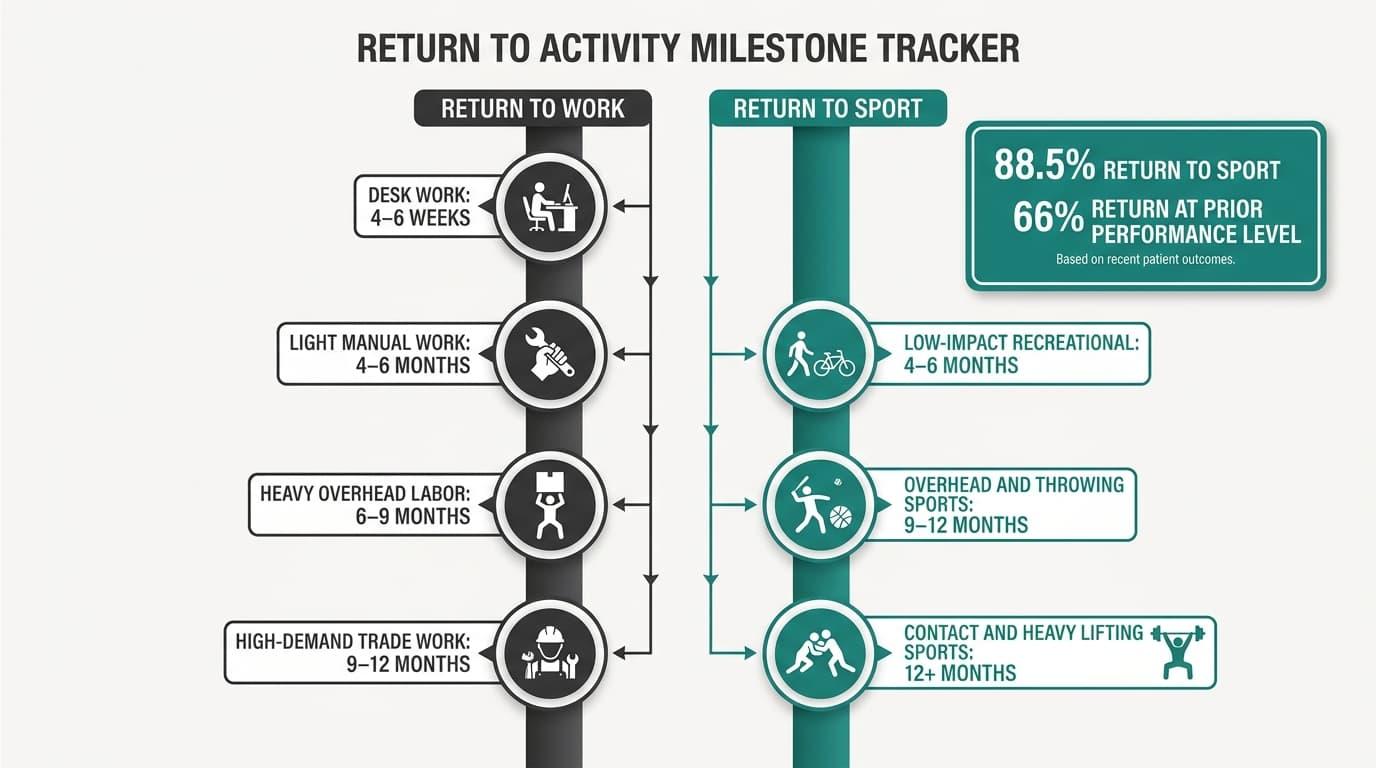
Not all jobs carry the same clearance timeline after rotator cuff surgery. Conflating them leads to either premature return or unnecessarily prolonged absence.
Desk Work vs. Manual Labor
Desk workers are typically cleared at four to six weeks post-surgery, provided the dominant arm isn't heavily engaged, and the sling can be accommodated. Driving usually remains restricted for the same four to six week window, or until the pain-free range of motion allows safe steering.
Manual labor and overhead work follow a completely different schedule:
-
Light manual work: Minimum four to six months post-repair.
-
Heavy overhead labor: Six to nine months, sometimes longer.
-
High-demand trade work, such as construction or roofing: Nine to 12 months depending on job requirements.
Non-operative patients managing partial tears can often return to low-impact activity in six to 12 weeks with physical therapy clearance, though overhead and load-bearing tasks still require a graduated approach.
Return to Sport: What the Data Shows
Research on rotator cuff surgery recovery shows that approximately 88.5% of patients return to sport following rotator cuff repair. That number sounds encouraging, but the more important figure is this: only around 66% return at their prior performance level.
That gap matters enormously for competitive athletes and serious recreational trainers. Full recovery and full performance aren’t the same milestone, and treating them as equivalent sets up unrealistic expectations.
Sport-specific timelines reflect that reality:
-
Overhead and throwing sports such as baseball, volleyball, and tennis: Nine to 12 months minimum.
-
Contact sports and heavy lifting sports: 12 or more months before safe return.
-
Low-impact recreational activity: Four to six months with consistent physical therapy progress.
Expecting to return to sport is reasonable. Expecting to return at full capacity on the same timeline requires a more honest conversation with your surgeon and physical therapist, because return-to-sport decisions depend on strength, pain, and functional test results rather than time alone.
How Anaconda Shoulder Support Fits Into Your Recovery
Rotator cuff repair is managed by your orthopedic surgeon and physical therapist, who don't change. But recovery doesn't happen only in the clinic.
The hours between PT sessions still matter, and that's where structured shoulder support earns its place.
During the non-operative management phase and the post-sling period of surgical recovery, the Anaconda Shoulder Brace provides proprioceptive feedback and load management support during daily activity. It's not a replacement for strengthening exercises; it's a complementary layer that helps you act with better shoulder awareness while it's still rebuilding tolerance.
That sensory feedback matters more than most athletes expect.
When the shoulder feels unstable, movement patterns compensate, and compensation mechanics in shoulder rehabilitation create new problems down the line. Consistent proprioceptive input from a well-fitted brace reinforces joint awareness during the transition from passive mobility work into active strengthening.
Built with a 3D knit compression design, the Anaconda Shoulder Brace acts as a supportive device that helps keep the shoulder feeling connected during daily movement, providing stability without restricting the range of motion your physical therapist is actively working to restore.
Final Words
Rotator cuff recovery is measured in months, not weeks. Depending on tear severity and treatment path, full recovery ranges from four months to well over a year, and rushing that process is the most reliable way to end up back at the beginning.
The most evidence-backed strategy is straightforward: Follow the phased protocol, stay consistent with physical therapy, manage load carefully, and track your milestones honestly. Patience here isn’t passive; it's the work.
At Anaconda, we're here for the athletes who refuse to quit. If you're working through recovery and want shoulder support that moves with your rehab rather than against it, we've built the brace for exactly that.
Frequently Asked Questions
Here are quick answers to the most common questions about rotator cuff recovery and rehabilitation.
What’s the fastest way to recover from a rotator cuff tear?
The fastest way to recover from a rotator cuff tear is to follow your rehabilitation plan consistently and avoid rushing the process. Tendons need time to heal, and recovery cannot be significantly accelerated beyond normal healing timelines. Following physical therapy instructions, protecting the shoulder, and avoiding premature loading are critical. Consistency usually leads to better outcomes than trying to return too quickly.
How painful is rotator cuff recovery?
Rotator cuff recovery is often most uncomfortable during the first few weeks after surgery or injury. Pain typically improves gradually as healing progresses and mobility returns. Some soreness during rehabilitation exercises is expected, especially when restoring range of motion. However, sharp or worsening pain should always be discussed with your healthcare provider.
What are the warning signs of a rotator cuff tear?
Common warning signs of a rotator cuff tear can vary by injury, including different types of tears, but often include persistent shoulder pain, weakness, and difficulty lifting the arm overhead. Many people also experience pain when rotating the shoulder or sleeping on the affected side. If something feels wrong but the symptoms are unclear, a clinician can determine whether the issue is a torn rotator cuff or another shoulder problem. Unlike typical muscle soreness, these symptoms often continue despite rest. Ongoing pain and weakness should be professionally evaluated.
Do I need to sleep sitting up after rotator cuff surgery?
Many surgeons recommend sleeping in a reclined position during the early stages of rotator cuff recovery. Sleeping slightly upright can reduce pressure on the repair site and improve comfort. Some patients use a recliner or extra pillows for support during the first few weeks. Your surgeon will provide specific recommendations based on your procedure and recovery progress.
What should I avoid permanently after rotator cuff surgery?
Most people can return to normal activities after recovery, but sudden heavy overhead loading should be approached carefully. Returning to intense lifting or throwing too soon increases the risk of reinjury. Long-term success usually depends on maintaining shoulder strength, mobility, and proper movement mechanics. Always follow your surgeon’s guidance before returning to high-demand activities, and make sure daily activities like lifting, reaching, and even walking with a natural arm swing feel controlled first.


