


Let’s be upfront about something: We make the Anaconda Shoulder Brace. So yes, we have a stake in this comparison. But we also know that recommending the wrong brace to an athlete who needs real support does no favors to anyone.
So this is a genuine feature-by-feature breakdown of how our brace stacks up against the Shock Doctor Ultra Shoulder Support with Stability Control: the good, the bad, and the parts where each brace earns its edge.
At Anaconda, we built our brace specifically for combat sport athletes managing shoulder injuries on the mat. Shock Doctor built theirs for a different kind of athlete. That difference shapes everything that follows.
Key Takeaways
-
Both braces are legitimately useful products built by credible brands. The difference is who they were built for
-
Anaconda's 3D knit compression molds to the joint and stays low-profile under training gear; Shock Doctor's neoprene adds therapeutic warmth but more bulk
-
Shock Doctor's three-strap X-Fit system offers stronger structural anchoring; Anaconda's dual-strap sits flatter and snag-free on the mat
-
Shock Doctor is HSA/FSA eligible at $66.99; Anaconda is $49.95 with 24-hour shipping and a 30-day return guarantee
-
Shock Doctor requires a left or right shoulder purchase; Anaconda is ambidextrous and fits either side
-
If you train in BJJ, MMA, or grappling, the Anaconda was built for that environment specifically
At a Glance: Anaconda vs Shock Doctor Side by Side
Here’s how both products compare across the features that matter most.

Compression and Shoulder Support: 3D Knit vs. Neoprene
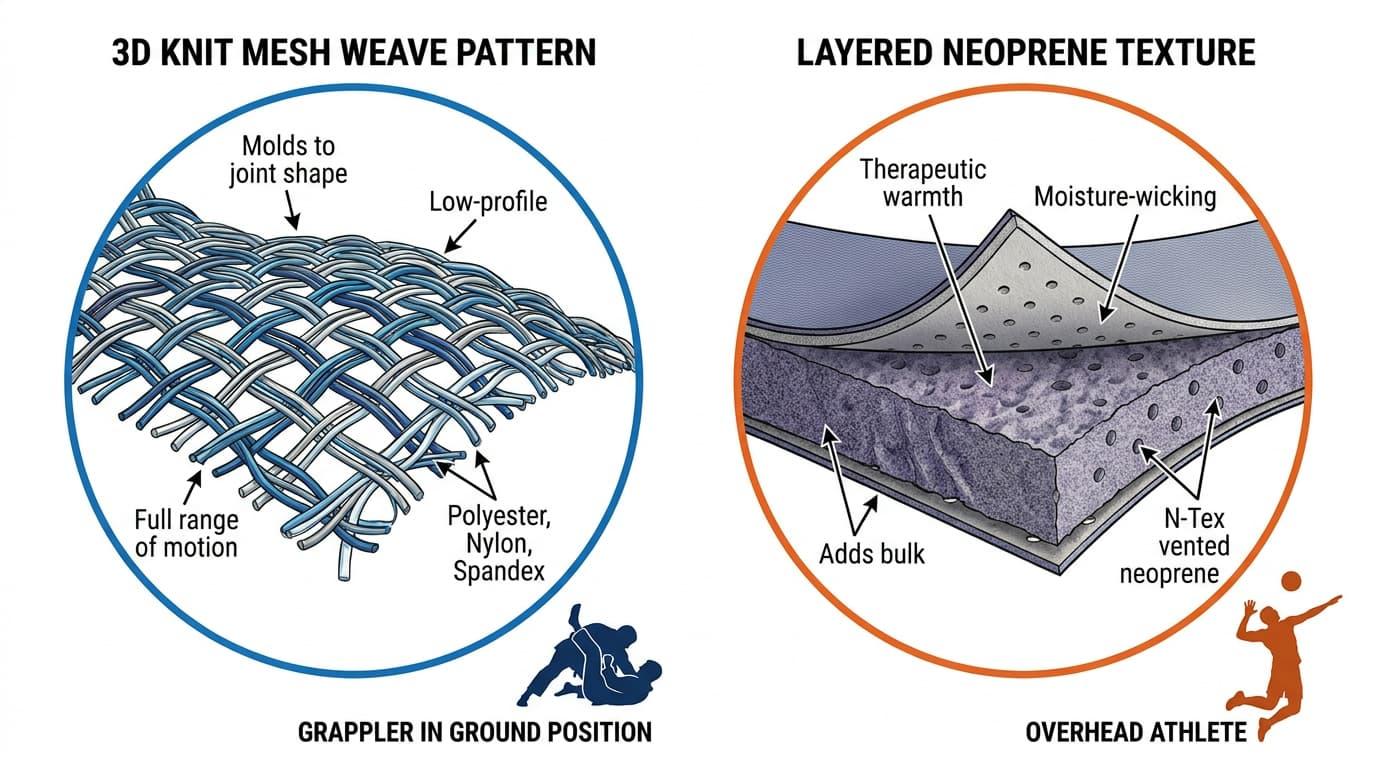
Anaconda uses a 3D knit construction made from Polyester, Nylon, and Spandex. The knitted structure molds to the shoulder, distributing pressure precisely around the joint rather than evenly across the sleeve. It stays elastic throughout the full range of motion, which matters when your shoulder moves through extreme angles during guard retention or a deep underhook.
Shock Doctor’s Ultra uses N-Tex neoprene: a vented, moisture-wicking material that adds therapeutic warmth alongside compression.
For athletes managing chronic stiffness, training in cold environments, or recovering from AC sprains and moderate separations, that warmth layer is a genuine benefit, while Anaconda is particularly effective for mild aches and rotator cuff inflammation.
Compression-only braces such as Bauerfeind OmoTrain and Copper Compression PRO+ can help with pain relief and mild support, but they do not provide the mechanical stability needed for serious instability or labral injuries.
Research shows that almost 2 million people in the US visit a doctor annually for rotator cuff tears, and for many of those, managing recovery in an upright or gym setting, neoprene warmth actively supports that process.
The honest tradeoff: Neoprene adds bulk. That bulk isn’t an issue for overhead lifting or collision sports, but on the mat or in tight positions, it becomes noticeable. The 3D knit keeps a lower profile and moves more freely through extreme shoulder angles.
Anaconda wins for grappling. Shock Doctor wins for athletes who benefit from therapeutic warmth and are primarily training upright.
Strap System: Dual Flat Straps vs. X-Fit Three-Strap Control
This is the feature where the two braces diverge most clearly, and it’s also where Shock Doctor makes its strongest case.
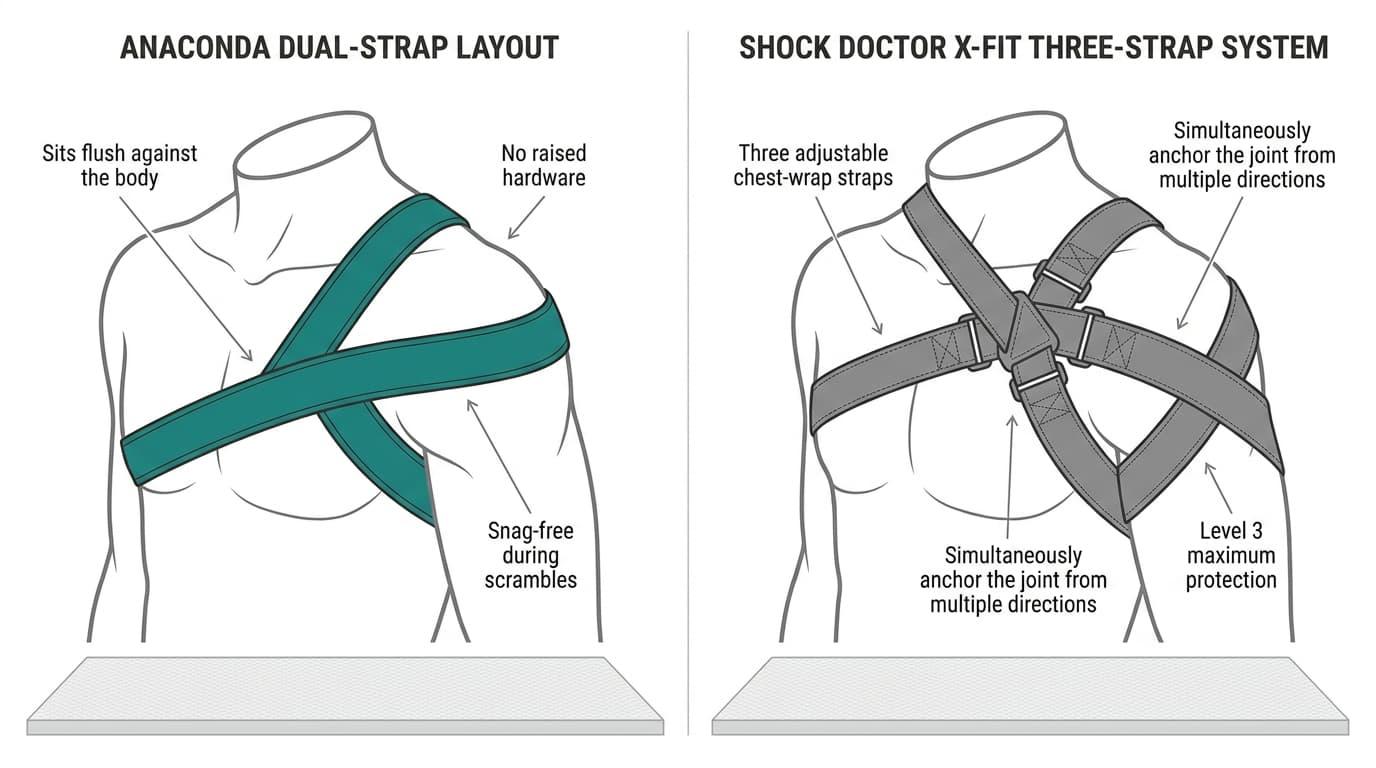
Shock Doctor’s X-Fit system uses three adjustable chest-wrap straps that simultaneously anchor the joint from multiple directions.
It is rated Level 3 (maximum protection) and is specifically designed to support AC sprains, moderate separations, and rotator cuff injuries with structured, multi-directional stability.
Athletes with labrum tears or recurrent dislocations often need more restrictive alternatives such as the DonJoy Sully, which is recommended for grapplers because the DonJoy Sully Shoulder Stabilizer provides superior mechanical stabilization for labrum instability.
For collision sport athletes, football players, rugby players, and anyone dealing with a significant AC injury, that level of anchoring is a real structural advantage. It is more support than our dual-strap system provides in that specific context, and it would be dishonest to suggest otherwise. That type of stabilizer also limits dangerous ranges of motion during grappling in a way compression-focused options do not, while trading off some mobility.
Where it falls short on the mat: Three chest-wrap straps mean more exposed strap edges. In BJJ, those edges catch on the gi fabric and the opponent’s sleeves. Understanding how strap tension affects fit during grappling vs. lifting makes it clear why a lower profile holds its position better through a live round.
The Anaconda dual-strap system sits flush against the body with no raised hardware, meaning nothing snags during scrambles, and the brace stays where you put it.
Shock Doctor wins for maximum structural anchoring in collision and overhead sports. Anaconda wins for grappling, where strap profile and snag-free movement are non-negotiable.
Impact Protection: Detachable Gel Pad vs. Fixed Neoprene
Both braces protect the shoulder from direct impact, but in different ways.
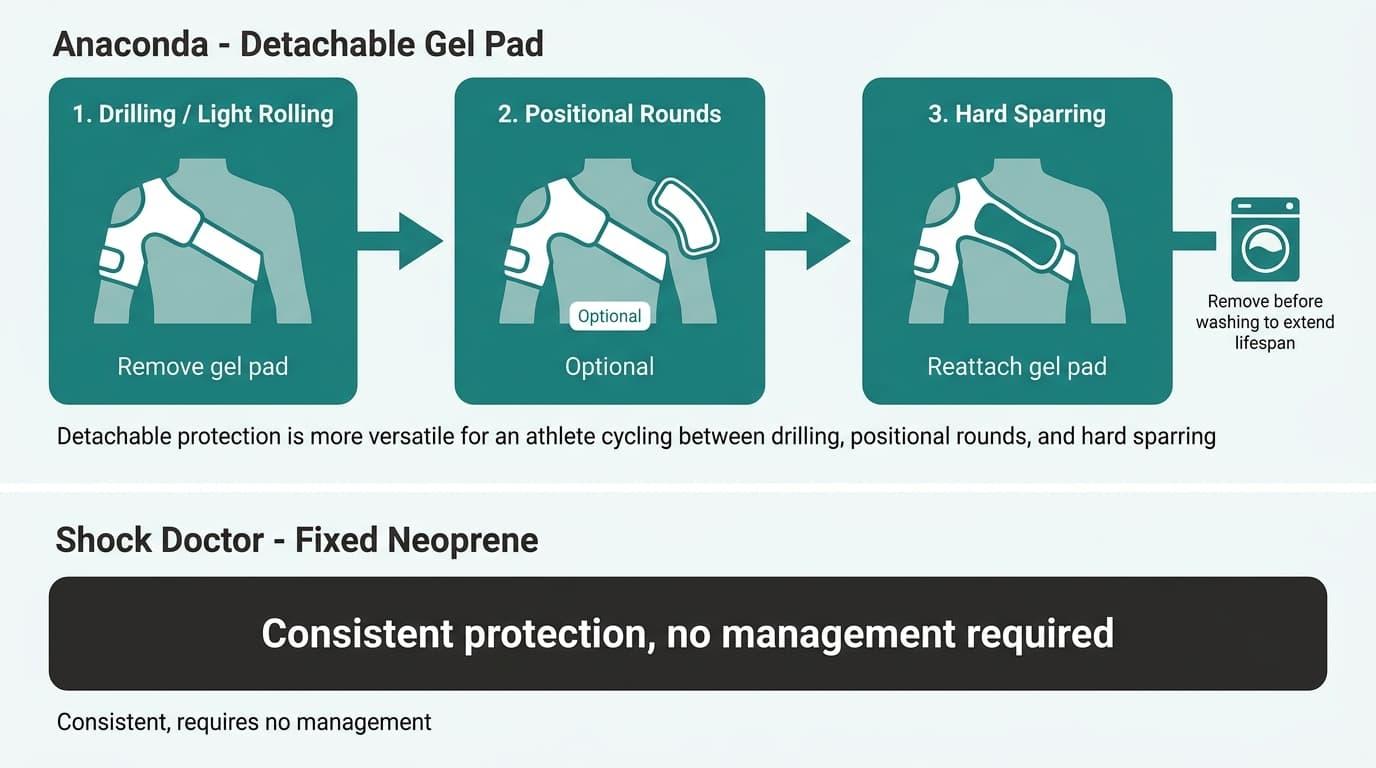
The Anaconda gel pad sits directly over the shoulder joint and detaches completely. You remove it for drilling and light rolling, and reattach it for sparring rounds where shoulder-to-mat contact is more likely.
That adaptability means you are not carrying unnecessary bulk during a technique session. Removing the pad before washing also extends its lifespan by reducing mechanical stress on the attachment points.
Shock Doctor's protection is built into the neoprene construction itself. It is consistent, requires no management, and means one less thing to think about before training. For athletes who primarily use the brace for recovery or gym sessions, a fixed protection design is reasonable. You put it on, and it works.
The honest assessment: Fixed protection is simpler. Detachable protection is more versatile for an athlete cycling between drilling, positional rounds, and hard sparring in the same week. Neither is objectively superior: it depends on how variable your training intensity actually is.
Anaconda wins for athletes who train at varying intensities. Shock Doctor wins for athletes who want a consistent, zero-management setup.
Fit and Sizing: Universal Ambidextrous vs. Left/Right Specific
Shock Doctor's Ultra is anatomically designed for a specific shoulder. You purchase it for the left or the right. It is available in Adult XS through Adult XXXL, a wider size range than most competitors offer. For athletes following specific clinical guidance for a particular shoulder injury, or who need a very precise anatomical fit, that specificity has value.
The honest note here: Shock Doctor's wider size range is a real advantage for athletes at the larger end of the spectrum, where fit precision matters more.
The Anaconda brace is universal and ambidextrous. One brace fits both shoulders, and sizes run from S to XXL.
The 3D knit construction with silicone-inlay grip adapts to the joint and holds its position through explosive movement without needing to be calibrated to a specific side. For most combat athletes who need to act quickly, secure support, and get back to training, the universal fit removes a purchasing barrier entirely.
Shock Doctor wins on size range and anatomical specificity, while Anaconda wins on simplicity, purchase speed, and ambidextrous versatility.
Durability: High-Frequency Training Over Time
The Anaconda shoulder brace's 3D knit holds compression tension through repeated wash cycles without the elastic breakdown that shortens cheaper sleeves. The detachable gel pad design helps here too: Removing it before washing reduces stress on the attachment points and extends the pad's performance.
Neoprene has well-documented longevity in low-frequency use. Under high-frequency washing, the warmth layer gradually thins, and compression retention softens over time. For athletes training five to six days a week with multiple washes, that degradation is a real factor.
Neoprene also creates more surface drag against mat material during sprawls and ground work, which adds skin friction over long sessions. It is not a dealbreaker for every athlete, but it is worth knowing going in.
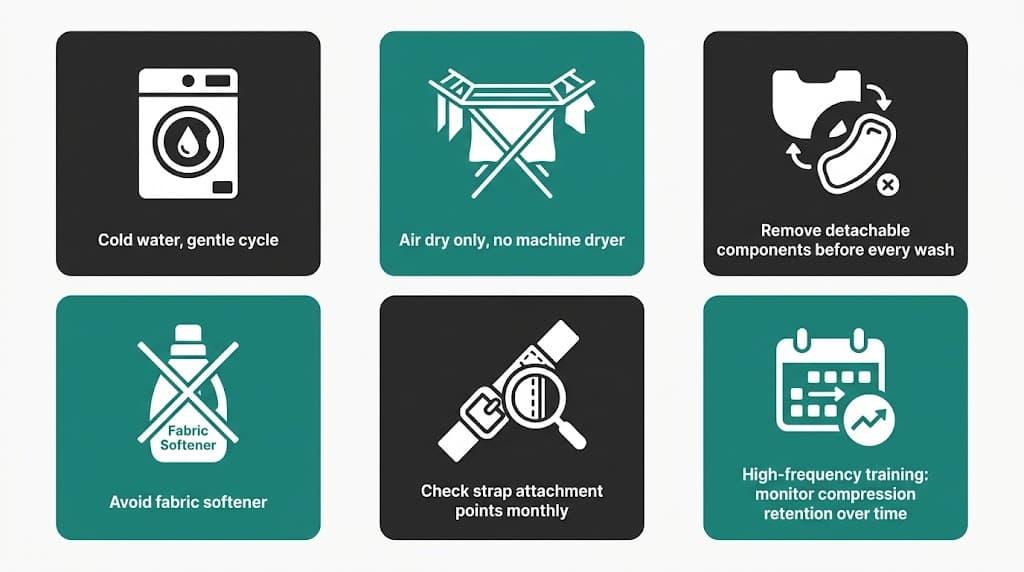
A care routine that applies to both braces:
-
Wash in cold water on a gentle cycle to preserve compression integrity
-
Air dry only, as machine dryer heat degrades elastic fibers significantly
-
Remove detachable components before every wash
-
Avoid fabric softener, which breaks down compression material over time
-
Check strap attachment points monthly for fraying or loosening
Anaconda wins for high-frequency mat training. Shock Doctor holds up well for lower-frequency gym and recovery use.
Price and Value: $49.95 vs. $66.99
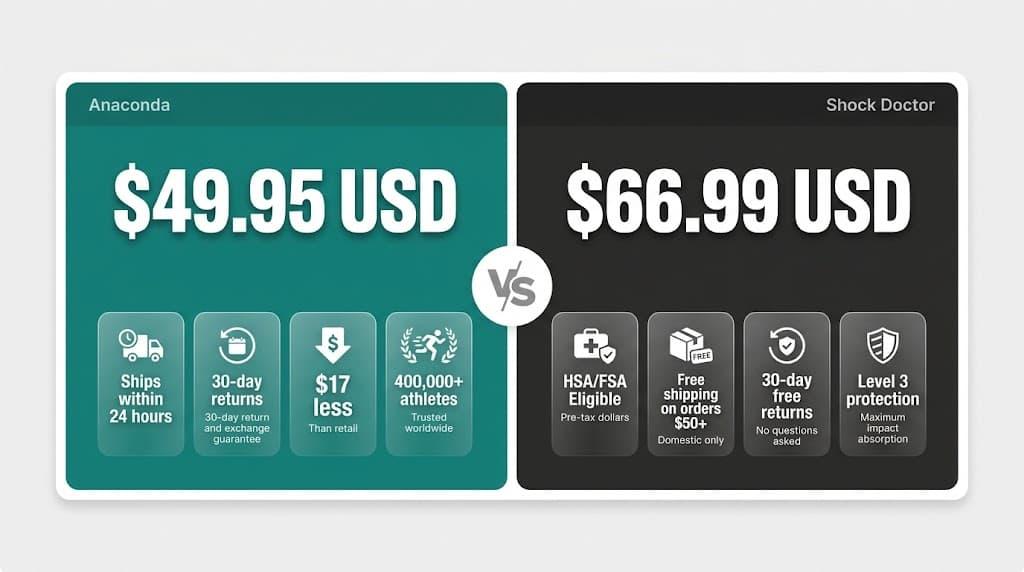
Shock Doctor's Ultra comes in at $66.99 and is HSA/FSA eligible, a meaningful advantage for athletes using health spending accounts to fund recovery gear.
That eligibility alone can make it a more cost-effective option for the right buyer. It also ships free on orders over $50, and Shock Doctor accepts returns up to 30 days.
At $49.95, the Anaconda Shoulder Brace costs $17 less and ships within 24 hours from the US warehouse with a 30-day return and exchange guarantee.
For combat athletes, that price point reflects grappling-specific construction rather than a feature set spread across multiple sports. It's something we've heard consistently from the 400,000+ athletes who've trained with Anaconda gear.
Neither brace replaces a professional medical evaluation. These are training support tools, not substitutes for clinical assessment or post-surgical recovery guidance.
Shock Doctor wins on HSA/FSA eligibility. Anaconda wins on price point for athletes paying out of pocket and on fulfillment speed.
Final Words
Shock Doctor's Ultra Shoulder Support is a well-built brace with a legitimate Level 3 protection rating, strong clinical credentials, and a strap system that genuinely outperforms ours for structural anchoring in collision and overhead sports.
If you're a football player, a swimmer dealing with impingement, or someone using HSA/FSA funds for a serious AC injury, it earns every cent of its $66.99.
If you train on the mat, the Anaconda was built for that environment in ways the Shock Doctor simply wasn’t. The 3D knit compression, flat dual-strap, and detachable gel pad are all designed around what grappling actually demands. That is not marketing: it is the honest answer.
Frequently Asked Questions
Still deciding between the Anaconda Shoulder Brace and Shock Doctor Ultra? Here are quick answers to the most common questions athletes ask before choosing the right shoulder support.
Is the Anaconda Shoulder Brace designed for left or right shoulders?
The Anaconda Shoulder Brace is designed for both left and right shoulders. Its adjustable strap system allows you to switch sides without needing a separate version. That makes it more convenient for athletes who want a flexible fit. The Shock Doctor Ultra, on the other hand, must be purchased for the specific side of the shoulder.
Can I use a shoulder brace during live rolling in BJJ?
Yes, you can use a shoulder brace during live rolling in BJJ, especially one built for grappling movement. The Anaconda Shoulder Brace was designed to stay low-profile under a gi or rash guard without catching during scrambles. Its strap system stays secure without bulky hardware getting in the way. More rigid braces may feel restrictive during active rolling sessions.
It may help prevent further aggravation while allowing shoulder and arm movement during live rolling, but do not rely on a brace alone if pain or instability continues; consult a physical therapist for rehab or rehabilitation planning, since it is not enough by itself for a torn rotator cuff, bursitis, a strain, or a more significant tear, and proper support should fit the healing process.
Is the Shock Doctor Ultra shoulder brace HSA/FSA eligible?
Yes, the Shock Doctor Ultra Shoulder Brace is HSA/FSA eligible. That means you may be able to purchase it using a health savings or flexible spending account. The Anaconda Shoulder Brace is currently not eligible for HSA/FSA purchases. If that matters for your budget or reimbursement, Shock Doctor has the advantage here.
How do the two braces differ in price?
The Anaconda Shoulder Brace costs $49.95 USD, while the Shock Doctor Ultra costs $66.99 USD. Both brands offer free returns within 30 days, making either option a lower risk to try. Anaconda also ships within 24 hours from its US warehouse. Shock Doctor includes free shipping on qualifying orders over $50.
Which brace is better for a serious AC joint injury?
The Shock Doctor Ultra may be ideal for a serious AC joint injury because it provides more structured stabilization. Its Level 3 support system is designed specifically for AC sprains and shoulder separations. The Anaconda Shoulder Brace may still work well for athletes training through lighter instability, especially in grappling sports like BJJ. These braces can serve different purposes: some provide compression so the shoulder feels fine in day-to-day movement, while higher-stability models may suit more severe instability. For severe injuries, it’s always best to get a professional diagnosis before relying on any brace alone. If you have a history of recurrent instability, get a clinician review before choosing among the best shoulder braces or other options.


