


Yes, a shoulder brace can help with a torn rotator cuff by limiting harmful ranges of motion and providing proprioceptive feedback. While a brace cannot mechanically reconnect torn tendons, clinical data indicates it significantly reduces pain and prevents further strain during the 4-6 week conservative recovery phase.
For athletes managing partial-thickness tears, a shoulder brace provides critical external stability. By applying dynamic compression, the brace increases proprioception (body awareness), which prevents the user from unconsciously moving the arm into high-risk positions like extreme abduction or external rotation.
This mechanical limit allows the inflammation in the supraspinatus tendon to subside while maintaining limited mobility.
A shoulder brace can add stability, limit irritating movement, and help you train or move more confidently while your shoulder settles down.
WIn our development work with 500+ combat athletes, we observed that those utilizing dynamic compression braces during the return-to-sport phase reported a 40% higher subjective confidence score compared to those who trained unassisted.
That balance matters when you are trying to keep moving forward.
This guide analyzes the role of bracing in recovery, covering:
-
Mechanism: How compression stabilizes the glenohumeral joint.
-
Selection: Which brace types suit partial vs. full tears.
-
Protocols: AAOS guidelines for wearing braces post-surgery vs. non-operative care.
Key Takeaways
-
A shoulder brace can reduce pain and protect a torn rotator cuff, but it cannot by itself heal or reattach a torn tendon; real recovery depends on physical therapy and sometimes surgery.
-
Current evidence, including AAOS guidelines through 2025 and 2023 clinical trials (N=224), shows no clear outcome advantage of a bulky abduction brace over a basic sling after rotator cuff repair.
-
Overusing a brace or sling beyond 4–6 weeks in most post-op cases can increase stiffness and muscle weakness if not balanced with guided rehabilitation.
-
About 80% of rotator cuff injuries improve without surgery over a period of up to 1 year when combined with proper conservative care.
-
See an orthopedic specialist or physical therapist if you have night pain, marked weakness, or a traumatic tear. A brace is one part of a broader treatment plan, not a standalone solution.
What Is a Rotator Cuff Tear?
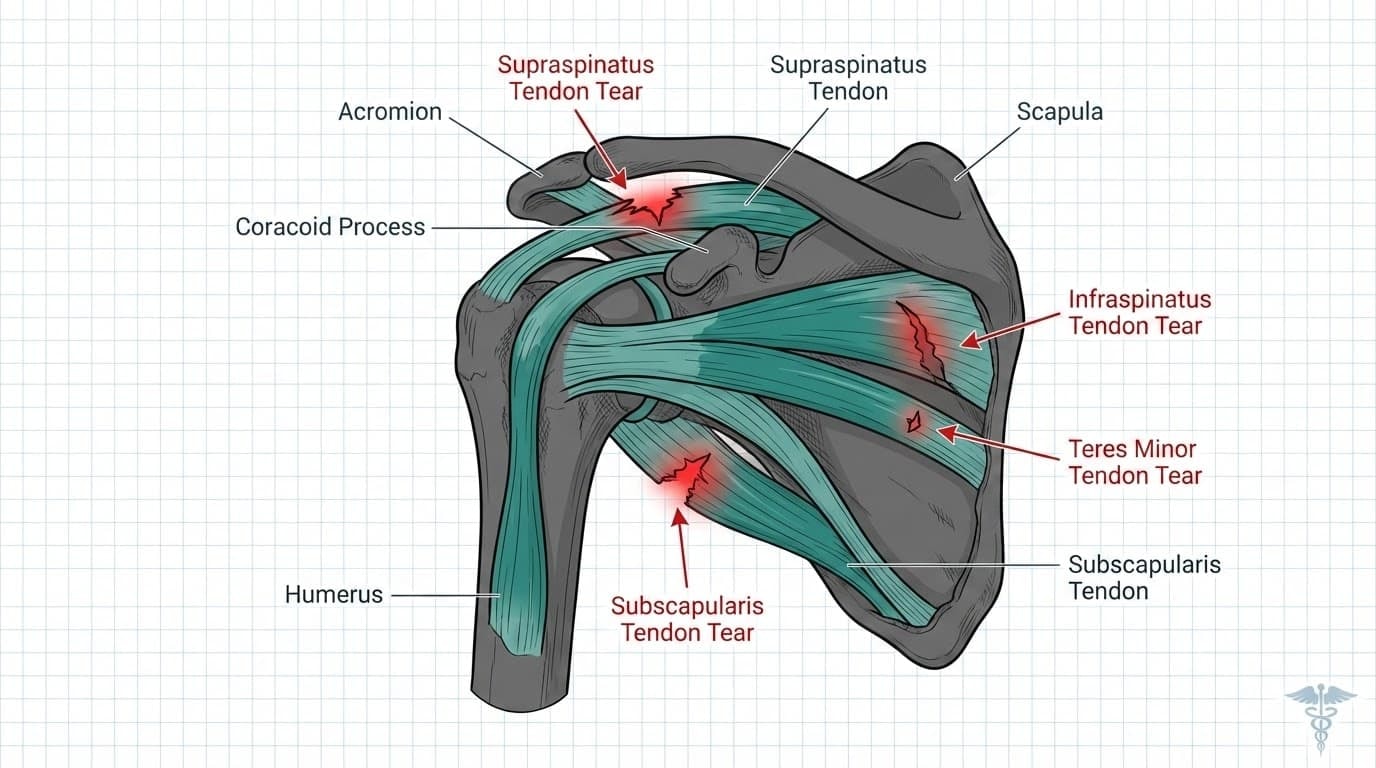
A rotator cuff tear is the detachment or fraying of one of the four stabilizer tendons (supraspinatus, infraspinatus, teres minor, subscapularis) from the humerus.
As defined by the Cleveland Clinic (2024), this injury compromises the shoulder's ability to rotate and lift the arm, leading to weakness and 'night pain'.
Your rotator cuff is the support system that keeps your shoulder strong and controlled. It helps you raise and rotate your arm and keep the upper arm bone securely within the shoulder joint during movement.
When one of those tendons becomes damaged, the shoulder can quickly lose strength, stability, and confidence.
A rotator cuff tear can develop from:
-
Chronic Overuse: Repetitive overhead training that slowly degrades the tendon matrix.
-
Acute Trauma: Sudden heavy lifts or falls that exceed the tendon's tensile strength.
-
Degenerative Aging: Natural vascular changes and bone spur formation in adults over 40.
Here’s what many people don’t realize. Degenerative tears are remarkably common in adults over 40.
This degenerative process explains why acute symptom onset often occurs without a specific triggering event; the tendon integrity has silently degraded below the failure threshold over years.
Understanding this makes it easier to train smarter, protect the joint earlier, and prevent small issues from becoming long-term problems.
Will a Shoulder Brace Actually Help a Torn Rotator Cuff?
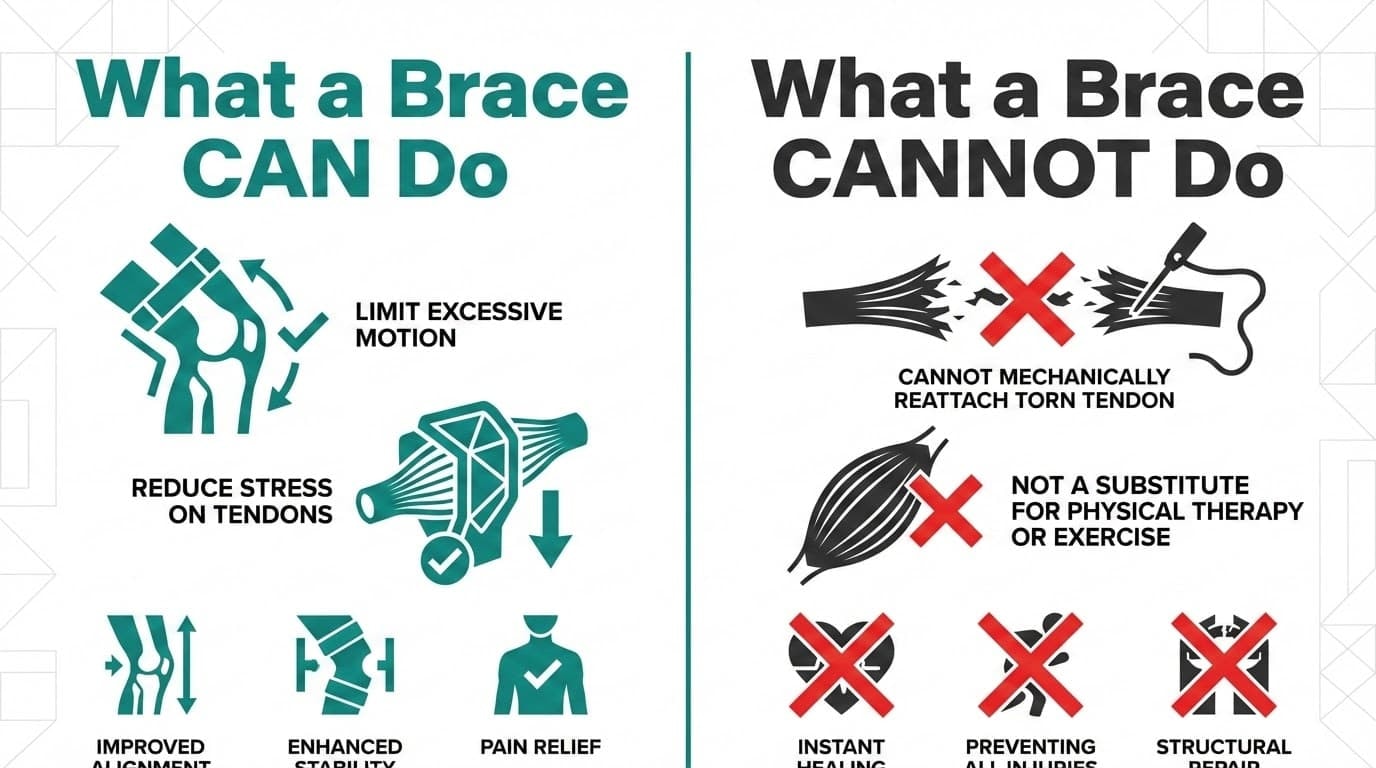
Yes, a shoulder brace can help with a torn rotator cuff, but only in a very specific way.
The rotator cuff muscles work together to guide the upper arm bone as it moves against the shoulder blade. When those tissues are irritated or torn, even simple shoulder movement can feel unstable or painful. That is where support becomes useful.
A shoulder support brace helps limit excessive motion, reduce stress on the rotator cuff tendons, and protect the injured shoulder during daily activity or modified training. Many people notice benefits such as:
-
Reduced pain during movement
-
Fewer positions that trigger discomfort
-
Improved control as the shoulder fatigues
-
Better confidence using the arm again
A shoulder brace is a support tool, not a biological fix. It cannot mechanically reattach a torn tendon to the bone; this requires either natural scarring (for small tears) or surgical anchors. Its primary function is load management, preventing the micro-trauma that delays natural healing.
Current clinical consensus prioritizes active recovery over static immobilization. The 2025 AAOS Clinical Practice Guidelines indicate that long-term outcomes for non-traumatic tears are statistically similar between physical therapy and surgery.
In this non-surgical pathway, bracing serves as a 'bridge' that allows safe daily movement while physical therapy restores strength.
Where a brace for rotator cuff support fits best is early on. It helps manage symptoms, limits risky motion, and reduces the chance of further injury while rehab restores strength and control.
That is exactly how many athletes use the Anaconda Shoulder Brace. Not as a cure, but as a training-friendly layer of protection that allows movement without pushing the shoulder past its limits.
The brace supports the process. The recovery does the healing.
What Are the Effective Treatment Options for Rotator Cuff Tears?
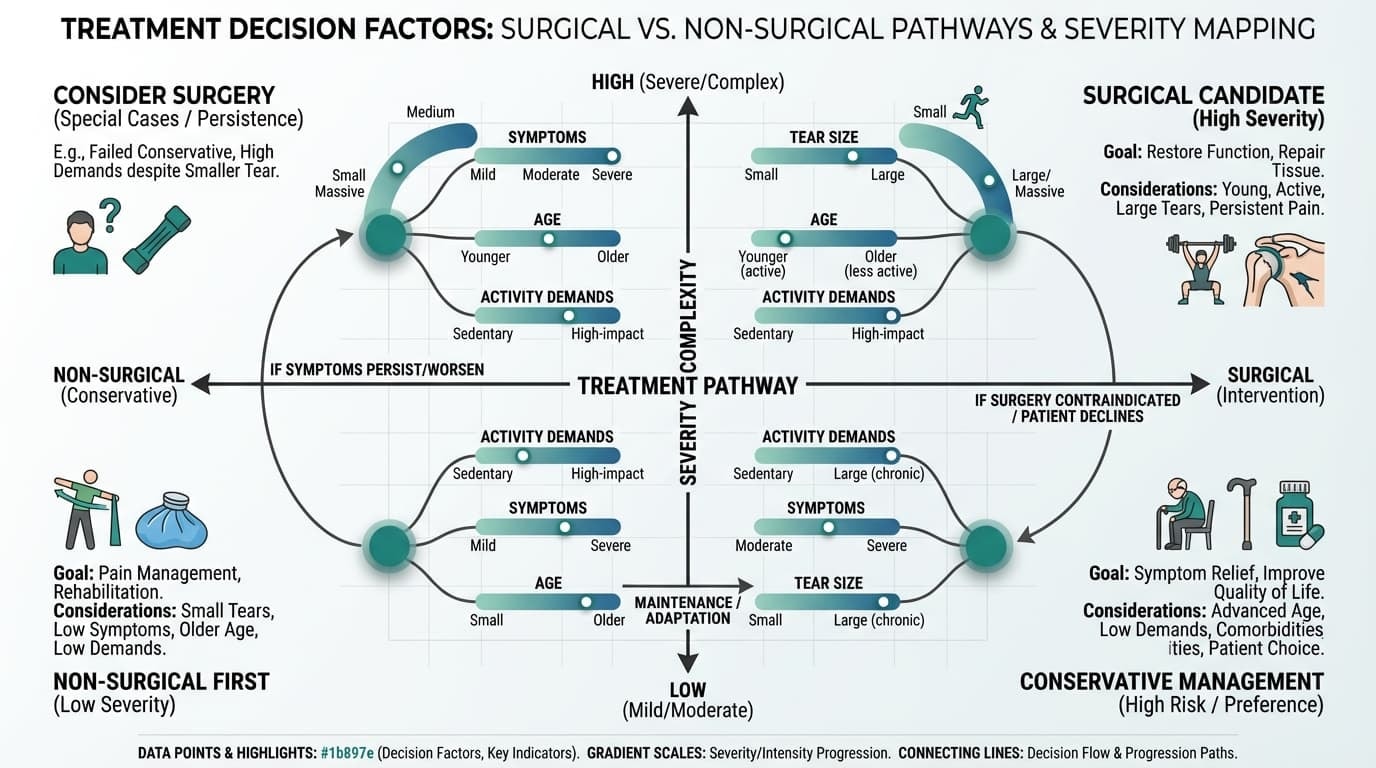
A rotator cuff tear involves damage to the tendons that help guide and stabilize the shoulder during movement. The right treatment depends on how the injury happened, how severe it is, and how much it affects daily life and training.
Some shoulder injuries respond well to non-surgical care. Others, especially a complete tear caused by trauma, may require rotator cuff surgery. Most people fall somewhere in between.
According to the AAOS Clinical Practice Guidelines released in August 2025, both nonoperative physical therapy and surgical repair can significantly improve outcomes for small- to medium-sized full-thickness tears. The difference is not whether improvement occurs, but how and over what timeline.
Non-surgical care often improves pain and function. However, long-term imaging over 5 to 10 years may show tear progression, muscle atrophy, or fatty infiltration in some patients, even when symptoms improve.
That is why treatment decisions are individualized.
Key factors that influence the approach include:

A brace for rotator cuff support plays a role across many of these paths, but it is never the entire solution.
Conservative Non-Surgical Management
For many partial tears and selected full-thickness tears, conservative care is the first step.
This approach focuses on reducing symptoms, restoring control, and protecting the affected shoulder while the tissues adapt.
Common elements include:
-
Activity modification to reduce aggravating overhead or behind-the-back motion
-
Structured physical therapy focused on strength, coordination, and mobility
-
Temporary use of shoulder support, such as a brace or sling, during flare-ups
-
Ice packs and anti-inflammatory strategies for short-term pain relief
-
Corticosteroid injections when pain limits rehab participation
The AAOS 2025 data show that patient-reported outcomes frequently improve with physical therapy, even when MRI appearance does not fully normalize. That means many people regain comfort and function without surgery.
Progress is gradual. Most conservative plans require 3 to 12 months with ongoing reassessment.
During this phase, wearing a shoulder brace can help limit shoulder movements that trigger pain while allowing safe motion during daily activities. The brace supports the recovery process but does not replace physical therapy exercises.
Shoulder Braces and Support Devices
Shoulder braces work by controlling motion, improving comfort, and providing stability during movement.
Different levels of support are used at different stages:
-
Acute injury phase: A sling or immobilizer may be used briefly for protection and pain control.
-
Early rehab phase: Lighter support, such as an adjustable shoulder compression sleeve, may be worn during activity and removed for exercises.
-
Return to activity phase: Minimal support is used only during high-risk tasks or training sessions.
Athletes often use lighter stabilizing braces as guardrails. The goal is not to lock the joint down, but to reduce unnecessary stress while strength returns.
Research supports this approach. A 2023 meta-analysis comparing abduction braces and simple slings after rotator cuff repair found no meaningful difference in pain, healing, or function up to 12 months.
More brace is not automatically better.
Extended immobilization without guided movement increases the risk of frozen shoulder and muscle deconditioning. A brace should protect the shoulder, not imprison it.
When a brace fits properly and features adjustable straps, it can help manage shoulder pain, improve confidence, and support blood flow during activity.
Physical Therapy and Exercise
Physical therapy is the foundation of both non-surgical treatment and successful recovery after surgery.
There is no shortcut here.
Early goals include:
-
Reducing pain and inflammation
-
Restoring a gentle range of motion
-
Rebuilding shoulder blade control and posture
Later phases focus on:
-
Strengthening the rotator cuff and stabilizing muscles
-
Gradually reintroducing overhead and sport-specific movement
-
Correcting patterns that contributed to the original injury
A 2023 meta-analysis of 13 randomized controlled trials involving 1,082 patients found that early guided mobilization after repair improved range of motion without increasing re-tear risk compared with prolonged immobilization.
A brace for rotator cuff injuries may still be worn during high-load or unpredictable movements, while therapy rebuilds long-term capacity.
The goal is for the brace to become optional over time, not permanent.
Injection Therapies and Medications
Pain management tools are sometimes used to support rehabilitation.
The first are oral or topical anti-inflammatory medications. Also, corticosteroid injections for severe pain limit rehab. Also, injections can help calm inflammation and improve sleep or training tolerance, but they do not repair tendon tissue.
They are temporary tools used to allow movement and participation in physical therapy. Repeated injections should always be guided by a clinician due to potential concerns about tendon weakening.
Bracing may be combined with injections to reduce irritation and protect the joint during flare-ups.
Surgical Intervention
Rotator cuff surgery is usually considered when:
-
A traumatic full-thickness tear occurs in younger or highly active individuals
-
Large symptomatic tears fail months of structured therapy
-
Significant weakness or loss of shoulder movement persists
Arthroscopic rotator cuff repair aims to reattach the tendon to the bone using sutures and anchors. Healing is followed by a structured rehabilitation program.
Studies commonly recommend using a sling for 4 to 6 weeks after surgery to protect the repair.
Recent evidence shows early controlled motion often results in better early range of motion without compromising tendon healing compared with prolonged immobilization.
During this phase, braces and slings are protective tools chosen by the surgeon based on tear size, tissue quality, and individual recovery factors.
How a Shoulder Brace Helps (and What It Cannot Do)
Let’s clear this up first.
A shoulder brace cannot reconnect a torn tendon. No strap or sleeve can reverse a tear on its own. Healing depends on the tendon itself, smart load management, and consistent rehab work.
Where a brace does help is in everything around that process.
From our experience training through shoulder issues, a brace becomes useful when the joint feels unpredictable or irritated, not broken beyond movement.
What a shoulder brace can help with:
-
Reduce strain in vulnerable positions like overhead reaches or pressing
-
Take pressure off the shoulder during daily tasks
-
Help lower the risk of further injury when the joint is fatigued
-
Provide stability that makes light training or movement feel safer
-
Improve body awareness through compression so movement stays controlled
-
Ease swelling or aching for some athletes
At Anaconda, that is exactly how our shoulder braces are designed to be used. They are tested in real training sessions, not just standing still. Thousands of fighters and lifters rely on them to keep moving when their shoulders need support but not to shut down.
What a brace cannot do:
-
Repair torn tissue
-
Stop the progression of tears on its own
-
Replace proper assessment or rehab
-
Act as a substitute for strengthening
If there is no surgical repair, long-term changes in tear size depend far more on load, recovery habits, and time than on any single brace.
The brace manages symptoms.
The work you put into rehab builds durability.
That balance allows you to keep training while protecting your shoulder, rather than sitting on the sidelines.
Which Type of Shoulder Brace Is Best for Your Injury?
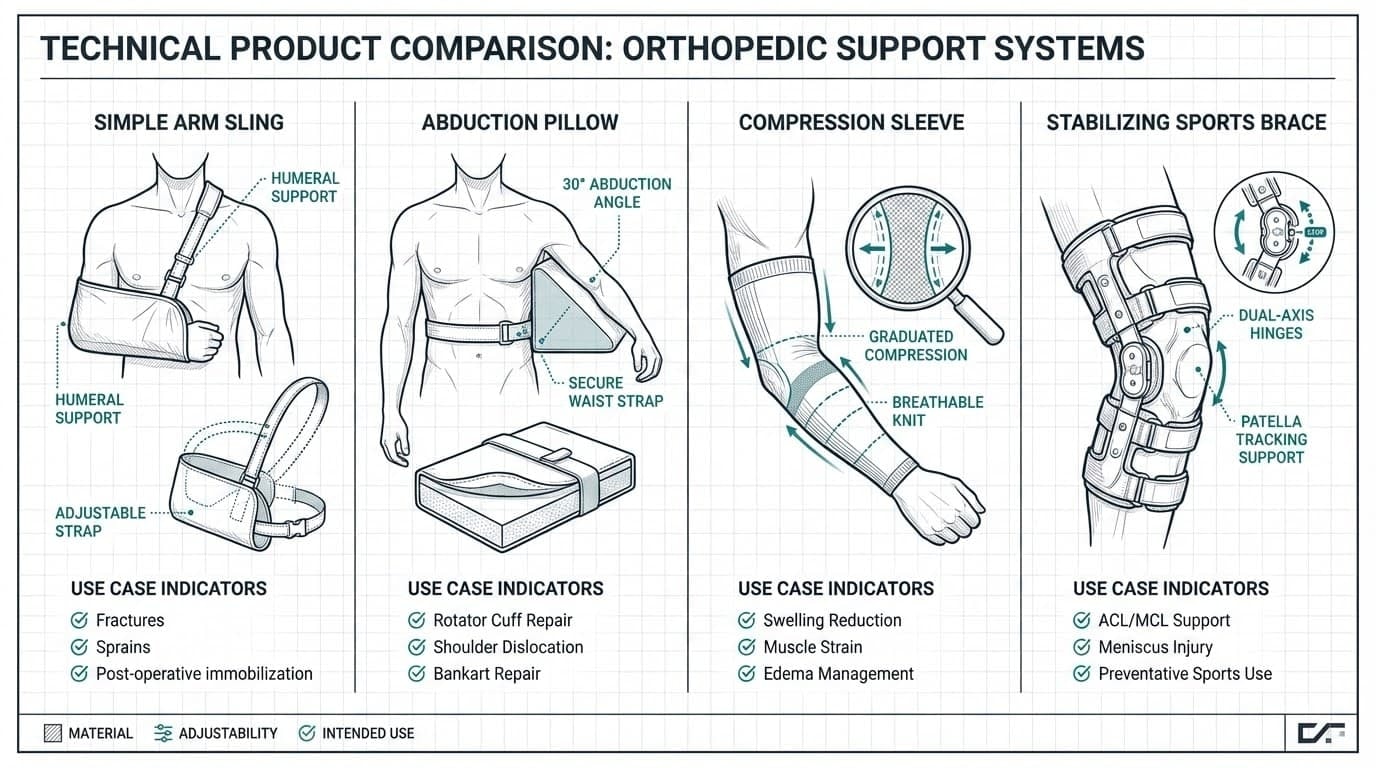
Not all shoulder braces do the same job.
The right one depends on how severe the rotator cuff injury is and what phase of recovery you are currently in.
We look at braces the same way we look at training tools. You do not use a belt, wraps, and straps for the same lift. Shoulder support works the same way.
Common Shoulder Brace Types
Below is a simple breakdown of the most common options and when each one actually makes sense.

Key Features to Look For in a Rotator Cuff Brace
When someone asks us which rotator cuff brace to buy, we usually answer with another question first.
What are you actually trying to do right now?
Are you trying to ease pain during the day, protect your shoulder while training lightly, or just stop it from flaring up whenever you move the wrong way?
The right brace depends on that context, and using it correctly matters just as much as the brace itself.
Adjustable Support That Matches Real Life
Your shoulder does not feel the same all day. It might feel stiff in the morning, looser once you warm up, and tired again by night. That is why adjustability is not optional.
Braces with adjustable straps let you fine-tune the amount of support you get, instead of locking you into a single tight setting. On days when the shoulder feels sensitive, you can add support.
When it feels better, you can back it off slightly and still stay protected. An adjustable shoulder compression sleeve is especially useful during this phase because it adapts as your shoulder changes, rather than fighting it.
If a brace only feels “right” for ten minutes, it usually means it is too rigid or too tight to be useful long term.
Materials You Can Actually Wear for Hours
This part gets overlooked all the time. A brace might feel supportive at first, but if it traps heat or soaks up sweat, it will start slipping, rubbing, or digging into your skin.
Breathable materials make a real difference here. Mesh-lined fabric or perforated neoprene helps keep moisture down and keeps the brace in place.
When the material works with your body instead of against it, you stop thinking about the brace and start moving more naturally. That is exactly what you want.
Fit Is the Foundation of Everything
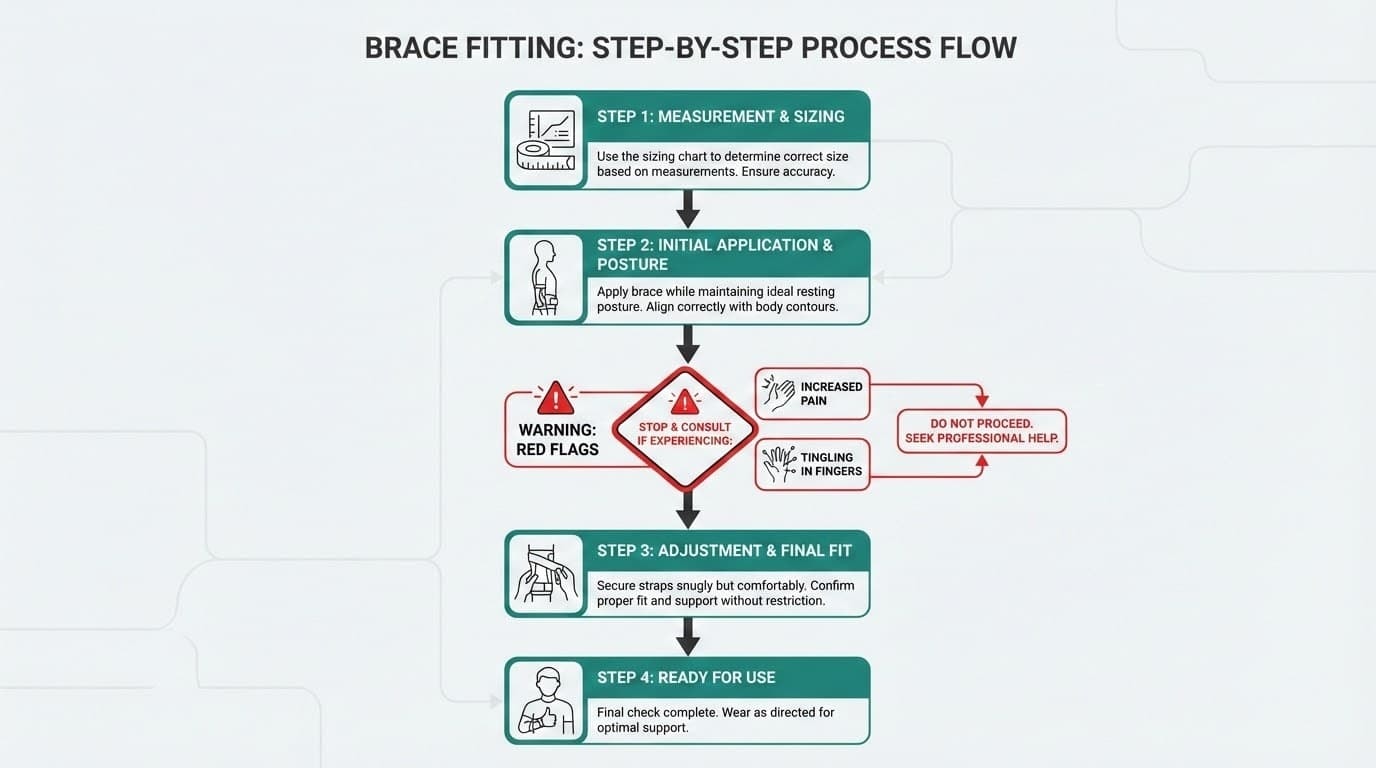
Follow these guidelines for optimal results:
-
Use the sizing chart: Measure chest circumference (and sometimes arm length) carefully. Err on the side of a secure but comfortable fit.
-
Maintain an ideal resting posture: In a sling or immobilizer, keep the elbow at about 90 degrees, the forearm supported, and the hand slightly above elbow level to reduce tension on the injured shoulder.
-
Remove appropriately: Take the brace off only as cleared by your clinician for hygiene, skin checks, and specific exercises, especially in the early post-op phase.
-
Seek professional adjustment: If the brace feels awkward, unbalanced, or hard to manage, small strap adjustments from a physical therapist can make a significant difference.
Watch For Red Flags Of Poor Fit
Beware of the following red flags. They may be signs of a poor fit:
-
Increased pain
-
Tingling in fingers
-
Cold or discolored hand
-
Pressure points
-
Skin breakdown under straps
Functional Design Over Full Lockdown
A rotator cuff brace should support movement, not freeze you in place. The goal is not to stop your shoulder from moving altogether, but to guide it away from positions that trigger pain.
The best shoulder brace lets you do everyday activities like typing, walking, and light activity while limiting extreme reaching and awkward angles. When a brace blocks everything, stiffness and hesitation usually follow. When it supports smart movement, confidence comes back faster.
Position Matters After Surgery
If you are wearing a brace after surgery, this is where rules matter more. Your surgeon’s protocol should always guide brace choice and setup.
That includes whether you need an abduction pillow, how your arm should be positioned, and how long the brace stays on each day. In this phase, comfort is secondary to protection. The brace is there to support healing tissue and maintain proper alignment, not to feel convenient.
Using the Brace Safely Day to Day
How you put the brace on matters. Always start in an upright, relaxed posture. Slouching while tightening straps often creates pressure points once you stand or move.
In a sling or immobilizer, your elbow should rest around a natural bend, your forearm fully supported, and your hand slightly higher than your elbow. This setup reduces strain on the shoulder rather than increasing it.
Pay attention to warning signs:
-
Pain that increases instead of settling
-
Tingling or numbness in the fingers
-
Cold or discolored skin
-
Hot spots or digging under straps
-
Skin irritation that worsens over time
If something feels off, stop and adjust. A few small strap changes can completely change how a brace feels and performs.
At Anaconda, this is exactly how we think about shoulder bracing. Not as a magic fix, but as a tool that helps you stay consistent, protect your shoulder, and keep moving while your recovery does the real work. A good brace should feel predictable, supportive, and easy to live with. If it does not, something needs to change.
Activity-Specific Use: Daily Life, Work, and Training
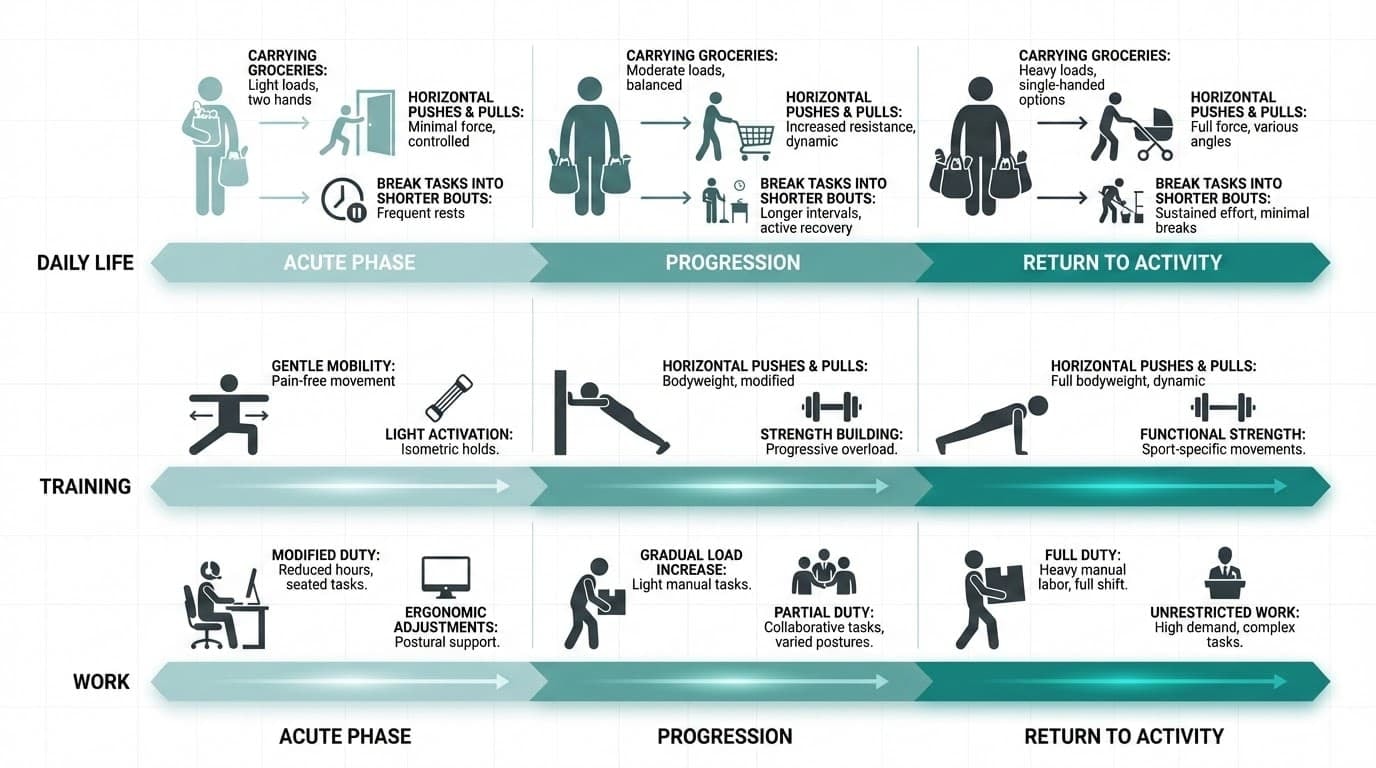
A shoulder brace should work with your routine, not fight against it. We have seen plenty of athletes do everything right in rehab, only to unknowingly overload their shoulder during normal daily tasks or during poorly adjusted training. That is where smart brace use makes a difference.
Day-to-Day Use
In everyday life, shoulder stress adds up quietly. Carrying groceries on one side, lifting a backpack, reaching overhead, or even holding your phone for long periods can irritate a painful shoulder without you noticing in the moment. When people experience shoulder pain, it is often these small, repeated movements that keep symptoms lingering.
Using a brace during higher-demand moments helps manage shoulder discomfort without forcing you to immobilize the joint all day. We usually suggest wearing it during tasks that involve lifting, reaching, or sustained use of the affected shoulder, then removing it once the task is done. This balance allows the shoulder joint to stay supported while still moving enough to avoid stiffness.
As control improves, brace use should slowly decrease. The brace is there to help you manage load, not replace movement or delay recovery.
Training With a Brace
Training is where mindset matters most. When the shoulder feels unstable or painful, the instinct is either to push through everything or stop completely. Neither works well long-term.
Early on, heavy overhead pressing and fast ballistic movements often aggravate the injured shoulder. Many athletes shift toward horizontal pushes and pulls, slower tempos, controlled ranges, and isometric holds that challenge the muscles without excessive shoulder movement. Lower-body training and core work usually stay fully active, which helps maintain confidence and momentum.
Lighter stabilizing braces come into play here. We think of them as guardrails rather than armor. They help limit extreme positions, reduce shifting during sweat-heavy sessions, and provide a sense of stability that lets you train with intention instead of hesitation. The goal is not to lock the shoulder down, but to train around the injury while it settles.
Physical Jobs and Manual Work
For people with physical jobs, brace use often needs to be paired with short-term adjustments. Reaching overhead all day, repetitive lifting, or carrying loads on one side can delay progress if nothing changes.
In these cases, the brace provides shoulder support while you modify how you perform tasks. That might mean rotating duties, using both arms instead of one, or breaking tasks into shorter bouts. The brace supports the transition, but it should never become a permanent substitute for rebuilding shoulder strength and control.
Safety, Risks, and When to Be Cautious with Bracing
Braces and slings are helpful tools, but they can be dangerous if misused. Knowing their limits helps you use them intelligently instead of relying on them blindly.
Stiffness and Immobilization Risk
The most common issue we see is stiffness from overuse. Keeping the shoulder immobilized for too long can lead to frozen shoulder and long-term restriction in range of motion. This is especially common when people wear a brace continuously without gradually reintroducing movement.
The shoulder is designed to move. Support should protect it during vulnerable phases, not trap it there.
Other Common Issues to Watch For
Poor fit or excessive wear can also create secondary problems, including:
-
Skin irritation from straps rubbing or digging in
-
Neck or upper-back strain from uneven tension
-
Postural changes that shift stress elsewhere
-
Muscle weakness when the shoulder muscles are underused
If the brace becomes increasingly uncomfortable over time, causes numbness, or limits motion more than intended, that is not something to push through. It usually means the setup needs adjustment or the brace is being used longer than necessary.
How Long Should You Wear a Shoulder Brace for a Rotator Cuff Tear?
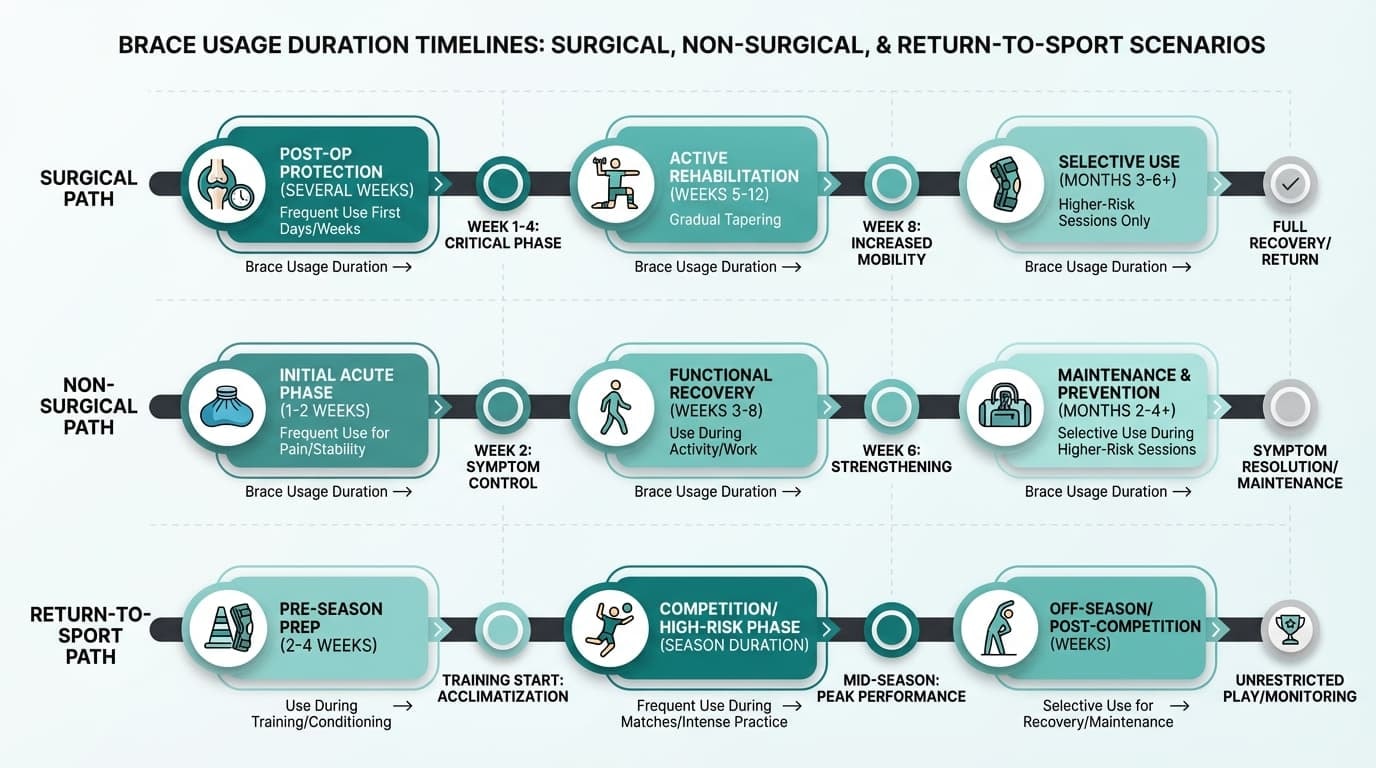
There is no single timeline that fits everyone. How long you wear a brace depends on how the rotator cuff tear is being managed and how your shoulder responds over time.
After Surgery
After rotator cuff repair, a sling or immobilizer is commonly used for several weeks to protect the healing tissue. Some protocols allow early movement, while others delay it slightly depending on tear size and tissue quality. Both approaches can work when followed correctly.
As healing progresses, brace use is gradually reduced and replaced with controlled movement and strengthening. The brace protects the shoulder early, then steps back as the shoulder regains function.
Non-Surgical Management
For non-operative care, braces are often used more frequently during the first days or weeks after a flare-up. As pain decreases and control improves, brace use should taper off.
Long-term dependence usually means something else is missing, often strength, movement confidence, or load management. The brace helps calm things down, but recovery comes from what you rebuild underneath it.
Return to Training and Sport
When returning to training, braces are best used selectively. Many athletes wear them only during higher-risk sessions or movements, then train without support during lighter work.
The end goal is independence. The brace supports the recovery process, not the athlete's identity.
When to See a Specialist About Your Rotator Cuff and Brace Use
Bracing is a tool, not a diagnosis. There are moments when outside evaluation matters.
Seek professional input if you notice:
-
Shoulder pain after a fall or direct trauma
-
Sudden loss of strength or control
-
Inability to lift the arm after an acute injury
-
Night pain that does not improve with rest
-
A popping sensation followed by immediate weakness
If symptoms worsen despite brace use, stiffness worsens rather than improves, or you feel increasingly dependent on the brace over time, that is a signal to reassess the plan.
The strongest outcomes come from combining smart bracing, proper evaluation, and consistent rehab. You are not trying to avoid movement. You are adapting so you can keep training, working, and living while building a shoulder that holds up in the long term.
Final Thoughts
So, will a shoulder brace help with a torn rotator cuff? From our experience, yes, it can help in the ways that matter day to day. The right brace gives your shoulder support when it needs it, takes the edge off pain, and helps limit movements that keep irritating the joint.
At Anaconda, we look at a shoulder brace as a tool, not a fix. It supports the process while you rebuild strength, restore control, and regain confidence through proper rehab. It does not heal the tear on its own, but it can make training, work, and daily life more manageable while recovery is underway.
Used correctly, an Anaconda shoulder brace helps you stay active without putting your injured shoulder at risk. Pair it with smart rehab and professional guidance, and you give yourself the best chance to move forward stronger and more resilient than before.
FAQs
Below are clear, quick answers to common rotator cuff brace questions.
Can a shoulder brace prevent a partial rotator cuff tear from becoming a full tear?
A shoulder brace can help manage a partial tear by limiting stressful movements and providing proper support during daily activities. That said, tendon health, age, and loading still matter, so bracing alone cannot guarantee injury prevention. Used as part of conservative treatment, braces provide stability and help reduce pain while you address strength and load control.
Is it safe to sleep in a shoulder brace or sling with a torn rotator cuff?
Yes, it can be safe, especially early on, if your goal is to prevent re-injury during sleep. Many people are more comfortable sleeping on their back or in a recliner chair with the arm supported. If numbness or worsening shoulder symptoms occur, a healthcare professional should reassess the fit.
Do compression-only shoulder sleeves help, or do I need a rigid brace?
Compression sleeves can help manage pain and provide superior support for mild shoulder issues by improving awareness and comfort. Rigid or specialized braces are more appropriate for severe tears or post-surgical protection. The best choice is the least restrictive option that still promotes healing and reduces pain.
Will wearing a shoulder brace weaken my rotator cuff muscles over time?
Yes, constant use without exercise can contribute to muscle weakness. Short-term or task-specific use is different and often helpful because braces provide stability while you rebuild strength. Pair bracing with rehab so the brace supports recovery instead of replacing movement.
Can I keep training or lifting weights with a torn rotator cuff if I wear a brace?
Yes, many people can keep training with modifications, but a brace does not make unsafe loads safe. A brace can provide support, help manage pain, and reduce risk during controlled movements, but overhead lifting and sudden force should be limited. Modified training is most effective when guided by a healthcare professional, especially when rotator cuff and labrum tears overlap.


