


You know the brace would help. But wearing it can feel like announcing an injury before you even start training.
That hesitation is real. No one wants to walk into the gym looking like they just came from a clinic.
The good news is that modern athletic wear has changed that. Today’s support gear is designed to look like part of your outfit, not something separate from it. Compression sleeves and braces now blend into training fits so you can stay supported without standing out for the wrong reason.
At Anaconda, that mindset comes from real experience. Our gear is built for athletes who want to keep training, keep moving, and still look like they belong in the gym.
In this guide, you’ll learn how to wear support gear without the “injured” look, and how to build a clean, athletic fit around it.
Key Takeaways
-
The athleisure trend has made functional fashion the standard. Gym clothes that go from training to the street are the new normal.
-
The old beige, bulky brace aesthetic is gone. Modern support gear uses neutral tones, sleek lines, and performance fabrics that disappear into athletic outfits.
-
Color matching, symmetry, and treating compression sleeves as part of your uniform are the keys to a cohesive, put-together look.
-
Serious athletes across every discipline use support gear. Wearing it does not signal injury. It signals you are training smart.
-
Athleisure pieces from quality brands are now designed to work across gym, street, and everything in between.
Why You Don’t Want to “Look Injured” (And Why That’s Rational)
You have got a knee that talks back on squat day. A sleeve would help. And yet, here you are, warming up bare-jointed, hoping today is not the single day it really matters.
It is not that you do not believe in the support. It is that you did not train this hard to walk into a busy gym looking like you belong in a waiting room.
For decades, visible braces and supports were designed for clinics: beige, bulky, Velcro-heavy. The design language was explicit. This gear announces that something is wrong with this person, this joint, right now. If you have spent years building an athletic identity, clinical-looking clothes feel like a threat to everything you have worked for.
The desire to feel good and look the part is not just a trend or vanity. Research on athletic identity in sport consistently shows that how we dress during training affects our confidence, effort, and performance outcomes. What you wear to the gym is no longer a casual afterthought.
Your discomfort with clinical-looking gear is a rational response to a real design problem. And the industry finally caught up with solving it.
The Shift: From Medical Hardware to Functional Fashion
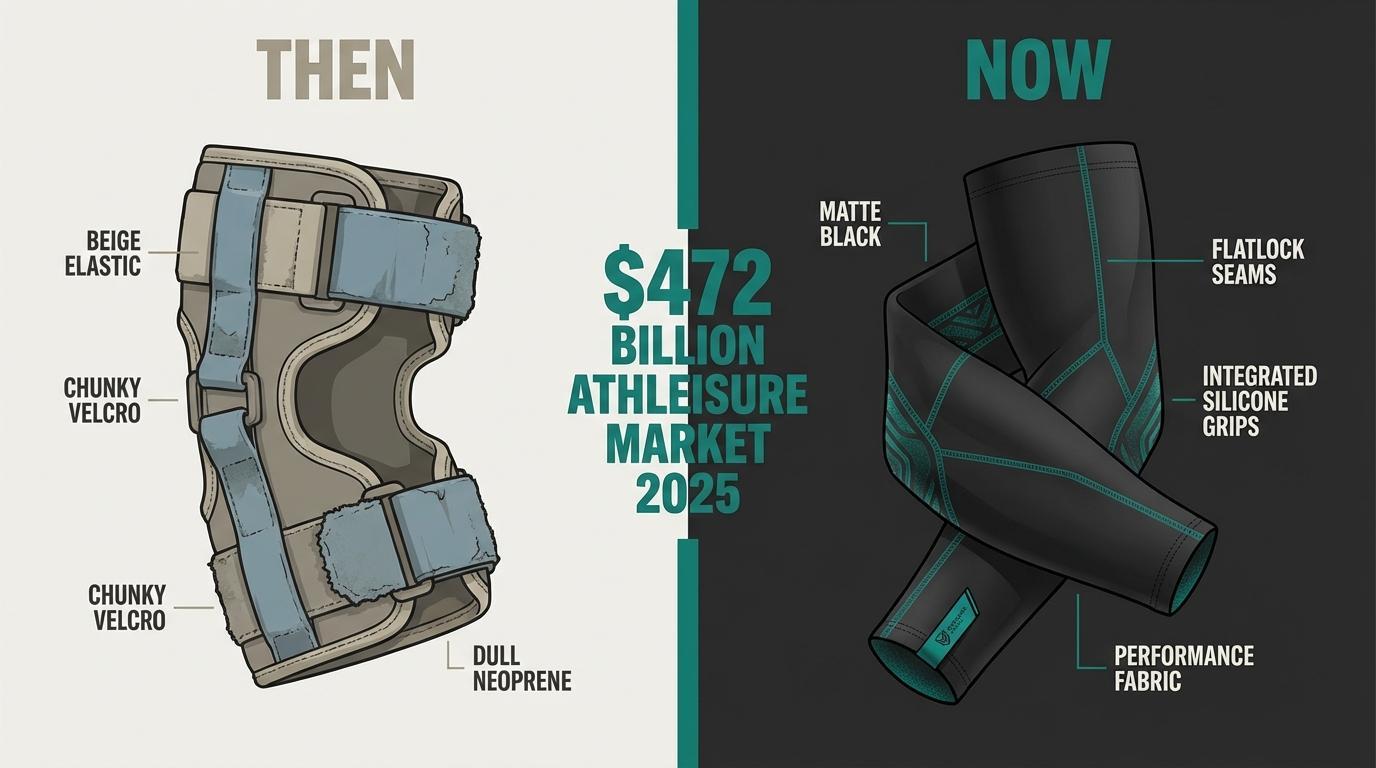
Here is the contrast that matters: old neoprene braces with hospital-blue straps versus 2025 performance sleeves built to look like part of a uniform.
The numbers tell the story. Global athleisure reached $472 billion in 2025 and is projected to exceed $1 trillion by 2035. The defining trend of this era is functional fashion: activewear clothing that transitions from training to coffee runs without requiring a costume change.
As high-waisted leggings, yoga pants, and sleek workout clothes became everyday wardrobe staples, the gap between stylish activewear and ugly support gear became impossible to ignore. Women and men started showing up dressed head to toe in premium gym clothes, then strapping on beige braces that looked like they came from a different decade entirely.
Brands had to respond. Modern support gear now features matte black and deep navy bases instead of beige elastic, hidden flatlock seams instead of bulky stitched bands, integrated silicone grips replacing chunky Velcro, and recycled performance fabrics matching the quality of premium leggings.
The athleisure aesthetic rewrote the rulebook for what joint support is allowed to look like. And it did not happen gradually. It happened because athletes demanded better.
The Psychology of the “Injury Aesthetic” in Modern Gyms
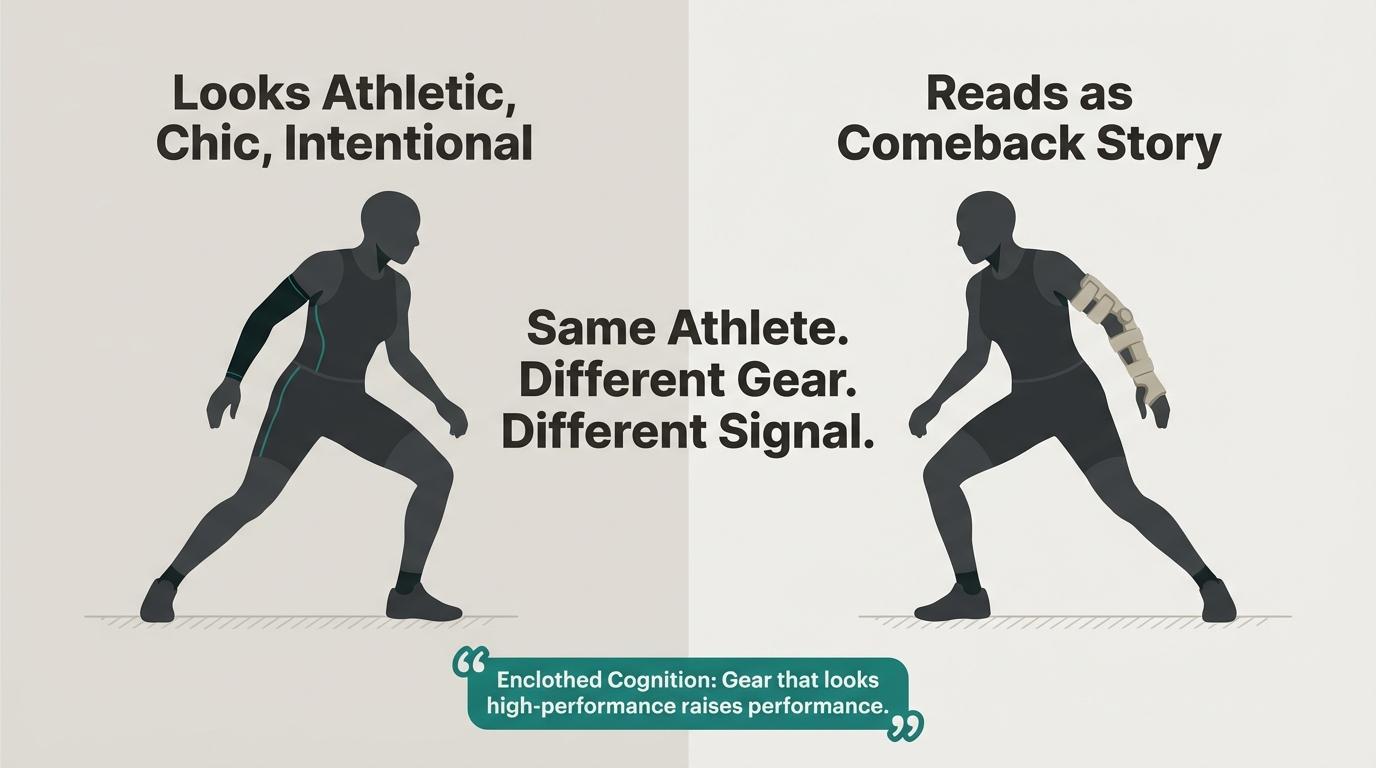
Social media and gym culture made the image more visible than ever. Every lift, every set, every outfit might end up documented. That adds a layer of self-consciousness that goes well beyond what you see in the mirror.
There is a subtle hierarchy that many people feel in training spaces.
-
Stylish, high-performing athletes on one side.
-
People fighting their way back on the other side.
-
Visible, clinical-looking gear gets unconsciously lumped with the second group, regardless of actual capability.
-
A person who has been training for five years can suddenly look like a comeback story the moment they strap on a beige brace.
The clothes and gear we wear in the gym reflect our training identity. An outfit that does not match the athlete you are sends the wrong signal, and you feel it. The experienced lifter skips the knee sleeve. The soccer player is hiding an ankle support under oversized socks. The CrossFitter leaves compression gear at home to avoid questions.
The problem was never the support itself. It was that the support gear's design language belonged to hospitals, not training floors. Modern athleisure has rewritten that language. Enclothed cognition research shows that wearing gear associated with high performance actually raises performance. When your support looks athletic and chic, it works with your mindset, not against it.
Design Principles: What Makes Support Gear Look Athletic, Not Clinical
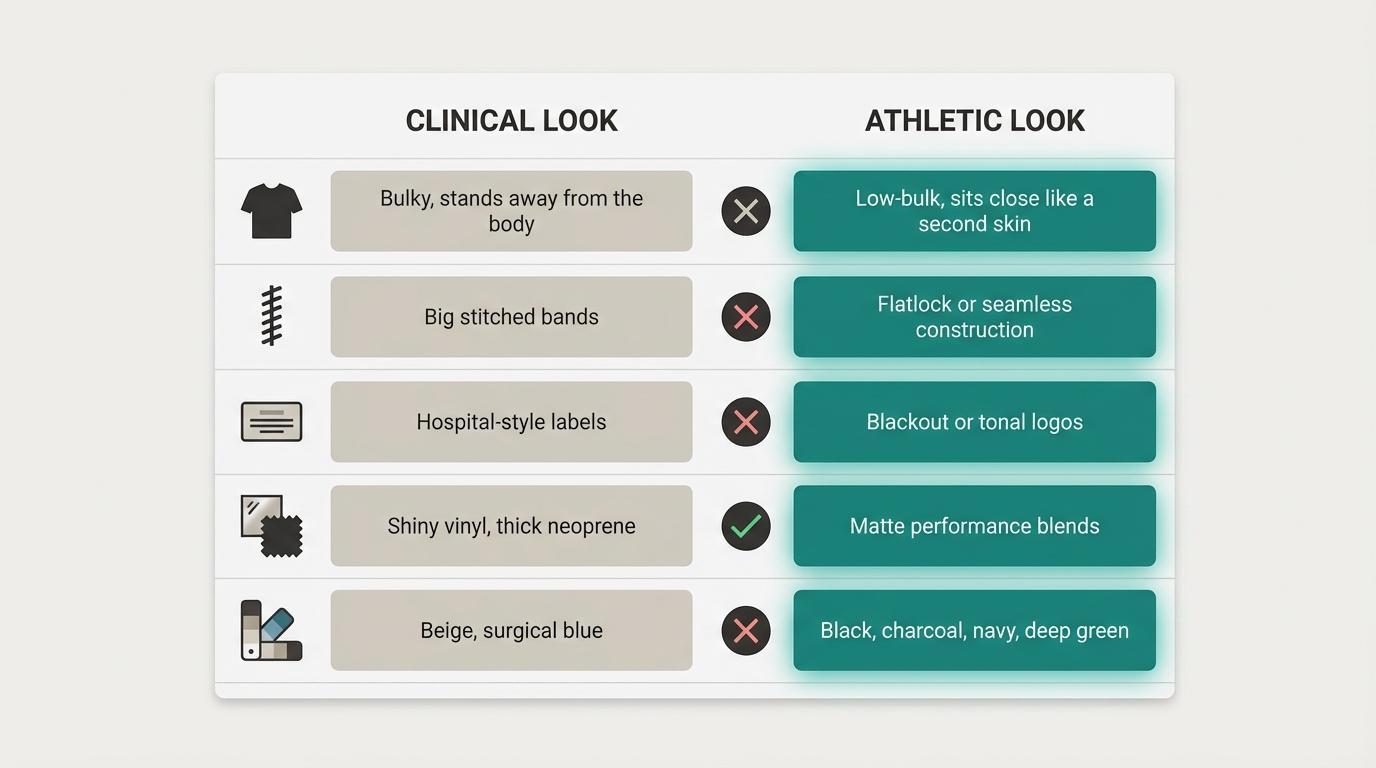
Looking injured is largely about design cues: color, bulk, symmetry, and how a piece integrates with the rest of your outfit. Get these right, and support gear becomes invisible. Get them wrong, and you are broadcasting fragility to the room.

Color is the key decision.
-
Black and charcoal sleeves blend with most modern palettes because that is already what your leggings, shorts, and trainers are wearing.
-
The Navy is a strong secondary option. Avoid hospital-coded tones entirely.
Choose pairs when possible, both knees or both elbows, to avoid the asymmetry that reads as one specific joint being broken. Match finishes: match by match. Let your support gear share at least one color with your bottoms or shoes. These small decisions elevate support sleeves from medical equipment into versatile athleisure pieces that complete a cohesive look.
When compression gear looks like it belongs, it becomes one of your wardrobe staples. Not an afterthought you strap on, hoping no one notices.
This is exactly what the Anaconda Shoulder Brace was built for. It uses 3D compression to hold the joint in optimal alignment without adding bulk that breaks the lines of your outfit. The gel padding sits flush against the body, and the secure strap system keeps everything in place without the Velcro bulk that instantly reads as medical.
It is designed to layer cleanly under a fitted top or sit exposed as part of a performance-forward look. Whether you are wearing it through a full training session or running errands afterward, it works as part of the outfit rather than against it. Trusted by over 400,000 athletes.
Styling Frameworks: How to Wear Joint Support Without Looking Hurt
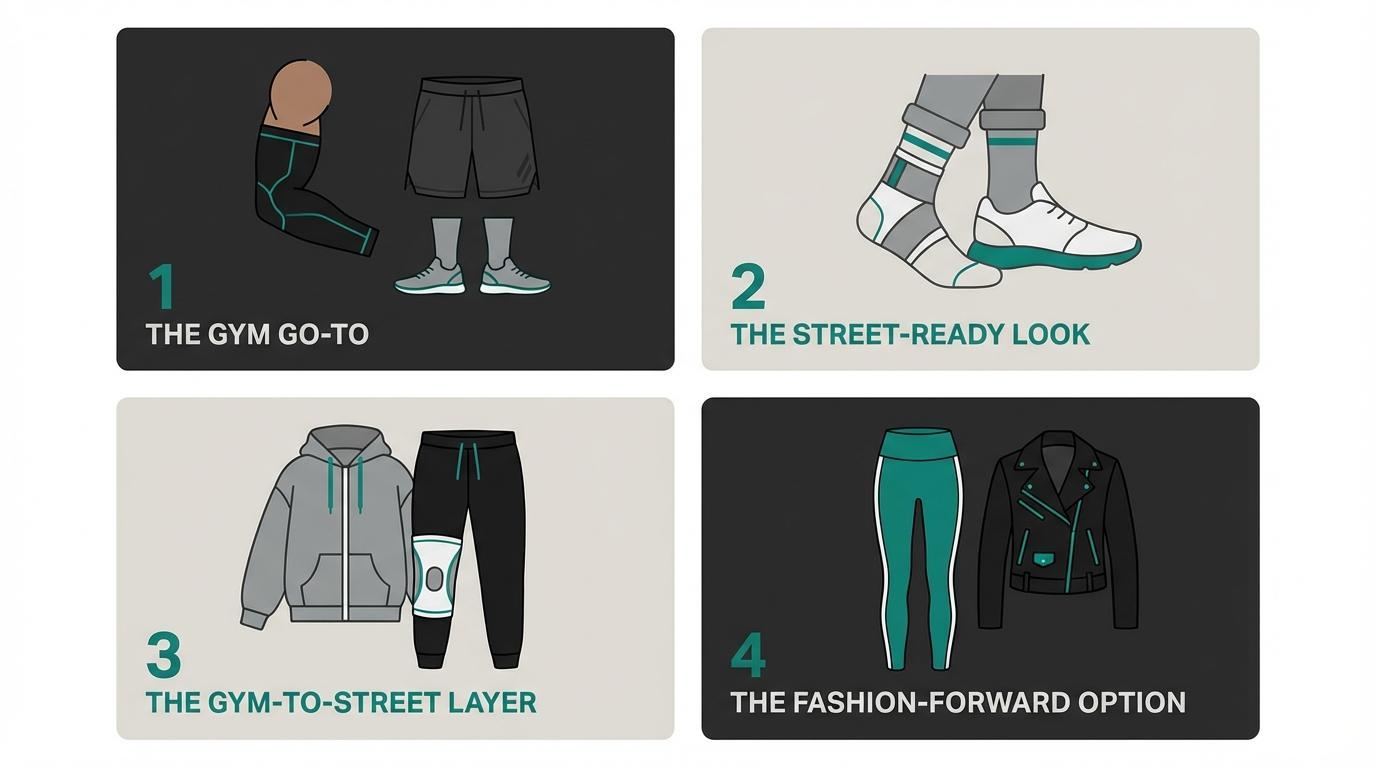
These are not abstract ideas. These are concrete outfit combinations you can put together this week.
The Gym Go-To
Black compression sleeve paired with 7-inch charcoal training shorts and tonal crew socks. Clean neutral trainers that echo the sleeve color.
The sleeve becomes one performance detail among several, not the focal point. High-quality leggings work the same way: the compression zones blend into the fabric pattern, and the sleeve line disappears entirely. Avoid white socks that create a visual break between the sleeve and the shoe.
The Street-Ready Look
Slim ankle support under crew socks matched to the sock color. Sleek sneakers that echo the tone. No exposed beige wrap cutting the leg visually and drawing the eye down.
This is where comfy and fun meet functional. The support is doing its job while your outfit is doing its job. Running errands, grabbing coffee, heading to class: this is casual clothes that happen to be protecting a joint, and no one outside your physio needs to know that.
The Gym-to-Street Layer
Compression knee sleeve under tapered joggers. Structured oversized blazer or zip-up hoodie on top. Clean neutral sneakers.
Layering is the move here. Sports bras and fitted base layers underneath, a structured outer piece on top. The sleeve is only barely visible when seated or in motion. You go from the gym to the street without changing, looking effortlessly chic and fully dressed the whole time.
The Fashion-Forward Option
For those who want to push the athleisure aesthetic further: high-waisted leggings in a bold color paired with a leather jacket or a vintage-inspired outer layer. Let your personal style and personality drive the outer pieces. The compression gear underneath is the functional foundation. The fashion lives on top of it.
Your workout clothes should tell one story. When the sleeve matches the shorts and the shoes, it reads as intentional personal style. When it clashes with everything, it reads as an afterthought. The difference is just a few deliberate choices.
From Gym to Street: Making Support Gear Part of Everyday Athleisure
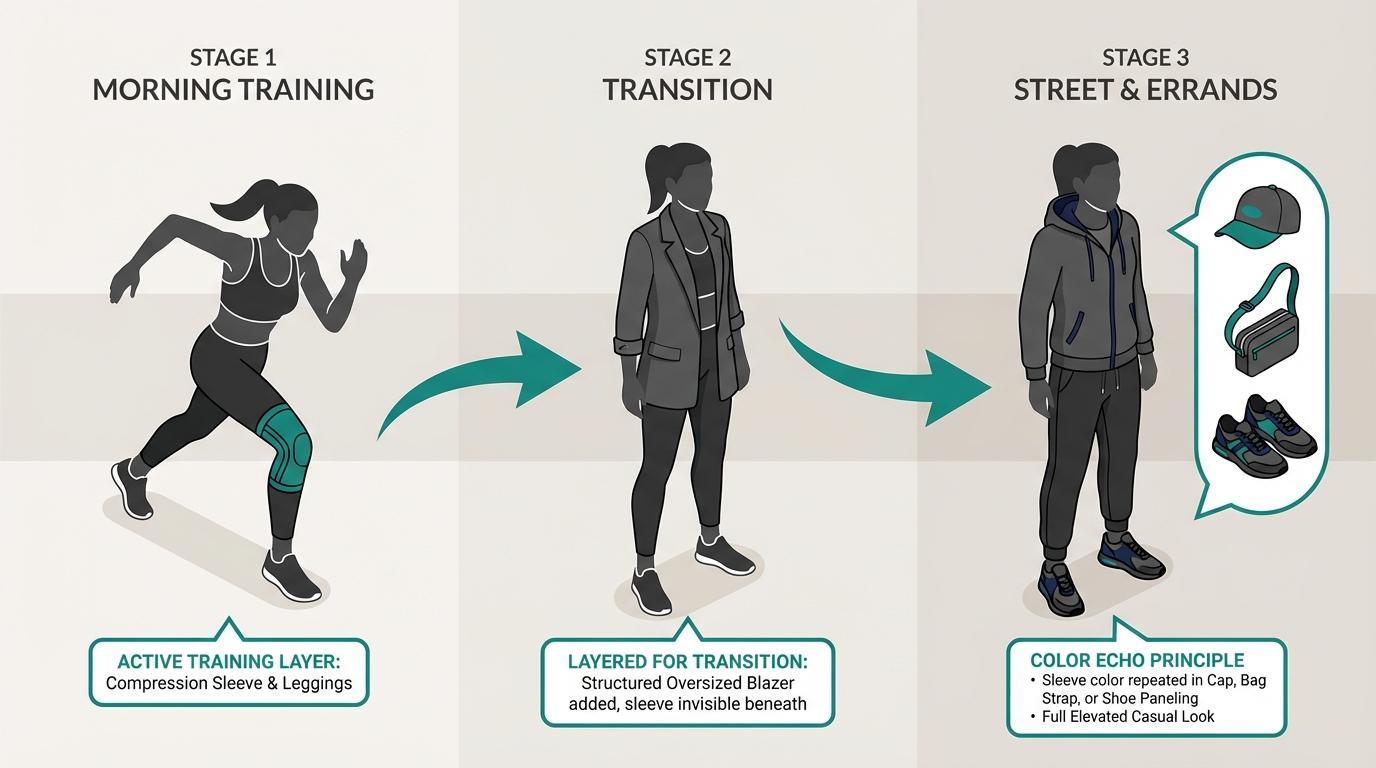
Modern active lives do not stop at the gym door. You go from lifting to running errands. From a morning run to a meeting. Your support gear needs to handle the entire day without requiring a bag change or a costume swap.
The athleisure trend in 2025 and 2026 is specifically about cutting the costume change out of your routine. A well-built athleisure wardrobe of versatile pieces means you stay put together and stylish from the first session to the last errand.
The Transition Outfit
Dark high-waisted leggings with built-in compression zones. Compression knee sleeve underneath, invisible at a glance. Cropped top under a structured oversized blazer. Sleek sneakers in neutral tones.
The sleeve line disappears into the leggings. The blazer reads as intentional dressing. You are chic and comfy and protected, all at once.
The Casual Elevation
This is the everyday go-to for anyone who wants to choose pieces that work harder. Tapered joggers over the sleeve. A zip-up hoodie as the outer layer. Casual, but elevated.
Layering is what makes this complete. When you stack pieces with intention, the compression gear underneath reads as one of several technical decisions rather than the only notable thing about the outfit.
Keep the look cohesive by repeating at least one color from your support gear elsewhere: the sleeve color echoed in a cap, bag strap, or shoe paneling. Black sleeve, black shoe detailing. Navy support, navy zip-up accent. These small repetitions create a stylish, pulled-together look where the compression gear feels like it belongs.
Looking Like an Athlete vs. Looking Injured: Reframing the Narrative
Here is the idea that changes everything: bare joints do not equal strength.
Walk into any serious training space and count the wrapped wrists, sleeved knees, and taped ankles. Women and men across every modern sport use compression layers and garments: a scoping review confirms they treat compression and joint support as standard activewear, not recovery gear. The brands they wear reflect that shift.
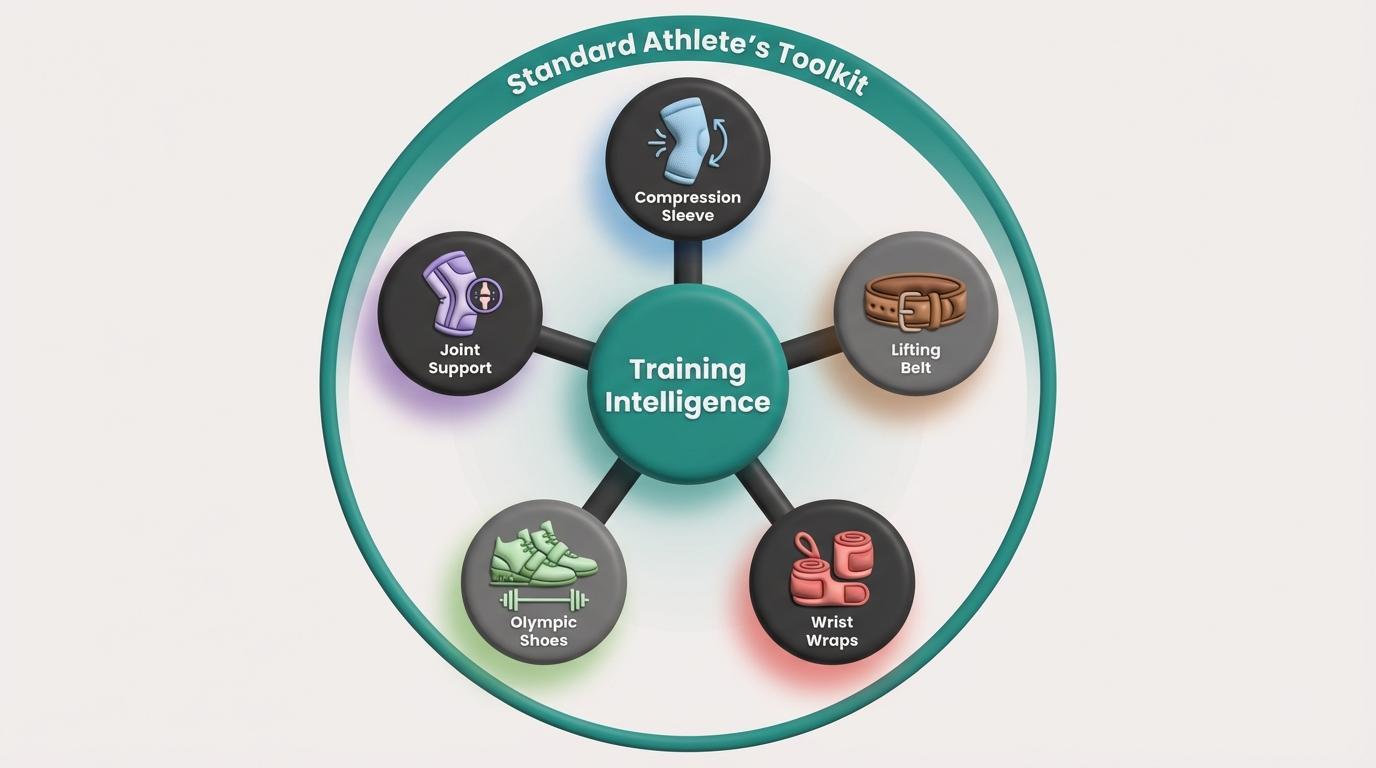
The key mental shift is this: reclassify support sleeves alongside lifting belts, wrist wraps, and Olympic shoes. These are all tools that serious, fashionable athletes use without apology. Wearing them is not a confession. It reflects training intelligence. You feel good because you are protecting your body, and you look the part because the gear finally does too.
The athleisure trend elevated this completely. Nobody needs to guess anymore whether you are wearing compression for style or for support. Modern athletic wear made that distinction irrelevant. The sleeve is sleek, the outfit is chic, the training is smart. All three at once.
The most fashionable thing you can do is still show up, session after session, because you protected your body when it mattered. Compression garments and exercise recovery research show that wearing the right gear consistently supports the smart decisions that keep athletes training long-term. That is not looking injured. That is looking like someone who plans to still be here in ten years.
Final Thoughts
The athleisure aesthetic changed what is possible. Support gear no longer has to look like a concession. It can be part of a stylish, intentional wardrobe that reflects how seriously you take your training.
Wearing the right gear, in the right colors, with the right layering choices, elevates the whole look. You feel good. You are protected. You look like the athlete you are, not the injury you are managing.
At Anaconda, we make support gear that earns its place in your outfit. Tested on real athletes, designed for real training. If you want to look and feel the part, we have you covered.
FAQs
Quick answers to common questions about wearing support gear without sacrificing style.
Will wearing visible joint support in the gym make people assume I’m seriously injured?
Not anymore. Most modern activewear includes sleeves that look stylish, comfy, and part of a normal outfit. The way you style it matters more; matching colors and layering helps you look more put together and less like you just came from rehab.
Is there a difference between medical-grade braces and athletic compression sleeves?
Yes, there is a clear difference. Medical braces are bulky and meant for recovery, while compression sleeves are designed for movement and activewear. If your goal is to stay fashionable and comfy while training, athletic sleeves are the better choice for everyday wear.
How many hours per day can I safely wear compression sleeves?
Most people can wear compression sleeves during training and for a single day without issues. If they feel too tight or uncomfortable, remove them and let your body rest. The goal is to stay supported while still feeling comfy and able to move freely.
What colors are safest if I’m worried about drawing attention to a brace or sleeve?
Neutral tones like black, grey, or even navy are the safest choice. These colors blend easily with most shoes and outfits, helping you create a more chic and modern look. Avoid bright or medical-looking tones for a cleaner, more fashionable finish.
Can I still look put together in athleisure if I need to wear support every day?
Yes, you can still look put together and even more stylish. Focus on layering, clean fits, and matching tones to make your outfit feel complete. The key idea is to choose pieces that reflect your personality, so your support gear feels like part of your look, not something separate.


