


If your shoulder is hurting right now, take a breath. We know that feeling. You move your arm once and immediately think, “Great. What did I do?”
The good news is you do not need a perfect diagnosis to start feeling relief within 10 to 20 minutes. Most shoulder flare-ups improve quickly when you match the right approach to the right type of pain.
There are just two mistakes to avoid. Do not keep retesting the painful movement to see if it still hurts. And do not force deep stretches into sharp pain, hoping it will “release.”
In this article, we are going to help you figure out what kind of shoulder pain you are dealing with and what to do about it today.
Key Takeaways
-
You can get quick relief from shoulder pain by matching your shoulder pain pattern to the right approach. Irritated pain responds best to calming strategies, while stiff pain often improves with gentle movement and heat. The right first step can immediately reduce stress on the shoulder joint and surrounding shoulder muscles.
-
Ice is typically more effective within the first 24 to 48 hours after a flare-up, which can make your shoulder pain feel sharp, warm, or swollen. Heat works better when the shoulder pain feels stiff, especially around the shoulder blade and upper back. Choosing correctly can help relieve shoulder pain rather than accidentally aggravate it.
-
A simple 10-minute routine combining positioning, temperature therapy, pendulum movement, and light activation of the shoulder blade can provide meaningful relief from shoulder pain. These steps gently unload the shoulder joint, reduce tension in the shoulder muscles, and help relieve shoulder pain without forcing the upper arm bone into painful positions.
-
Certain red flags mean you should not try to treat shoulder pain at home. Visible deformity, sudden weakness, numbness down the arm, or severe pain after trauma could indicate a more serious issue with the shoulder joint, including conditions like acute instability or even early signs of frozen shoulder complications that require medical evaluation.
-
Most mild shoulder pain from awkward sleep, poor desk posture, or overuse improves within a few days when you reduce irritation and move wisely. Even cases related to early frozen shoulder often respond better when you start appropriate shoulder pain relief early, before stiffness progresses.
Why Your Shoulder Hurts Right Now
You wake up and reach for your coffee, which feels heavier than it should. Or maybe you went hard in the gym, painted a ceiling all weekend, or played a long tennis match, and now your shoulder pain is making you pay for it.
Sometimes it is not even one big moment. It is hours at a desk, shoulders rounded forward, and that dull ache slowly building until the shoulder joint starts complaining.
Before you try to relieve shoulder pain randomly, it helps to understand the pattern.
Here is what usually matters for quick shoulder pain relief:
-
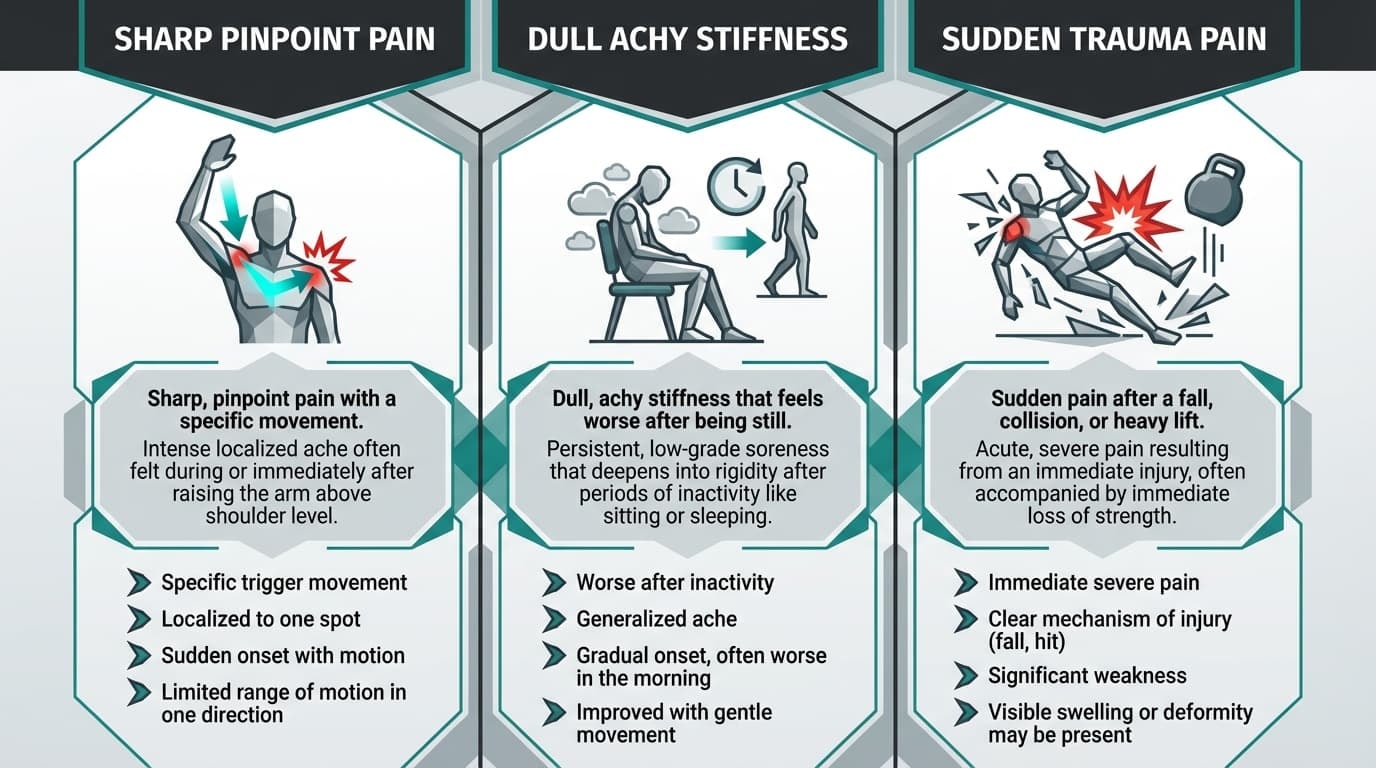
Sharp, pinpoint pain with a specific movement: If your shoulder pain spikes when lifting overhead, reaching behind your back, or rotating your arm outward, the shoulder joint may be irritated. This often involves sensitive tissues around the joint and the top of the upper arm bone. The goal here is to calm things down, not force range.
-
Dull, achy stiffness that feels worse after being still: If your shoulder pain is tighter in the morning or after sitting, and it eases once you move around, this often points to tight shoulder muscles and restricted movement around the shoulder blade. Heat and gentle motion usually help relieve shoulder pain in this pattern.
-
Sudden pain after a fall, collision, or heavy lift: If you felt a pop, shifting sensation, or immediate weakness in the shoulder joint, that is different. This type of shoulder pain needs protection first, not aggressive stretching. In some cases, especially if stiffness worsens over time, it can progress toward conditions like frozen shoulder, which require a more structured plan to treat shoulder pain safely.
Start Here in 30 Seconds
If you want quick shoulder pain relief, do this first before overthinking it.
-
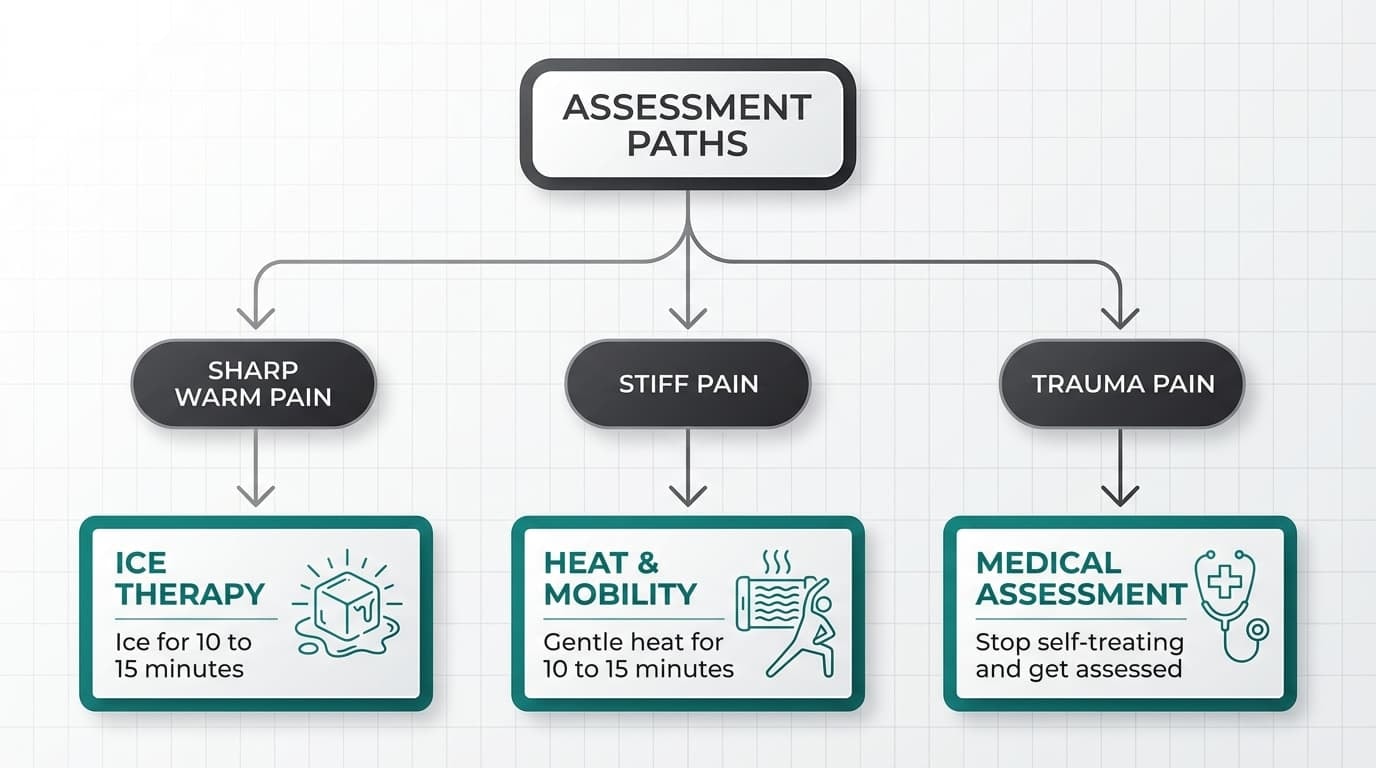
If your shoulder pain feels sharp, warm, or worse after activity. Use ice for 10 to 15 minutes. This helps calm irritation inside the shoulder joint and can reduce stress on sensitive shoulder muscles.
-
If your shoulder pain feels stiff and loosens once you start moving. Use gentle heat for 10 to 15 minutes, then add light mobility. Focus on slow movements around the shoulder blade and upper back to relieve shoulder pain without forcing the upper arm bone into painful positions.
-
If your shoulder pain started after a fall, collision, or heavy lift, and you feel weakness, numbness, or instability. Stop self-treating and get assessed. Trauma-related shoulder pain needs protection, not stretching.
One simple rule while you move: Keep discomfort at or below 3 out of 10. Mild tension is fine. Sharp or increasing shoulder pain is your signal to back off.
Quick Relief Decision Guide
Before you try to treat shoulder pain randomly, figure out which pattern you are in. That alone can make the difference between faster shoulder pain relief and dragging this out for weeks.
We use this same decision process when someone tweaks a shoulder mid-session.
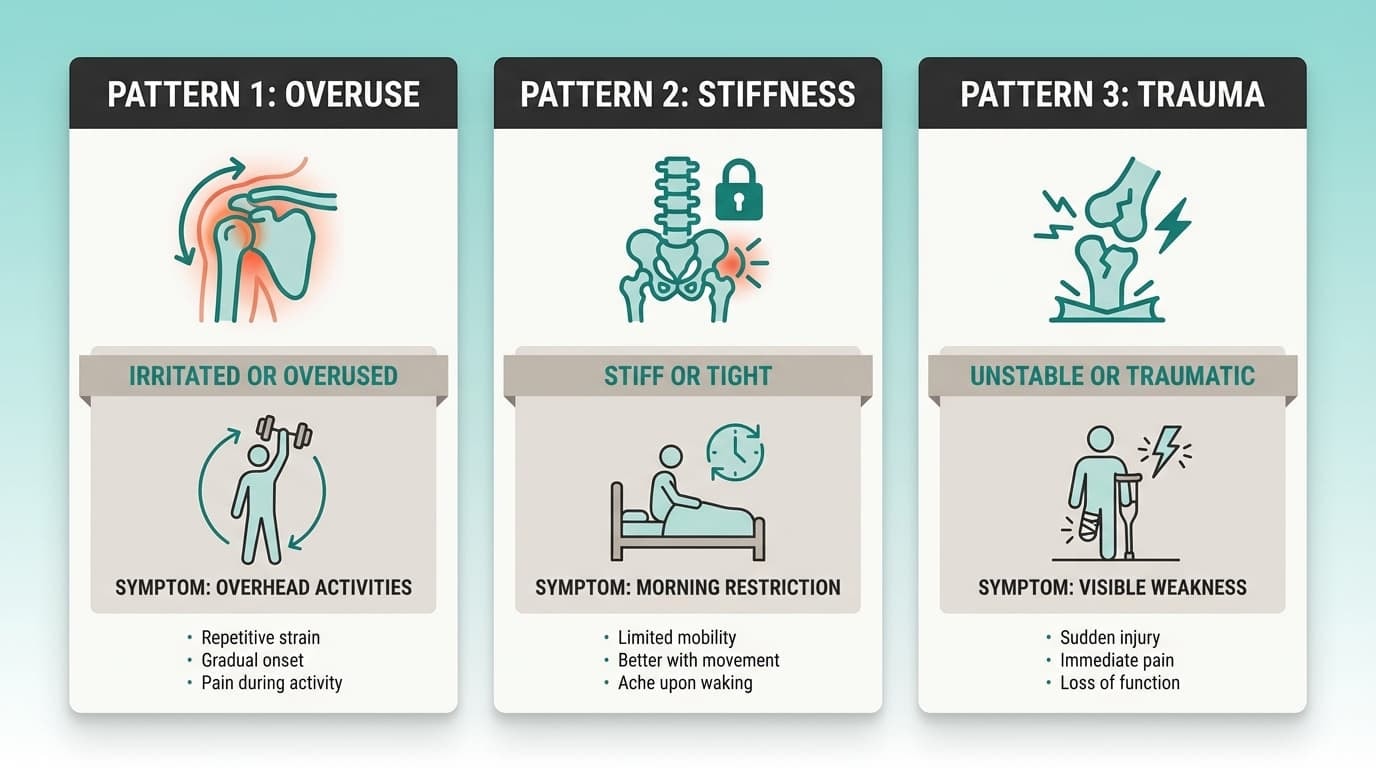
Pattern 1: Irritated or Overused
This is the most common training flare.
-
Shoulder pain appeared after overhead work, grappling, throwing, or pressing
-
You feel pain with a specific movement, especially lifting or rotating
-
The pain feels sharp or localized
-
Range of motion is possible, but uncomfortable
-
It may feel worse the more you use it
This often involves irritation around the rotator cuff, which stabilizes the shoulder joint and controls the upper arm bone during movement. When the rotator cuff is overloaded, the shoulder muscles tighten to protect the area, which can limit the range of motion and worsen shoulder pain.
Your priority here is to calm irritation and relieve pain before moving on to strengthening exercises. Gentle motion is fine. Forcing a full range of motion or pushing through intense shoulder pain is not.
The goal is short-term shoulder pain relief first, then gradual rebuilding toward optimal shoulder health once symptoms settle.
Pattern 2: Stiff or Tight
This pattern usually builds gradually.
-
Shoulder pain feels achy rather than sharp
-
It is worse in the morning or after sitting
-
It improves slightly once you start moving
-
You feel restricted rather than unstable
Here, the shoulder muscles around the shoulder blade and upper back are often tight. The shoulder joint itself may feel “stuck,” especially if you have been inactive or guarding the arm.
In some cases, especially if stiffness progresses and the range of motion steadily decreases, this pattern can resemble early frozen shoulder. Frozen shoulder develops gradually and leads to increasing restriction of motion, sometimes with severe pain at night.
The key here is controlled mobility. Use heat and gentle movement to restore range of motion. The goal is to relieve pain while maintaining joint movement so the shoulder joint does not stiffen further.
Pattern 3: Unstable or Traumatic
This one feels different.
-
Sudden shoulder pain after a fall, collision, or heavy lift
-
You feel pain immediately, along with weakness
-
You cannot move the arm normally
-
There isa visible change in shape or position
-
Severe pain limits even small movements
This may involve significant rotator cuff injury, joint instability, or other structural damage. If you feel intense shoulder pain, numbness, or severe pain that does not settle with rest, this is not something to self-manage aggressively.
In cases of trauma or rapidly worsening symptoms, your focus is on protection, not on range-of-motion work. Get assessed before attempting to treat shoulder pain at home.
Your 10-Minute Quick Relief Routine
If your shoulder is bothering you right now, we want this to feel manageable. Not overwhelming. Not complicated. Just a clear plan you can follow today for real pain relief.
This is the exact sequence we run through when someone on our team tweaks a shoulder during training. We see this often. A hard roll, an awkward post, a sudden pull. We stop, assess the causes of shoulder pain at that moment, and reset before things spiral out of control.
We also work closely with athletes who regularly check in with a physical therapist when something feels off. This routine is built around what consistently helps ease pain early without creating future pain.
Let’s walk through it step by step.
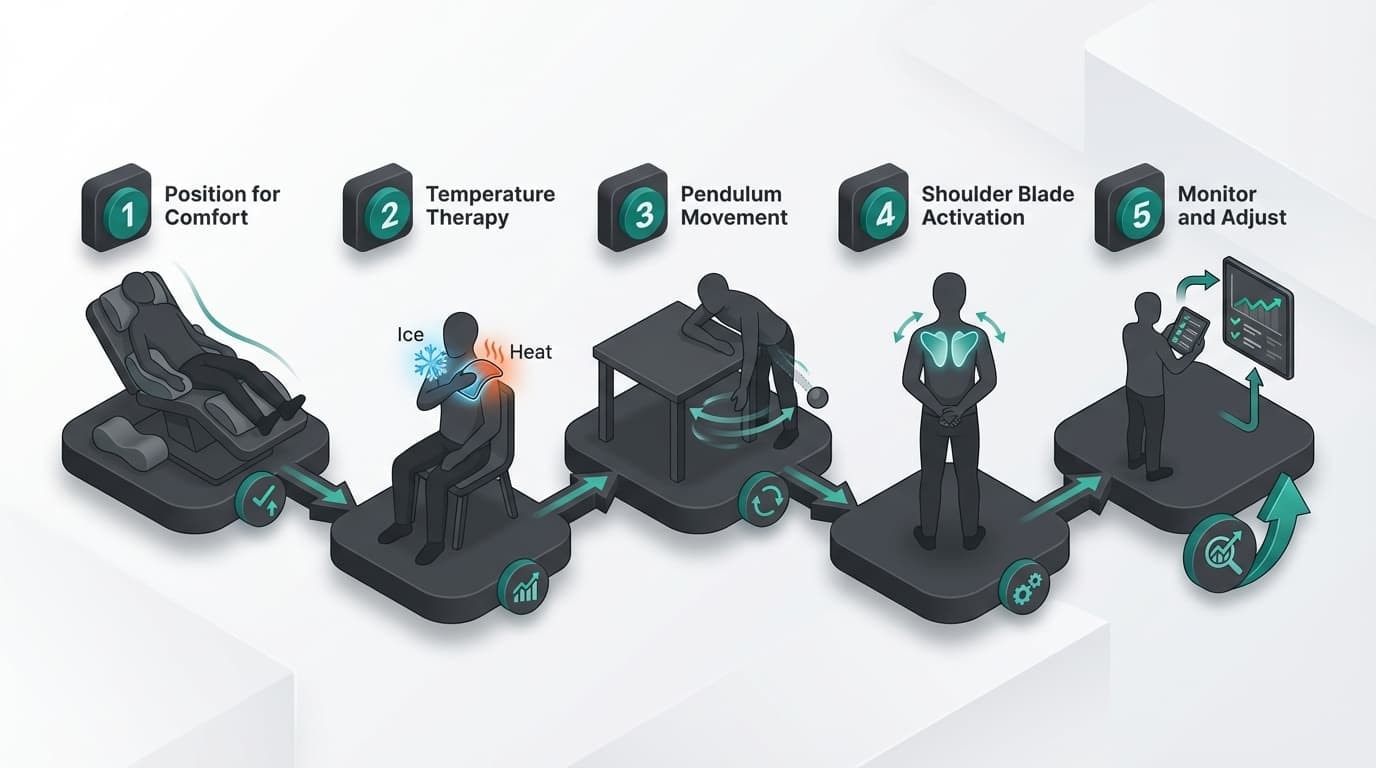
Step 1: Position for Comfort (1–2 minutes)
Before you move, you need to calm the system.
Sit in a slightly reclined position and support your arm on pillows or the arm of a couch. The goal is to take pressure off the shoulder joint and allow the shoulder muscles to relax.
When the shoulder is irritated, the body instinctively guards. That tension increases discomfort and reduces the range of motion. Supporting the arm reduces load on the upper arm bone and can immediately relieve pain and other barriers to relief.
If you experience pain even while sitting still, adjust the position until discomfort drops to about a 2 or 3 out of 10. You should not feel severe pain just resting.
If you cannot find a position that reduces discomfort, or if severe pain follows a fall or collision, that could indicate a severe injury, and you should seek medical attention.
Step 2: Temperature Therapy (10–15 minutes)
Now choose your tool carefully.
If the shoulder feels warm, irritated, or flared up after activity, apply a cold pack wrapped in a thin cloth for 10 to 15 minutes. A cold pack helps calm inflammation inside the shoulder joint and can provide noticeable pain relief in the first few hours.
If the shoulder feels stiff, tight, or restricted after being still, use gentle heat instead. A heating pad or warm compress improves circulation and prepares tissues for movement.
Research continues to support targeted anti-inflammatory strategies during the acute phase. A randomized controlled trial published in 2023 showed measurable short-term pain relief benefits in post-arthroscopic shoulder patients using anti-inflammatory medication protocols. That does not mean you need nonsteroidal anti-inflammatory drugs automatically, but it reinforces that calming inflammation early supports pain relief.
Use temperature therapy to ease pain, not eliminate it entirely.
Step 3: Pendulum Movement (1–2 minutes)
This is one of the safest early shoulder exercises.
Lean forward with your unaffected hand supported on a table or chair. Let the painful arm hang completely relaxed. Using your body, create small circles with the hanging arm.
Do not actively lift. Do not contract hard. Let gravity assist.
This protects irritated rotator cuff tissue and gently restores range of motion without forcing the shoulder joint.
If you experience pain that increases or sharpens, reduce the circle size. Movement should feel controlled, not forced.
This step is especially important for people worried about frozen shoulder, also known as adhesive capsulitis. Adhesive capsulitis involves progressive stiffness and restricted range of motion. Early gentle movement can help treat shoulder pain and reduce the risk of worsening restriction.
We have seen athletes ignore early stiffness, only to deal with frozen shoulder months later. Early controlled movement matters.
Step 4: Shoulder Blade Activation (1–2 minutes)
Now we lightly engage the shoulder blade.
Sit upright and gently squeeze your shoulder blades together for 5 seconds. Release. Repeat 8 to 10 times.
Add slow shoulder rolls forward and backward. Keep everything controlled.
These are not strengthening exercises yet. They are activation drills designed to re-engage stabilizing shoulder muscles without overloading the rotator cuff.
A 2024 systematic review examining exercise therapy for rotator cuff–related shoulder pain found that structured movement programs improve function even when immediate pain relief is modest. Consistent, controlled movement builds optimal shoulder health over time.
We focus on activation first. Strengthening exercises are done later, once symptoms have settled. This is how you prevent future pain and injuries, rather than repeatedly chasing pain relief.
Step 5: Monitor and Adjust
Repeat this sequence two to three times per day for 48 to 72 hours.
You are looking for small wins:
-
You experience pain less frequently
-
Range of motion improves slightly
-
Movements feel less guarded
-
Daily activities are easier
If persistent pain persists beyond several days or stiffness increases in a manner resembling adhesive capsulitis, consult a physical therapist. Early intervention prevents long-term complications.
The recent 2025 multisociety guidelines on corticosteroid injections confirm that while injections may provide short-term pain relief in conditions like frozen shoulder, they are not first-line for mild flare-ups. Guidelines recommend spacing injections at least 2 to 3 weeks apart, sometimes up to 3 months.
In other words, conservative care works. Movement works. Patience works.
We see this every week with the athletes we work with. The goal is not zero discomfort instantly. The goal is smart pain relief today so you can build back toward optimal shoulder health without creating future pain.
Take 10 minutes. Calm it down. Move gently. Reassess.
That is how you move forward safely.
If you still need to move through work or light training without the shoulder feeling unstable, external support can help.
We designed the Anaconda Shoulder Brace specifically for martial artists and combat athletes. It has been personally tested on the mats, during live rounds, and in real training environments. If it does not hold up under pressure, it does not make it into our lineup.
Thousands of athletes train in our gear because it protects without getting in the way.
The brace provides:
-
3D compression to stabilize the shoulder joint
-
Gel padding to absorb pressure and minor impact
-
A secure strap system that stays in place
-
Support without restricting mobility
It is built to give the shoulder structure while it settles down, without locking up your range or forcing you to move unnaturally.
What to Avoid in the First 24–72 Hours
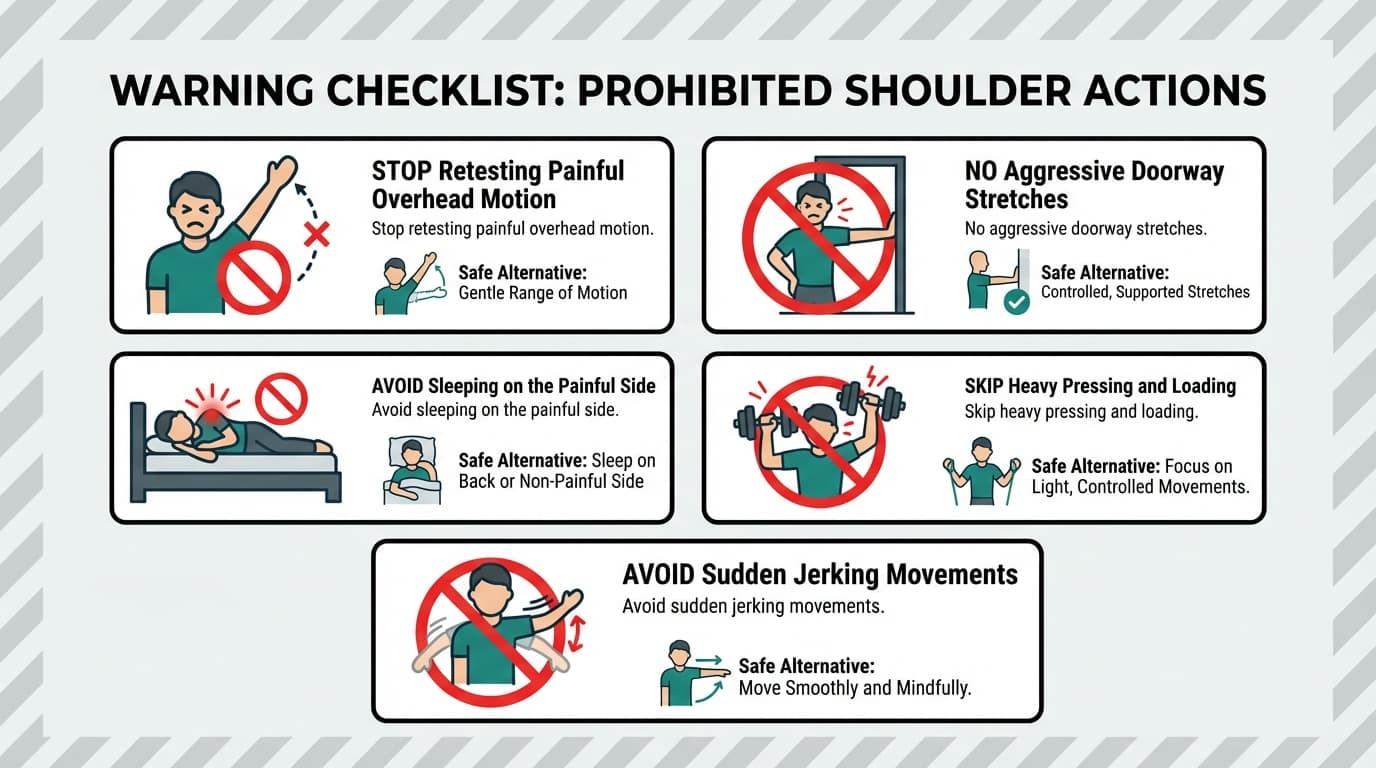
The first few days matter. What you avoid can be just as important as what you do.
We’ve seen athletes stall their recovery by pushing too early.
-
Stop retesting painful overhead motion: Lifting your arm over and over “to see if it still hurts” keeps irritating the shoulder joint. Test it less. Let it calm down.
-
No aggressive doorway stretches: If a stretch causes sharp or increasing pain, back off. Forcing the upper arm bone into end range too early can aggravate irritated rotator cuff tissue.
-
Avoid sleeping on the painful side: Lying directly on the sore shoulder compresses sensitive structures and can trigger night pain. Sleep on the opposite side with a pillow supporting the affected arm.
-
Skip heavy pressing and loading: Push-ups, bench press, overhead press, and dips can overload healing tissue in the early phase. Give the shoulder muscles time to settle.
-
Avoid sudden jerking movements: Throwing, explosive pulling, or sudden yanks place unpredictable stress on the shoulder joint. Control matters right now.
The goal in this window is protection and controlled movement, not proving you can push through discomfort.
Medications, Gels, and Injections
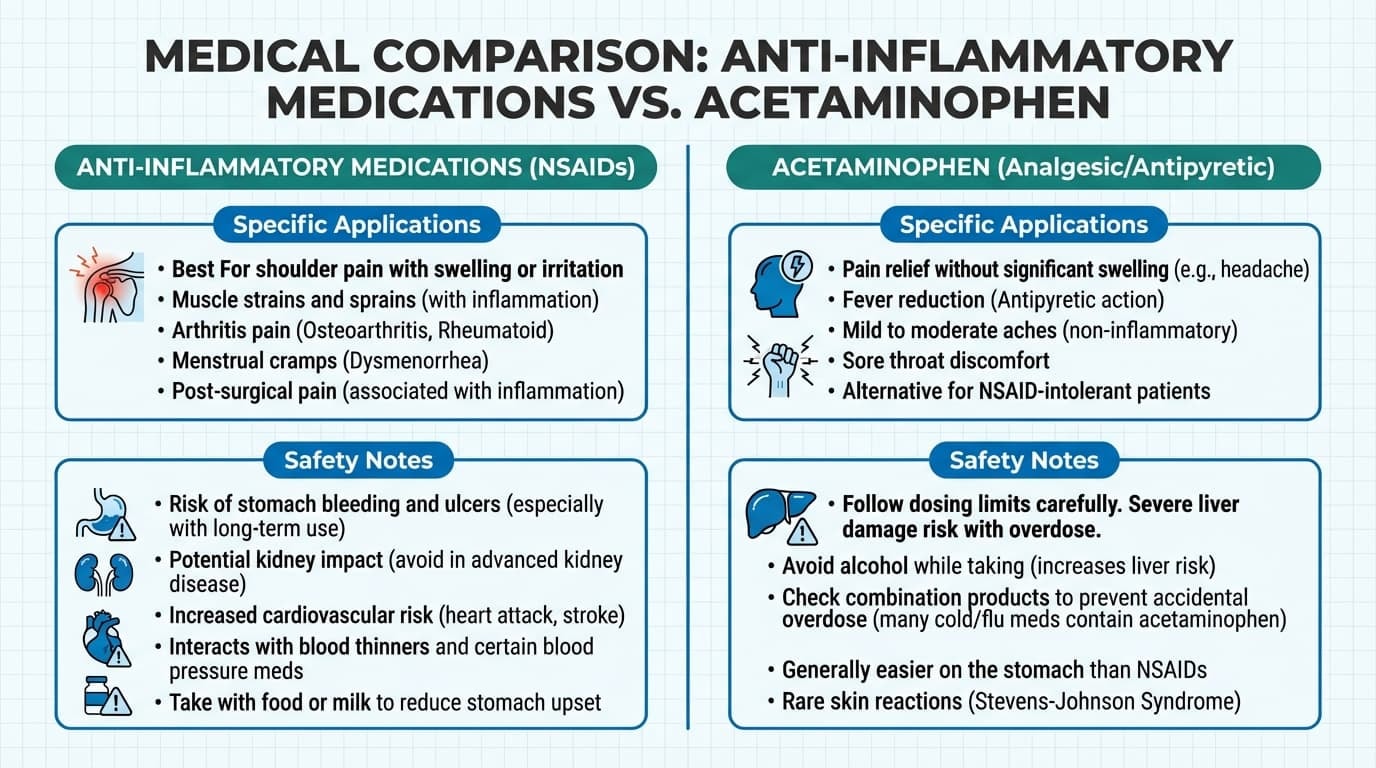
Medication can help relieve shoulder pain, but it should not replace smart movement and load management.
We believe support gear and structured rehab should come before injections in most mild cases.
Over-the-Counter Options
Short-term medication can help manage shoulder pain while you focus on movement and recovery. Below is a quick comparison to help you choose the right option safely.
Research after arthroscopic shoulder surgery shows IV ibuprofen provided slightly better pain scores at 24 hours compared to paracetamol, with lower opioid use in one randomized trial of 64 patients. That does not mean everyone needs anti-inflammatory medication, but it supports short-term use when appropriate.
Always consult your healthcare provider before using medication, especially if you have kidney, liver, or stomach conditions.
Medication can reduce inflammation and pain, but it does not correct the mechanics of the complex joint or address the surrounding muscles that control the glenohumeral joint.
Topical Treatments
Topical gels containing anti-inflammatory ingredients or menthol can help reduce inflammation locally without systemic exposure.
Apply gentle pressure over the painful area, especially around the shoulder joint or the acromioclavicular joint, if that region is tender.
Topicals can be useful if you want pain relief without taking pills.
They work well alongside ice pack application, heat using a heating pad or electric heating pad, and light mobility drills.
If shoulder pain wakes you when you fall asleep or prevents you from lying on your left or right side comfortably, topical and temperature strategies can help you settle the joint capsule before rest.
Injections: When They Make Sense
Corticosteroid injections are sometimes used for persistent shoulder pain, especially in cases of rotator cuff irritation, fluid-filled sac inflammation, or frozen shoulder (also called adhesive capsulitis).
A 2024 meta-analysis comparing corticosteroid and hyaluronic acid injections for adhesive capsulitis showed corticosteroids were more effective at reducing pain and improving function at 2 to 4 weeks, but there was no meaningful difference at 6 or 12 weeks.
The 2025 guidelines recommend spacing repeat injections at least 2 to 3 weeks apart, sometimes up to 3 months.
Injections can reduce inflammation inside the joint capsule, but they are not the first step for mild shoulder problems. Overuse can increase the risk of further complications.
If you are experiencing severe pain, progressive loss of range of motion, or shoulder pain that does not improve despite activity modification, consult a healthcare provider for a proper physical exam. They may recommend imaging tests to evaluate structural issues before forming a treatment plan.
Seek medical attention urgently if shoulder pain follows trauma or is accompanied by weakness or neurological symptoms.
When Shoulder Pain Is an Emergency

Most shoulder pain can be managed safely at home in the early stages. However, certain symptoms require immediate medical evaluation.
Trauma
Seek urgent care if shoulder pain follows:
-
A fall directly onto the shoulder or an outstretched arm
-
A collision during a sport
-
A heavy lift followed by a pop and immediate weakness
-
Visible deformity compared to the other side
-
Complete inability to lift the arm
These signs may indicate dislocation, fracture, or significant structural injury.
Neurological Symptoms
Get medical help immediately if shoulder pain is accompanied by:
-
Numbness or tingling running down the arm
-
Sudden loss of strength
-
A sensation that the arm is not responding normally
These symptoms may suggest nerve involvement.
Infection
Seek urgent evaluation if you have:
-
Fever or chills with shoulder pain
-
Redness and warmth around the joint
-
Rapidly worsening pain despite rest
These can signal infection and require prompt treatment.
Cardiac Symptoms
Call emergency services immediately if left shoulder pain occurs with:
-
Chest pressure or tightness
-
Shortness of breath
-
Jaw pain
-
Sweating or nausea
These may be signs of a heart attack.
Book an Appointment If
Not all shoulder pain is an emergency, but some patterns require proper evaluation.
Schedule an appointment with a healthcare provider if:
-
Shoulder pain lasts longer than 10 to 14 days despite appropriate care
-
Pain keeps returning with the same movements or workouts
-
Night pain repeatedly wakes you
-
You cannot lift your arm overhead without limitation
-
A severe injury is not improving as expected
A clinician will perform a physical exam and may recommend imaging tests to clarify the diagnosis and guide a treatment plan.
Build Long-Term Shoulder Resilience
Quick pain relief is step one. Staying consistent without recurring flare-ups is the real goal.
Over 300,000 athletes train in Anaconda gear because staying consistent matters more than pushing through pain.
Here is how you protect your shoulder long-term.
1. Optimize Your Workstation
Small setup changes reduce daily strain.
-
Keep your monitor at eye level
-
Keep your elbows close to your body
-
Support your forearms
-
Relax your shoulders instead of letting them creep upward
Take short movement breaks every 45 to 60 minutes. Even simple resets prevent stiffness from building into shoulder pain.
2. Build Strength Gradually
Once pain settles, introduce strengthening exercises.
Focus on:
-
Rotator cuff control
-
Shoulder blade stability
-
Controlled pressing and pulling
Start with light weights and strict form. Quality matters more than load. Strengthening the surrounding muscles improves joint stability and reduces future pain risk.
3. Progress Smartly
Avoid jumping from zero to full intensity.
Increase training volume gradually. Respect recovery. Warm up before overhead work. Keep movements within a comfortable range before expanding them.
Smart progression protects the shoulder joint from overload and helps prevent future injuries.
4. Keep a Simple Trigger Log
If shoulder pain returns, look for patterns.
Track:
-
Workouts
-
Sleep position
-
Desk posture
-
Repetitive movements
Over time, you will identify what triggers flare-ups. Adjusting early helps prevent future pain instead of reacting to it.
Resilience is not about avoiding training. It is about training intelligently so your shoulders hold up over time.
Conclusion
Most shoulder pain improves when you act early and stay controlled. Calm irritation, protect the shoulder joint, and avoid forcing movements past shoulder height.
Skip aggressive stretches like hanging off a door frame or dropping into a deep child’s pose if they trigger pain. If symptoms persist, a proper physical exam and, when needed, imaging tests can clarify whether the issue involves the rotator cuff, fluid-filled sacs, or even the acromioclavicular joint. Severe pain after trauma warrants an emergency room visit.
Anti-inflammatory strategies can help in the short term, but lasting progress comes from a structured treatment plan and smart progression. If raising your left hand or lying on your left side remains painful after several days, get evaluated.
Protect your training so small flare-ups do not become bigger setbacks.
FAQs
Still unsure about your shoulder? Here are quick, straight answers to the most common questions.
How do I know if I should use ice or heat for shoulder pain today?
You should use ice if your shoulder pain started recently after overuse or a minor strain, especially if it feels warm or swollen. You should use heat if the shoulder feels stiff and tight, and it improves once you start moving. If you are unsure, try ice for 10 minutes first and assess the response. If stiffness remains without relief and there was no recent injury, switch to heat and gentle mobility.
Can I sleep on my shoulder if it hurts?
You should avoid sleeping directly on an irritated shoulder. Sleeping on it compresses sensitive tissues and often increases night pain. Instead, lie on the opposite side with a pillow supporting the sore arm, or sleep on your back with the arm propped up. The goal is to keep the shoulder in a neutral, relaxed position overnight.
Which single stretch is safest to try first for quick shoulder relief?
The safest stretch for quick shoulder relief is the pendulum exercise. Lean forward, support yourself with your non-painful arm, and let the sore arm hang while making small, pain-free circles. This movement uses gravity to reduce joint pressure without forcing overhead range. Avoid aggressive doorway stretches or deep child’s pose positions if they trigger pain.
How long should I wait before lifting weights again after shoulder pain starts?
You should wait until daily movements are mostly pain-free before returning to lifting. For mild overuse pain, this usually means resting from heavy or overhead lifting for several days. Restart with light weight, higher reps, and controlled range. If pain returns quickly or lasts more than 2 to 3 weeks, consult a physical therapist for guidance.
Are steroid injections safe for quick shoulder pain relief?
Steroid injections can provide short-term relief of shoulder pain for certain diagnosed conditions. They are typically used when conservative care has not worked. Guidelines recommend spacing injections by 2 to 3 weeks to avoid potential side effects. Injections are usually not the first step for a mild or recent shoulder flare.


