


Preventative knee brace training is the proactive use of a prophylactic knee brace during healthy training to reduce injury risk before damage occurs.
Combined with structured neuromuscular work, this approach cuts lower-extremity knee injury risk by 25%, based on a 2025 meta-analysis of 28,176 athletes.
The knee does not warn you before it goes — one awkward landing or one heavy squat with tired legs erases months of training. Serious athletes are finally addressing that pattern before the injury, not after.
This guide covers the research behind preventive bracing from Anaconda Performance, the three brace categories that actually matter, sport-specific guidance for CrossFit, running, and lifting, and how to integrate bracing with strength training so the knee holds up long-term.
Key Takeaways
-
Training-based prevention programs reduce knee injury risk by up to 25% among athletes, according to a 2025 meta-analysis of 28,176 participants.
-
Prophylactic knee bracing works on two levels: mechanical (limiting dangerous movement patterns) and neurological (improving the speed at which your body detects joint position).
-
The right brace depends on your sport and injury history. A hinged brace for CrossFit and contact sports, a compression sleeve or patellar stabilizer for runners, a sleeve for lifters.
-
Bracing and strength training are not competing strategies. They are a system. Bracing supports the joint while neuromuscular capacity is still developing.
-
A brace worn without supporting strength work creates dependency. That is the one mistake that makes bad knees worse.
What Is Preventative Knee Brace Training?
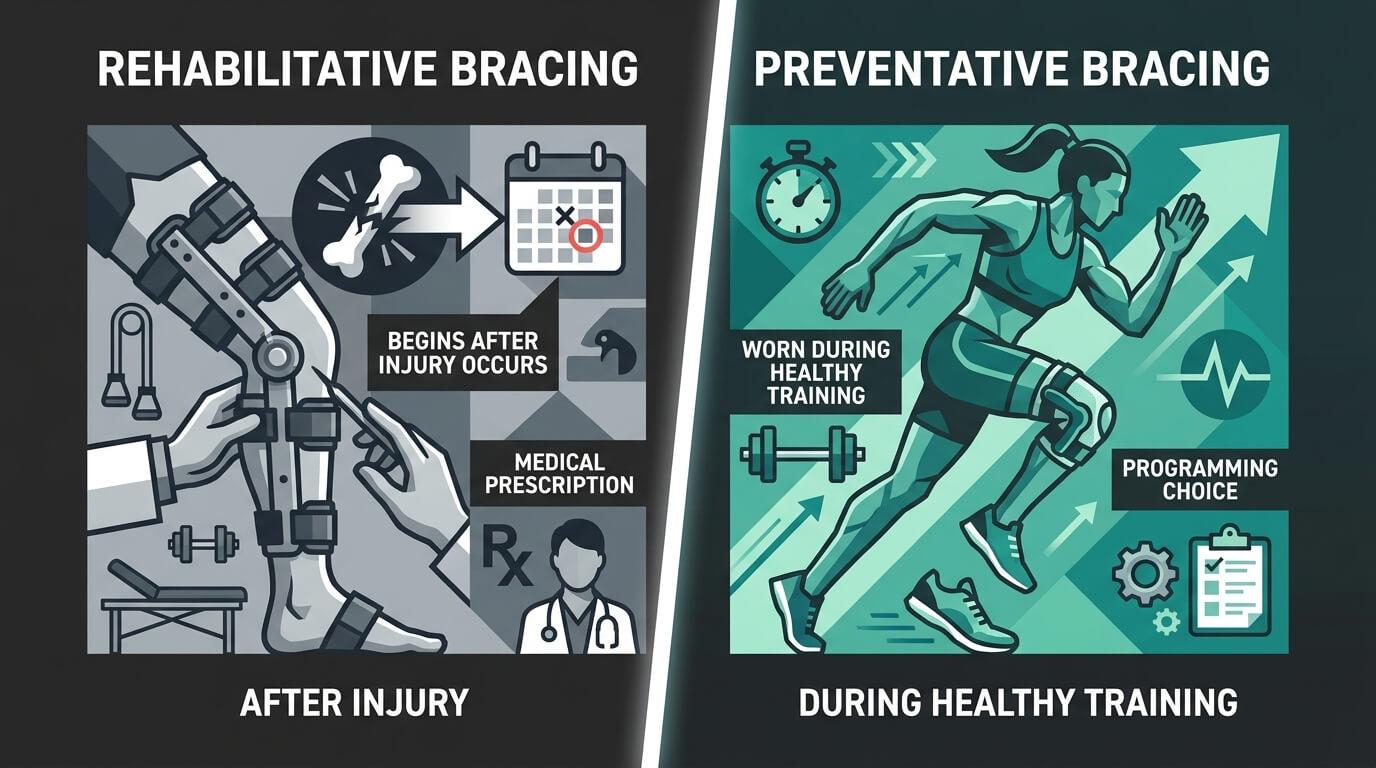
Preventive knee brace training is the proactive use of a prophylactic knee brace during exercise to reduce injury risk before anything goes wrong.
Preventive bracing differs from rehabilitative bracing, which begins only after an injury has occurred. A prophylactic brace is worn during healthy training to reinforce neuromuscular control and knee joint stability under load — meaning the decision to wear one is a programming choice, not a medical prescription.
A 2025 meta-analysis of 19 randomized controlled trials involving 28,176 athletes found that training intervention programs reduced the risk of lower-extremity knee injuries by 25%. That number reframes bracing from a reactive tool into a legitimate performance strategy.
Bracing works best as a layer on top of structured training, not a standalone fix. A prophylactic brace worn during squats, sprints, or lateral drills adds sensory feedback and mechanical support that complements what your muscles are already doing. Strip away the training, and the brace loses most of its value.
How Common Are Knee Injuries in Athletes?
The knee is not just commonly injured. It is consistently the joint that costs athletes the most time.
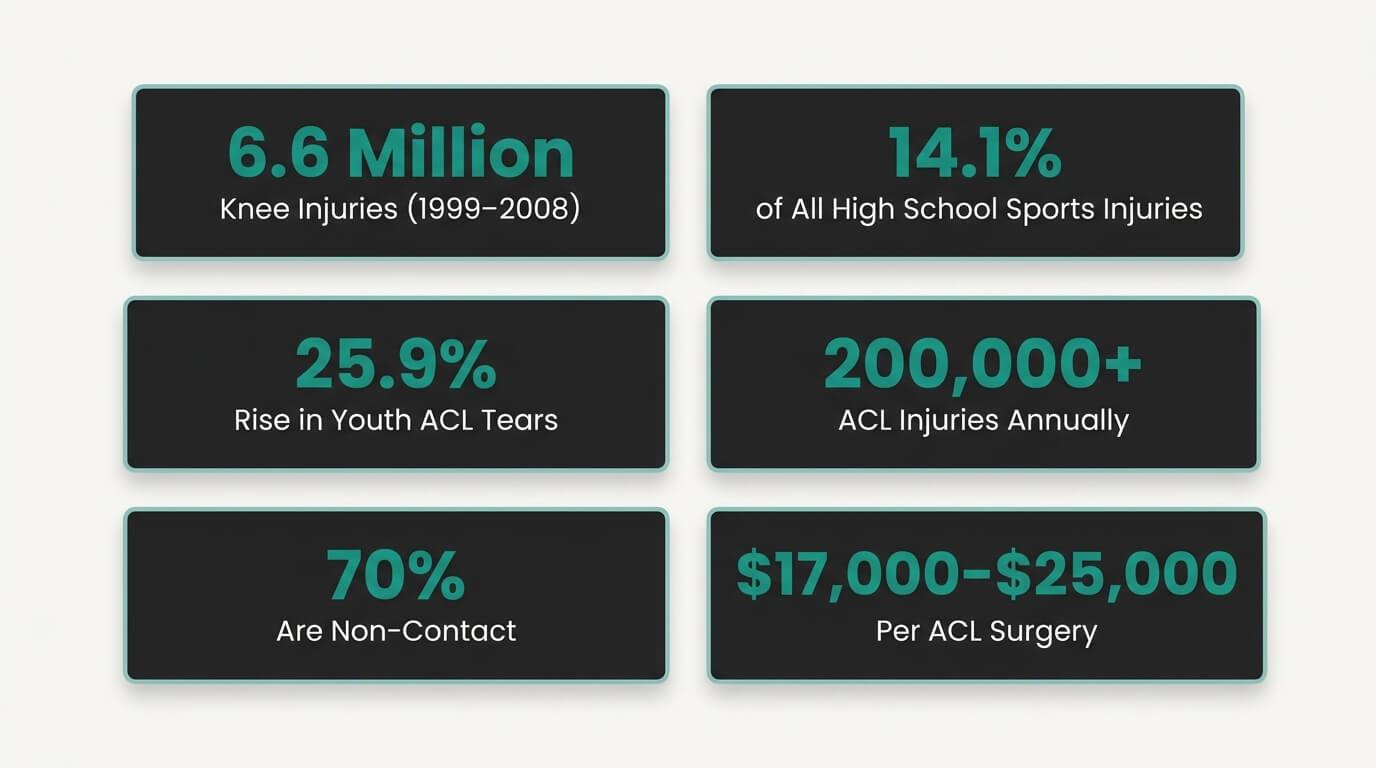
US emergency departments treated over 6.6 million knee injuries between 1999 and 2008, with athletes aged 15 to 24 hit hardest. The knee accounts for 14.1% of all high school sports injuries per NATA injury surveillance data, and ACL tears among youth athletes have climbed 25.9% over the past 15 years based on longitudinal pediatric orthopedic research.
More than 200,000 ACL injuries occur in the US annually, per the American Academy of Orthopaedic Surgeons. Roughly 70% are non-contact — meaning technique, fatigue, and joint mechanics, not collisions, drive most of the damage.
A single ACL surgery and rehabilitation runs $17,000 to $25,000 per athlete according to published cost-of-care analysis in the Journal of Bone and Joint Surgery — before counting lost training months, deconditioning, and re-injury risk on return.
How Does a Prophylactic Knee Brace Actually Work?
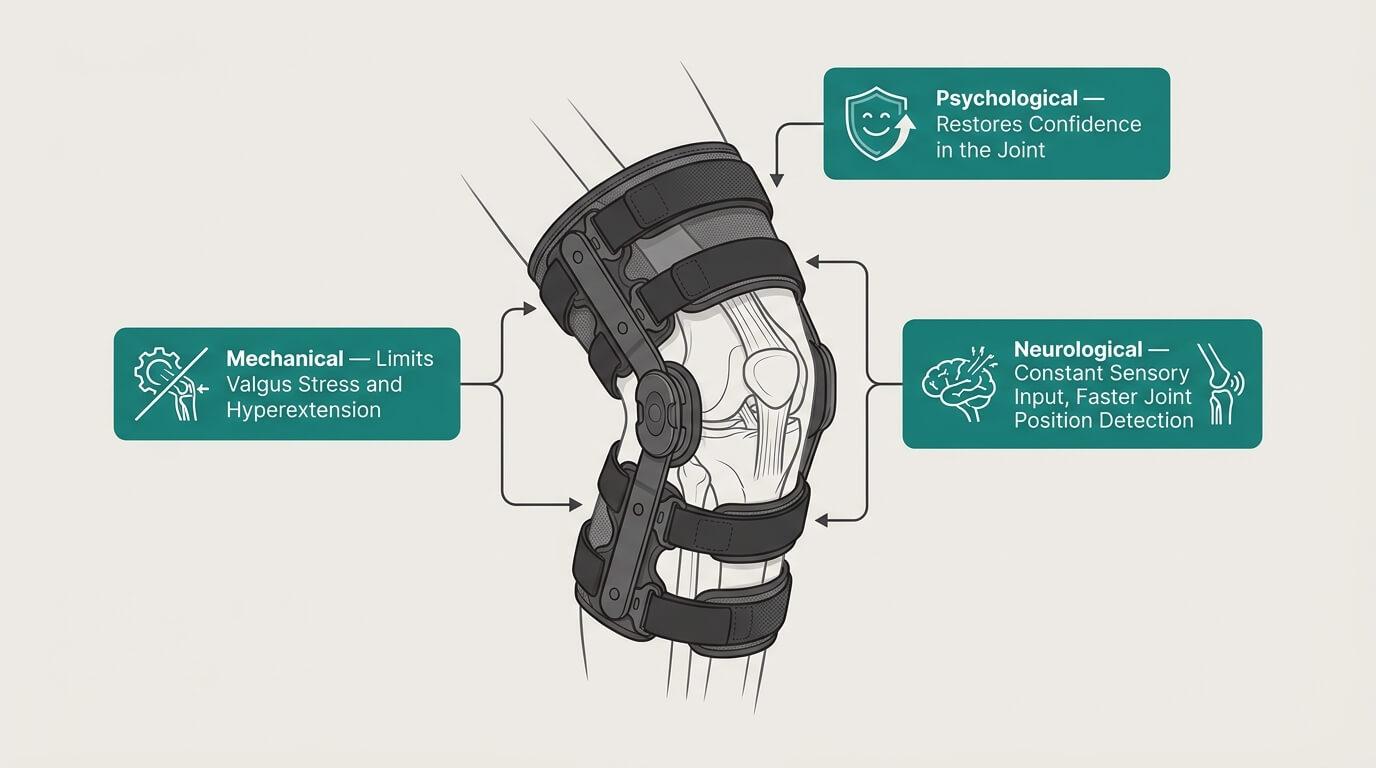
Bracing works on two levels: Mechanical and neurological.
At the mechanical level, a well-designed brace limits the movement patterns most likely to cause damage, specifically valgus stress and hyperextension, which are the primary forces behind ACL and MCL injuries in high-load movement.
At the neurological level, the compression and contact create constant sensory input, sharpening how the joint is read in real time.
That feedback loop improves neuromuscular control by helping the body detect joint position faster, which triggers quicker reactive muscle activation during landing mechanics and lateral cuts.
There is also a psychological dimension that does not get enough credit. Athletes who have experienced a near-miss buckle often develop hesitation in movement. Bracing restores confidence in the joint, which directly affects how freely and aggressively they train.
The evidence on prophylactic bracing is not unanimous.
A frequently cited West Point cadet study documented a 56-58% reduction in MCL injuries among braced football players, while other systematic reviews of prophylactic knee bracing in American football (2012) found no statistically significant effect, and some noted altered gait patterns under heavy load.
The takeaway: bracing has real support in contact-sport contexts but should not be treated as universally protective.
What Are the Different Types of Knee Braces?
Not all knee braces serve the same purpose. Choosing the wrong type for your situation can undermine the very protection you are after.
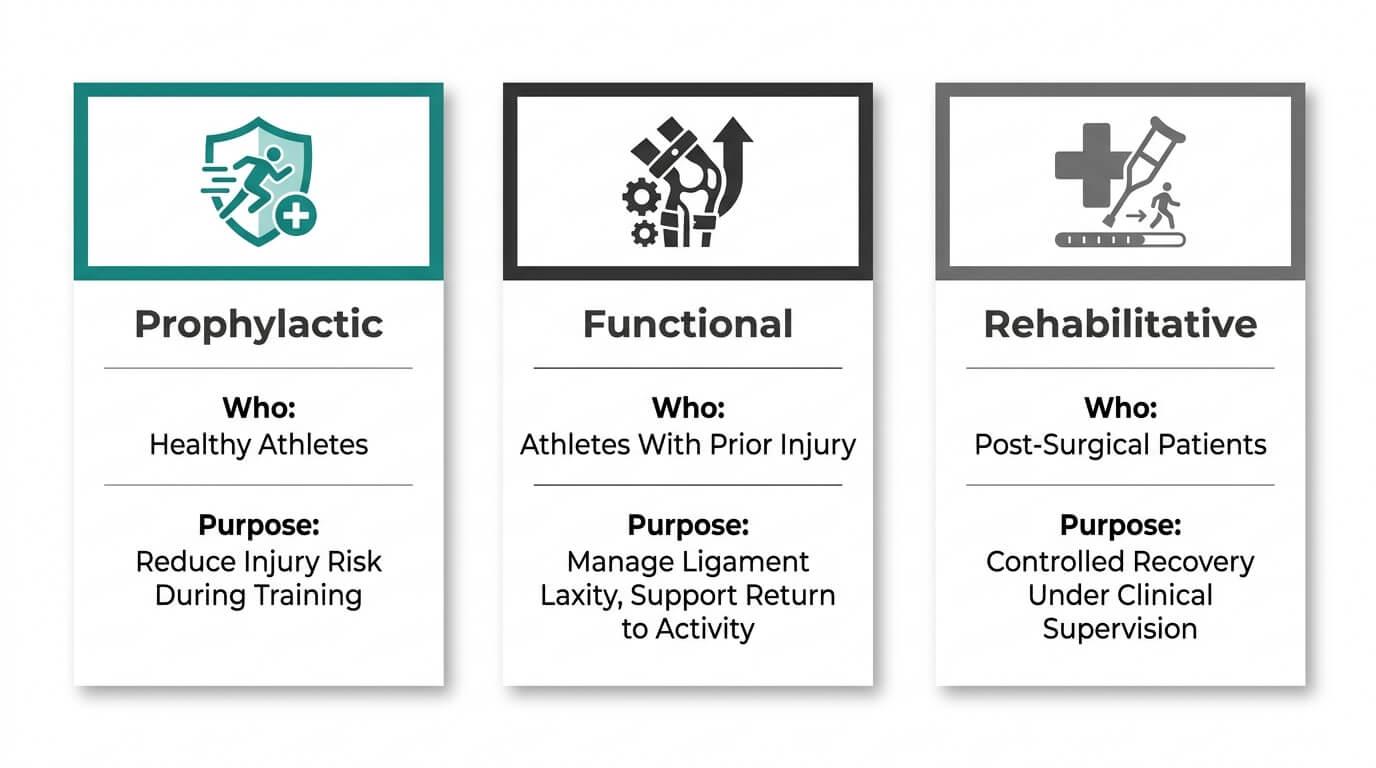
The clinical breakdown of prophylactic, functional, and rehabilitative braces is straightforward once you know which category your situation falls into.
-
Prophylactic: Worn by healthy athletes to reduce injury risk during training or competition. Designed to limit valgus stress and constrain hyperextension.
-
Functional: Supports a joint that has already been injured. Compensates for ligament laxity and helps athletes return to activity with more stability. Not a preventive tool.
-
Rehabilitative: Used post-surgery under clinical supervision.
Here is how those three categories map to use cases:
When Should Athletes Wear a Preventive Knee Brace?
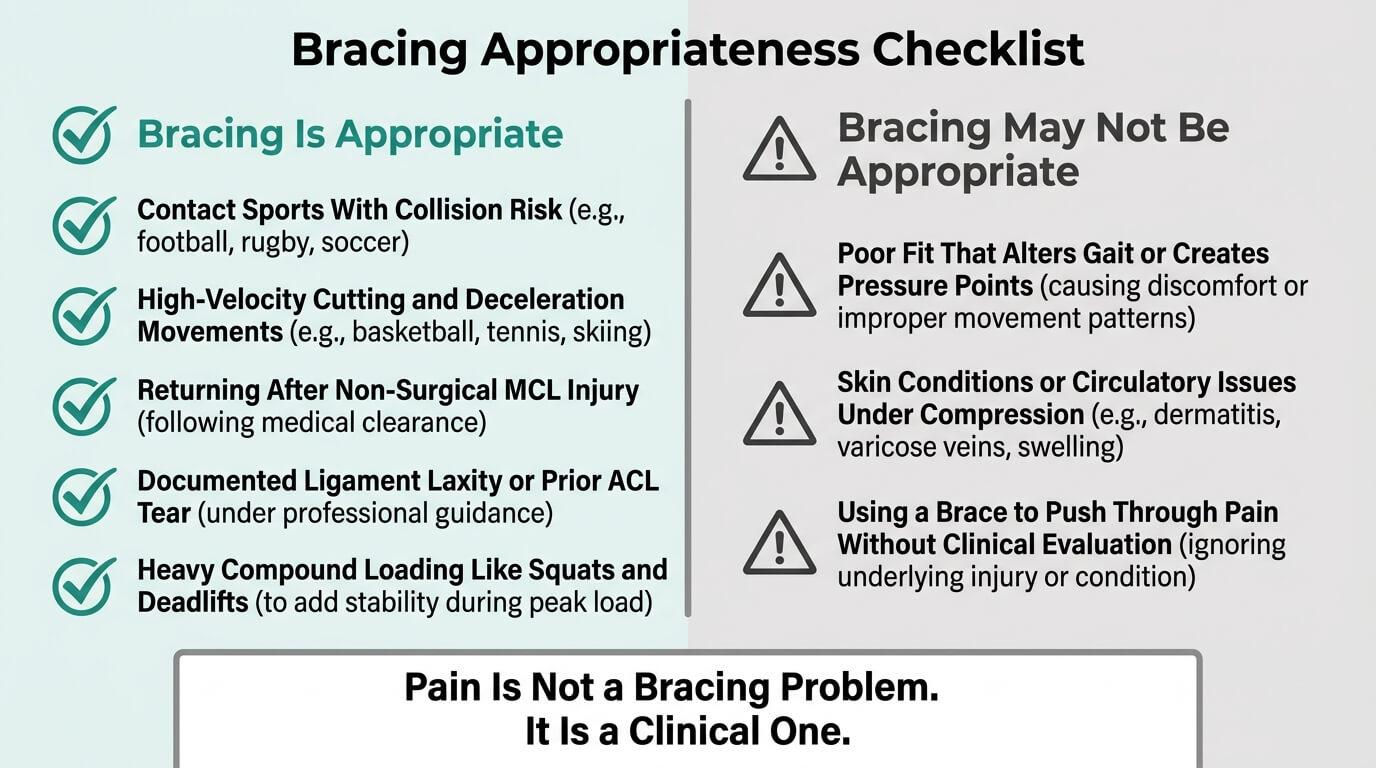
Preventive bracing has the clearest rationale in high-contact, high-velocity environments.
Athletes competing in contact sports, where lateral collisions and awkward landings are routine, consistently show up in the research as the group most likely to benefit. The same logic applies to athletes returning from non-surgical MCL injuries or with documented ligament laxity.
Preventive bracing is most appropriate in these situations:
-
Contact sports with collision or lateral impact risk
-
High-velocity cutting and deceleration movements
-
Returning to training after a non-surgical MCL injury
-
Documented ligament laxity or prior ACL tear history
-
Heavy compound loading patterns like squats and deadlifts
Bracing is not appropriate in every situation, though.
A brace worn on a structurally sound knee without supporting conditioning work can create dependency and mask the feedback your body needs to self-regulate. It can also suppress pain signals that point to a need for clinical attention, not compression.
Bracing may not be appropriate in these situations:
-
Poor brace fit that alters gait or creates pressure points
-
Skin conditions or circulatory issues that worsen under compression
-
Using a brace to push through pain without a clinical evaluation
Pain is not a bracing problem. It is a clinical one.
Which Knee Brace Is Best for Your Sport: CrossFit, Running, or Lifting?
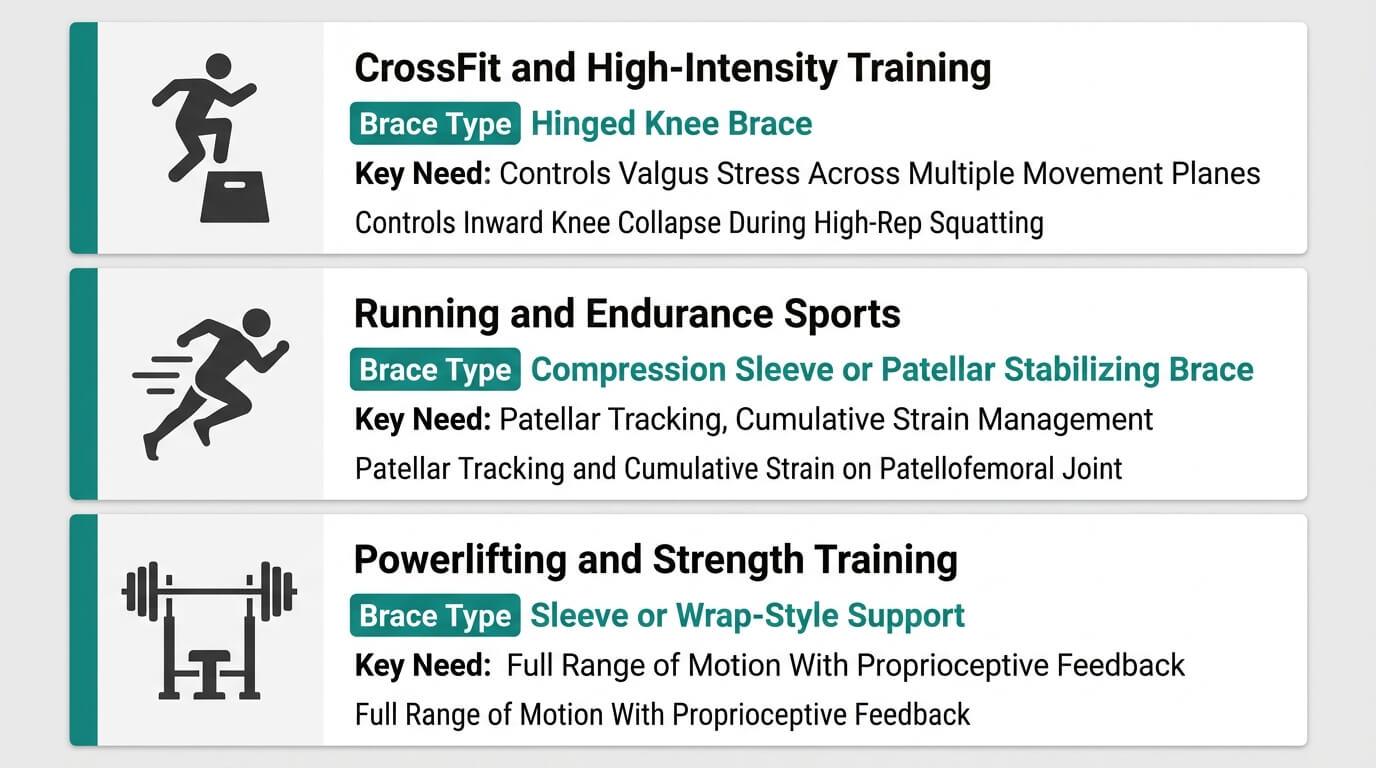
Not every knee brace works for every sport. The load patterns and movement demands differ, and the wrong brace can reduce performance or create a false sense of protection.
CrossFit and High-Intensity Training
CrossFit puts the knee through multiple planes of stress in a single session. Box jumps, lateral cuts, and Olympic lifts all generate valgus stress at different intensities and angles.
A hinged knee brace is the most appropriate choice because it controls inward knee collapse during high-rep squatting and provides structural support through landing mechanics. Compression alone is not enough when the movement demands are this varied.
Running and Endurance Sports
Runners deal with repetitive stress rather than acute, high-load impact. The primary concern is patellar tracking and cumulative strain on the patellofemoral joint.
Patellofemoral pain syndrome is common in distance runners. A compression sleeve or patellar stabilizing brace addresses that pattern more effectively than a rigid hinged brace. The goal is consistent support across thousands of repetitions, not peak-load protection.
For athletes managing runner's knee or patellofemoral stress, patella-stabilizing brace options for hybrid athletes help preserve natural movement while providing targeted support.
Powerlifting and Strength Training
Strength training presents a specific challenge: the brace cannot interfere with squat depth or alter the load's path through the joint.
A poorly fitted brace shifts joint mechanics under heavy load, which increases risk rather than reducing it. Lifters need a sleeve or wrap-style support that maintains full range of motion while adding proprioceptive feedback without changing their natural tracking pattern.
Strength Training and Bracing: A Unified Prevention Framework
Strength training reduces the risk of knee injury by strengthening the muscles that support the joint under load. But muscles take time to develop, and during that early phase, the joint is still vulnerable.
That is exactly where preventive bracing earns its place in a serious training protocol.
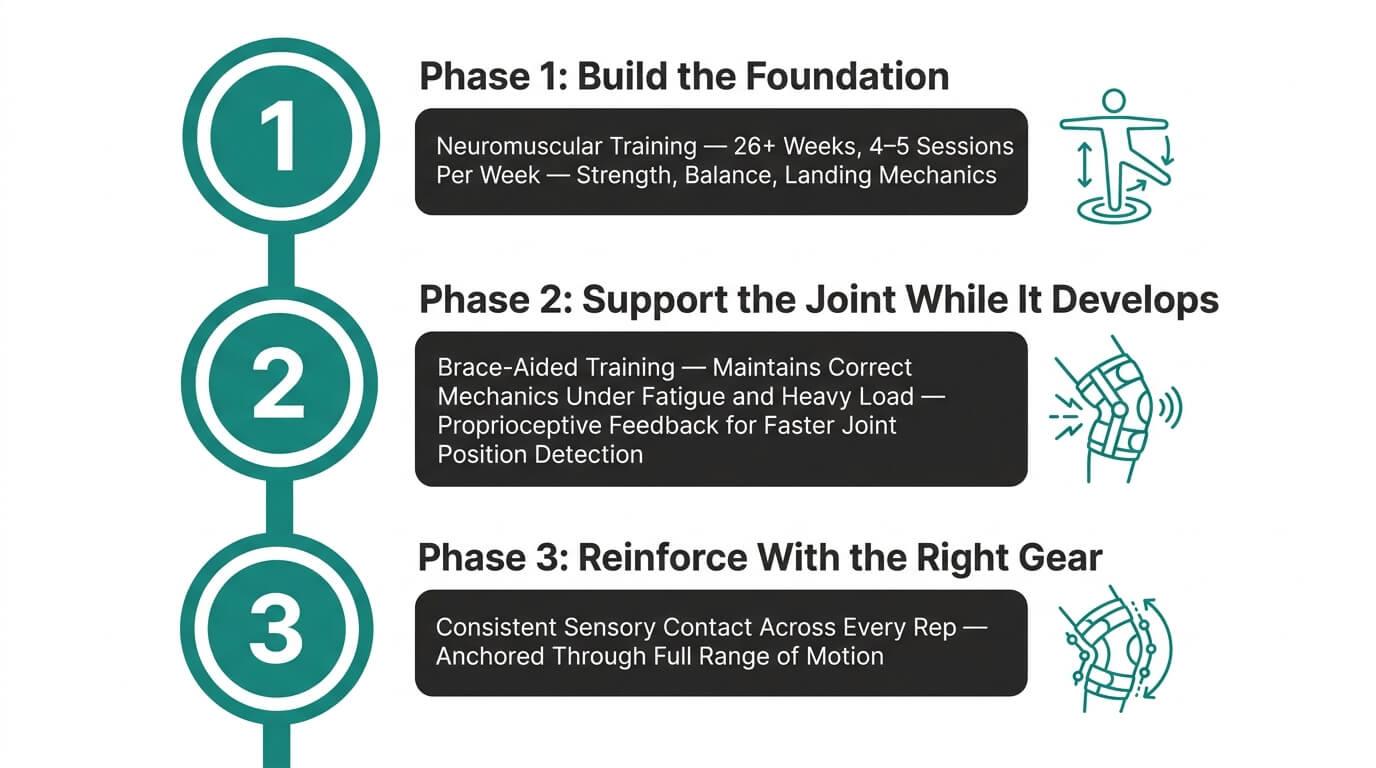
The framework works in three phases:
Phase 1: Build the Foundation
Neuromuscular training is the core. The 2025 meta-analysis above found that programs lasting 26 weeks or more, with 4-5 sessions per week, produced the strongest injury-reduction outcomes among the interventions studied. Strength, balance, and landing mechanics all belong here.
Phase 2: Support the Joint While It Develops
Brace-aided training helps athletes maintain correct mechanics during the phases when fatigue or heavy load would otherwise cause form to break down. The proprioceptive feedback from a well-fitted brace gives the nervous system sharper, faster information about joint position in real time. A brace that slips mid-session loses that feedback loop at the exact moment it matters most.
Phase 3: Reinforce With the Right Gear
The Anaconda Knee Brace was built around that insight.
Its rubber-inseam grip and Fight Tech straps are designed to stay anchored through the full range of motion, from the bottom of a squat to the landing phase of a box jump, so sensory contact remains consistent across every rep. It wraps under, around, and above the knee to provide support from multiple angles without restricting mobility.
Optional side stabilizers add lateral reinforcement for athletes who need it during heavier sessions.
Fit, Positioning, and Keeping Your Brace Training-Ready
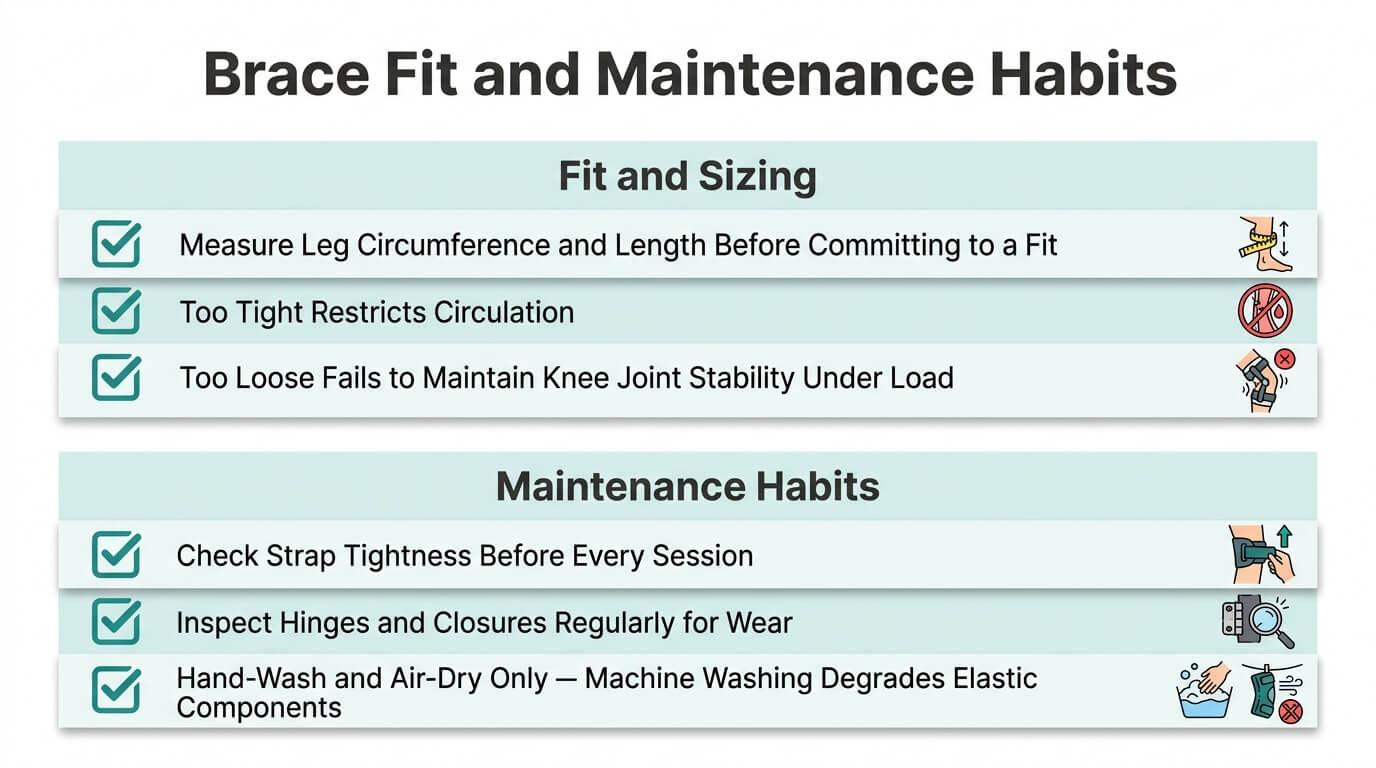
A brace that migrates mid-session is not doing its job. Once a hinged knee brace shifts out of position, it loses its ability to control valgus stress and deliver consistent proprioceptive feedback.
Sizing is where most athletes go wrong.
Too tight, and you restrict circulation.
Too loose, and the brace fails to maintain knee joint stability under load.
Measure both leg circumference and length before committing to a fit.
Skin contact and sleeve material matter more than most athletes expect. Breathability and sweat management directly affect how consistently you wear the brace. A compression sleeve that becomes uncomfortable at the 30-minute mark is pulled off, defeating the purpose entirely.
For athletes figuring out how long to keep a brace in rotation across different training phases, wear timelines by injury severity and activity level are covered in detail here.
A few practical habits that make a real difference:
-
Check strap tightness before every session. Dynamic movement loosens straps faster than most people anticipate, and a brace that felt secure at warm-up can shift significantly by the working sets.
-
Inspect hinges and closures regularly for wear. A structurally compromised brace provides false confidence rather than real support.
-
Hand-wash and air-dry only. Machine washing degrades elastic components and alters fit over time, which directly affects long-term brace performance.
Train Smarter, Protect Longer
Preventive bracing is a deliberate performance decision made by athletes who understand that knee joint stability is built through systems, not single solutions.
The research supports combining neuromuscular strength training with the right prophylactic brace for your activity, your load patterns, and your joint history. Pair those two things consistently, and you stay on the floor longer than athletes who rely on either one alone.
Anaconda was built by an athlete who lived with this injury. Founder Luke Kilcoyne tore his ACL and MCL training Brazilian Jiu-Jitsu against the Thai national team in Thailand — and discovered that off-the-shelf knee braces either restricted performance or fell apart under combat-sport load.
The Anaconda Knee Brace was engineered to solve that exact gap, and over 100,000 athletes now train in it. It carries a 4.8-star rating from verified Yotpo buyers, holds 4.4/5 across 274 Trustpilot reviews, competed at ADCC 2024, and is backed by a 30-day money-back guarantee.
FAQs
Here are the most common questions athletes ask before adding preventive bracing to their protocol.
How do you train to prevent knee injuries?
Training to prevent knee injuries means combining neuromuscular training, landing mechanics work, and progressive strength loading. Programs that combine all three consistently outperform single-method approaches in injury-reduction research. A prophylactic knee brace supports this process during the phases when strength and coordination are still developing.
When is a knee brace not recommended?
A knee brace is not recommended when the cause of pain has not been evaluated clinically, when the fit is poor enough to alter your gait, or when it is being used to avoid addressing a genuine strength deficit. Bracing works alongside strength training, not instead of it.
What is the number one mistake that makes bad knees worse?
Relying on a brace as a substitute for building knee-stabilizing strength. Wearing a prophylactic knee brace without any supporting strength training creates dependency and delays the development of neuromuscular control that actually protects the joint long-term. The brace is a tool, not a training program.
What is the difference between a prophylactic and a functional knee brace?
A prophylactic brace is worn by healthy athletes to prevent injury during training. A functional brace is worn by athletes with a structural injury to manage instability and support return to activity. Using a functional brace as a preventive tool on a healthy knee is not the right approach, and the reverse is equally true.
Does wearing a knee brace weaken the knee over time?
Not if it is used correctly. The risk arises when bracing replaces strengthening rather than supporting it. A brace worn during active training alongside progressive loading does not cause muscle atrophy. The dependency concern applies specifically to passive, all-day use without any accompanying exercise.
What knee brace is best for ACL injury history?
Athletes returning to training after an ACL injury need a brace that controls rotational forces without compromising mobility. ACL-specific brace guidance by injury stage is based on whether you are in active recovery or returning to full load.


