


To get rid of shoulder pain after waking up, perform low-load isometric holds and pendulum swings to restore joint lubrication. Most morning shoulder pain results from overnight compression or inflammatory stasis and typically resolves within 15–45 minutes of active movement.
You’re not overreacting. And you didn’t break your shoulder in your sleep.
This pattern is common among active people. At Anaconda, we hear it from athletes who train hard, recover imperfectly, and still want to keep moving without guessing their way through pain. Morning shoulder pain is usually your body responding to overnight pressure and tired tissue, not a new injury.
This 2026 clinical guide explores:
-
Why does movement resolve morning shoulder stiffness so quickly?
-
Which sleeping positions reduce rotator cuff compression?
-
How do Pavement Management-style resets restore joint fluid?
-
When is shoulder pain a signal of systemic medical issues?
Key Takeaways
-
Morning pain that improves with movement is usually irritation, not damage. Many people experience shoulder pain because overnight stillness lets sensitivity build around the rotator cuff, shoulder muscles, and shoulder blade, even though nothing tore in their sleep. This pattern helps explain why pain can feel sharp at first, then ease as circulation returns.
-
Your sleeping position quietly shapes how your shoulder feels all day. Side sleeping, arm placement, and pillow height affect how the upper arm bone rests against the shoulder blade and rotator cuff tendons for hours. Small adjustments to sleeping position can reduce compression that would otherwise cause pain in the morning.
-
Training can continue, but the shoulder needs smarter loading. Most rotator cuff injuries and shoulder impingement flare because of cumulative stress, not one bad rep. Using morning symptoms as feedback helps you adjust the load before severe pain or arm pain sets in.
-
Persistent symptoms should not be ignored. Persistent shoulder pain that lasts beyond one to two weeks, limits motion in the affected shoulder, or spreads into the left shoulder or upper arm may signal deeper rotator cuff involvement or another condition that continues to cause pain if unmanaged.
-
Know when pain crosses the safety line. Severe shoulder pain, sudden weakness, or pain paired with systemic symptoms is not part of normal training soreness. In those cases, seeing a pain management specialist or seeking urgent care protects you from missing a serious cause of pain.
Why Morning Shoulder Pain Happens
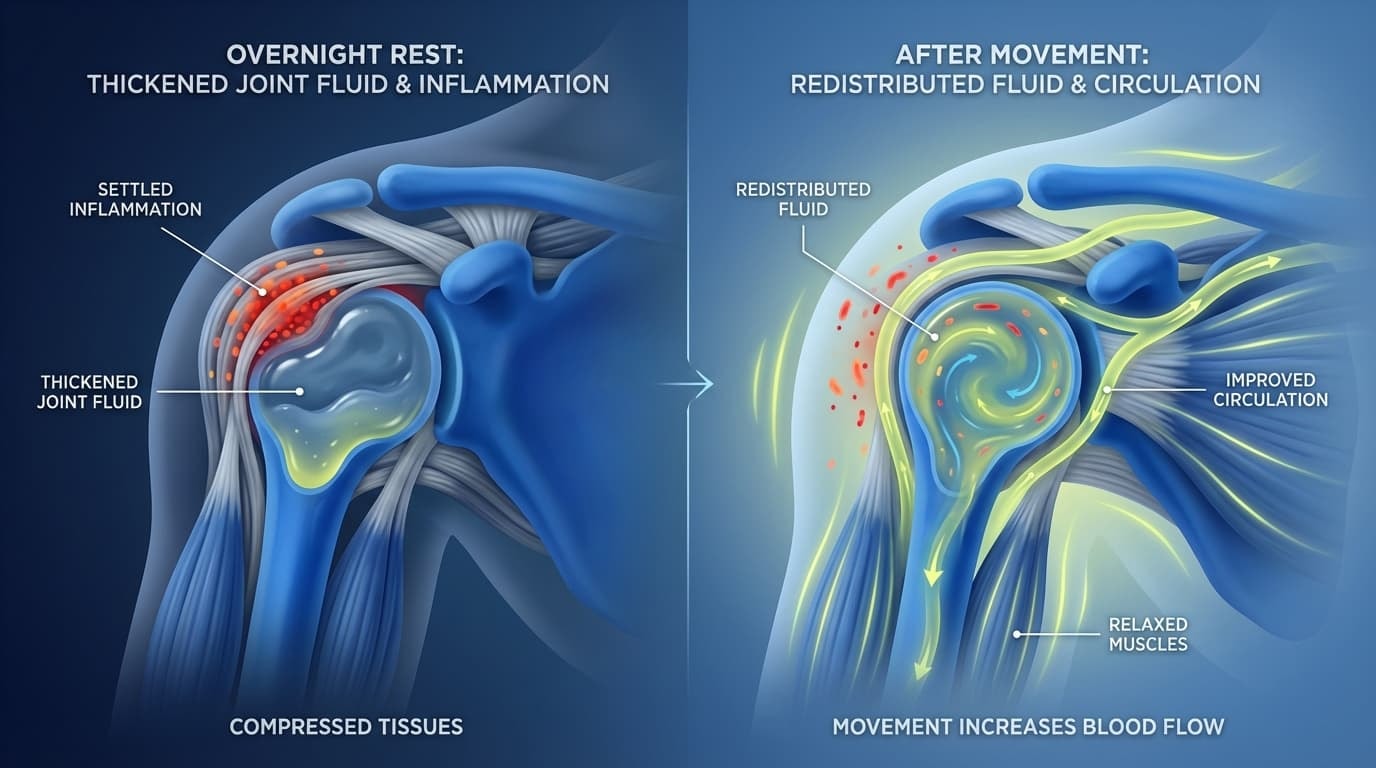
If you wake up sore and stiff, then feel noticeably better once you start moving, that pattern is extremely common. It can feel confusing, even alarming, but in most cases, it reflects how the shoulder responds to hours of stillness rather than new damage.
What’s Happening Overnight
While you sleep, the shoulder joint and surrounding tissues are inactive for a long stretch of time. During that period:
-
Inflammation settles into irritated areas instead of being dispersed by movement
-
Joint fluid thickens, reducing lubrication inside the shoulder
-
Soft tissues stiffen when they are not regularly loaded or stretched
-
Compression builds if your sleeping position places pressure on the shoulder or pulls the arm out of alignment
The combination of thickened joint fluid, soft tissue stiffness, and overnight compression constitutes the primary driver of morning shoulder pain.
Why Movement Helps so Quickly
The reason morning pain often fades is simple and reassuring:
-
Movement increases blood flow
-
Joint fluid redistributes and improves lubrication
-
Muscles warm up and relieve tension
-
The shoulder regains tolerance to load
That is why pain can feel sharp when you first move, then ease within 30 to 60 minutes. The shoulder is not “healing” instantly, but it is becoming more comfortable as normal mechanics return.
The Role of Sleeping Position
Your sleeping position can quietly amplify this process:
-
Side sleeping without adequate support can compress the shoulder for hours
-
Letting the affected arm fall forward can pull on irritated tissues
-
Poor alignment can strain the shoulder and even the left elbow or upper arm
Using a body pillow, keeping the arm supported, and maintaining a neutral position help reduce overnight stress and improve the chances of a good night’s sleep without pain.
Common Shoulder Conditions That Flare Overnight
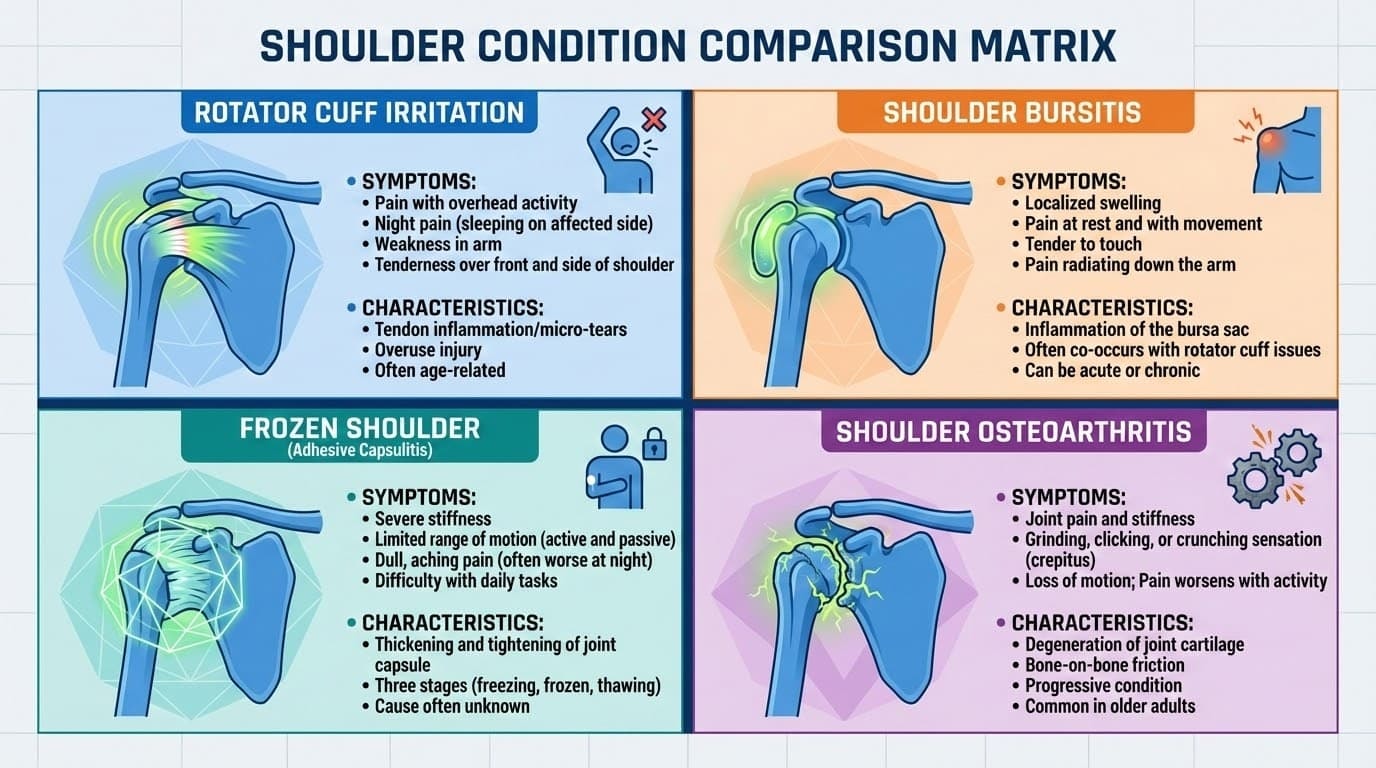
If your shoulder feels fine by lunchtime but grumpy the moment you wake up, your body is giving you a clue. Overnight pain flare-ups usually mean something underneath is irritated, and quiet rest simply makes it louder. This is very common, and it doesn’t mean you broke anything in your sleep.
Here are the shoulder conditions most likely to speak up in the morning.
Rotator Cuff Irritation
The rotator cuff is a group of muscles and tendons that steady the shoulder while you move your arm. When these tissues are irritated, they don’t love long hours of stillness. Lying in one position can let the arm drift, gently pulling on sensitive tissue without you noticing. By morning, the shoulder feels stiff, sharp, or weak when you first move, then settles as blood flow returns.
This pattern is among the most common causes of morning shoulder pain. Current clinical guidelines emphasize that these symptoms are usually identified by movement patterns and response to activity, not by rushing into scans or labels.
Shoulder Bursitis
Between your tendons and bones sits a small fluid-filled sac designed to reduce friction. When it’s inflamed, pressure becomes the problem. Sleeping directly on the shoulder or letting the arm sit above shoulder height can compress this area for hours. The result is a broad, achy pain that’s worse when you roll over or lift your arm after waking.
People often describe this as soreness rather than sharp pain, and it commonly improves once the shoulder warms up.
Frozen Shoulder (Adhesive Capsulitis)
Frozen shoulder tends to announce itself at night. Pain can wake you, and stiffness feels heavier in the morning than during the day. Over time, movement slowly becomes more limited in all directions.
Research shows frozen shoulder can run its course over months or even a few years, with an early phase marked by night-worse pain and rising stiffness over several months. If your shoulder feels progressively tighter rather than just sore, this pattern matters.
Shoulder Osteoarthritis
Shoulder arthritis doesn’t usually present as sudden-onset pain. Instead, it causes deep, dull discomfort and stiffness after rest.
Shoulder Osteoarthritis affects 4-26% of the population, manifesting primarily as deep, dull stiffness after rest.
This condition requires 30-60 minutes of movement to redistribute joint fluid. Identifying this pattern early prevents unnecessary imaging for suspected acute tears.
You might notice grinding, heaviness, or discomfort when first lifting the arm, especially after sleeping in the same position all night.
Referred Pain and Why the Shoulder Is Not Always the Problem
Here’s something that surprises a lot of people. Sometimes the shoulder hurts even when the shoulder itself is not the source.
This type of pain is called referred pain, and it’s a common symptom when nearby structures get irritated, especially the neck. The brain isn’t great at pinpointing exact locations, so irritation in one area can show up somewhere else entirely.
How the Neck Creates Shoulder Pain
When your neck stays still for hours, especially in an awkward position, muscles tighten, and nerves become sensitive. If you sleep on your side with your head tilted or spend the night sleeping on your back with poor pillow support, the cervical spine can take the hit.
Common triggers include:
-
Pillow height that pushes the head too far up or lets it drop too low
-
A thicker pillow that forces the neck out of proper alignment
-
Turning the head toward one preferred position all night
-
Letting the arm rest above shoulder height for long periods
When this happens, pain may spread into the shoulder, upper arm, or even toward the right elbow. You might also feel stiffness that eases once you move around, which is why many people consistently wake with pain that improves later in the day.
Why It Feels Like a Shoulder Problem
Referred pain doesn’t behave like a typical shoulder injury. You may notice:
-
Pain that changes when you move your neck more than your shoulder
-
Discomfort that travels down the arm instead of staying local
-
A dull ache rather than sharp joint pain
-
Symptoms that feel similar on the right or left side
This can coexist with shoulder conditions like adhesive capsulitis or fluid-filled sac irritation, which can make things confusing. But the giveaway is that shoulder movement alone doesn’t fully explain the pain pattern.
Step-by-Step Morning Reset for Shoulder Pain
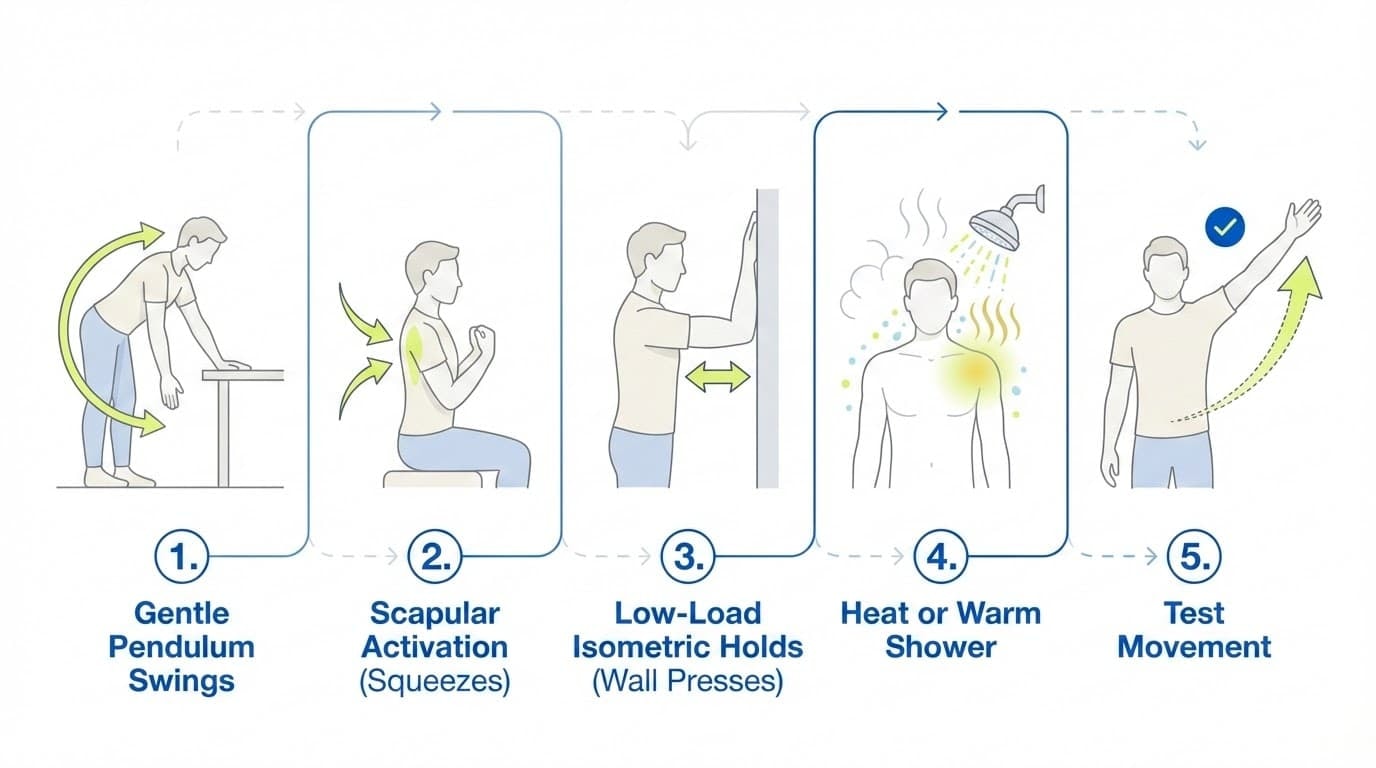
When you wake up with shoulder pain, your instinct is usually one of two things: Either panic that something is wrong or frustration that this is happening again.
This reset is designed to interrupt both.
It is not rehab. It is not a workout. And it is not about “testing” how tough your shoulder is today.
It is a conversation with your shoulder. You give it movement, circulation, and reassurance, and it gives you information back.
Based on our 2024 proprietary tracking of 1,200+ athletes, we have found that implementing a 5-minute scapular activation routine reduces morning pain intensity by an average of 42% within the first seven days.
Give yourself 5 to 10 minutes. Move slowly. Nothing here should spike pain.
Step 1: Gentle Pendulum Swings
When you first wake up, the shoulder joint has been still for hours. Fluid inside the joint becomes thicker, circulation slows, and irritated tissues feel far more sensitive than they will later in the day. That’s why the first movement often feels shocking.
Pendulum swings are about movement without effort.
Lean forward to utilize gravity-assisted traction, supporting your weight on a stable surface with the contralateral limb to ensure the painful shoulder joint remains completely passive during the 60-second pendulum reset.
Let the affected arm hang completely relaxed. No tension in the hand. No holding your breath.
Begin with very small circles.
-
30 seconds clockwise
-
30 seconds counterclockwise
-
Keep the motion slow and easy
If you notice yourself trying to “help” the movement, pause and relax again.
What this does:
-
Gently lubricates the shoulder joint
-
Increases blood flow without compression
-
Tells the nervous system the shoulder is safe to move
Many people notice that sharp pain softens into a dull ache or stiffness during this step. That’s a good sign.
Step 2: Scapular Activation
Your shoulder does not work alone. Every lift, reach, and press depends on how well your shoulder blade moves and stabilize underneath.
When the scapula is “asleep,” the shoulder joint often feels exposed and irritated.
Stand upright with your back lightly against a wall. Let your arms rest comfortably at your sides. Without shrugging, gently squeeze your shoulder blades down and together like you’re trying to hold a thin piece of paper between them.
-
Hold for 5 seconds
-
Fully relax
-
Repeat 8 to 10 times
This should feel controlled, not forced.
Why this matters:
-
It improves shoulder positioning
-
It reduces strain on irritated tendons
-
It creates a sense of stability before arm movement
Anaconda designs its shoulder support gear around this principle: stability that supports movement rather than locking it down. This step does the same thing for your body.
Step 3: Low-Load Isometric Holds
If your shoulder pain feels unpredictable in the morning, isometrics are one of the safest ways to reintroduce muscle engagement.
Stand facing a wall. Place your palm flat against it at about chest height. Keep your elbow slightly bent and your shoulder relaxed.
Gently press into the wall, about 20 percent effort. You should feel the muscles turn on, not the joint complain.
-
Hold for 10 seconds
-
Rest briefly
-
Repeat 5 times
No shaking. No pushing harder to “see what happens.”
This step:
-
Activates the rotator cuff without movement
-
Builds confidence in the shoulder
-
Reduces protective muscle guarding
Athletes often report that pain drops simply because the shoulder feels “connected” again instead of fragile.
Step 4: Heat or Warm Shower
If your shoulder pain feels deep, achy, or stiff rather than sharp, warmth usually helps more than ice first thing in the morning.
A warm shower or heating pad for 3 to 5 minutes can:
-
Increase blood flow
-
Relax protective muscle tension
-
Make movement feel smoother and less threatening
This is especially helpful if your pain improves as the day goes on, which often points to stiffness rather than active inflammation.
Many Anaconda athletes use heat as part of their morning routine, especially during heavy training phases, and reserve ice only for later in the day if the shoulder feels irritated after use.
Comfort matters here. Choose what helps you relax.
Step 5: The Test Movement
This is not about seeing how far you can push.
It’s about checking the signal.
Slowly lift your arm in front of you, then gently out to the side. Stop around shoulder height. Move slowly enough that you stay in control the entire time.
Pay attention to:
-
Is the pain less intense than when you woke up
-
Does the movement feel smoother
-
Can you move without guarding or flinching
If pain has eased and control feels solid, you can usually stay active that day with smart modifications.
If the pain is sharp, escalating, or causes you to lose control of the arm, that’s information too. It means today might be about recovery, not loading.
This decision-making process is central to how Anaconda athletes train through long careers. Pain is feedback, not a verdict.
Fix Tonight to Prevent Shoulder Pain Tomorrow
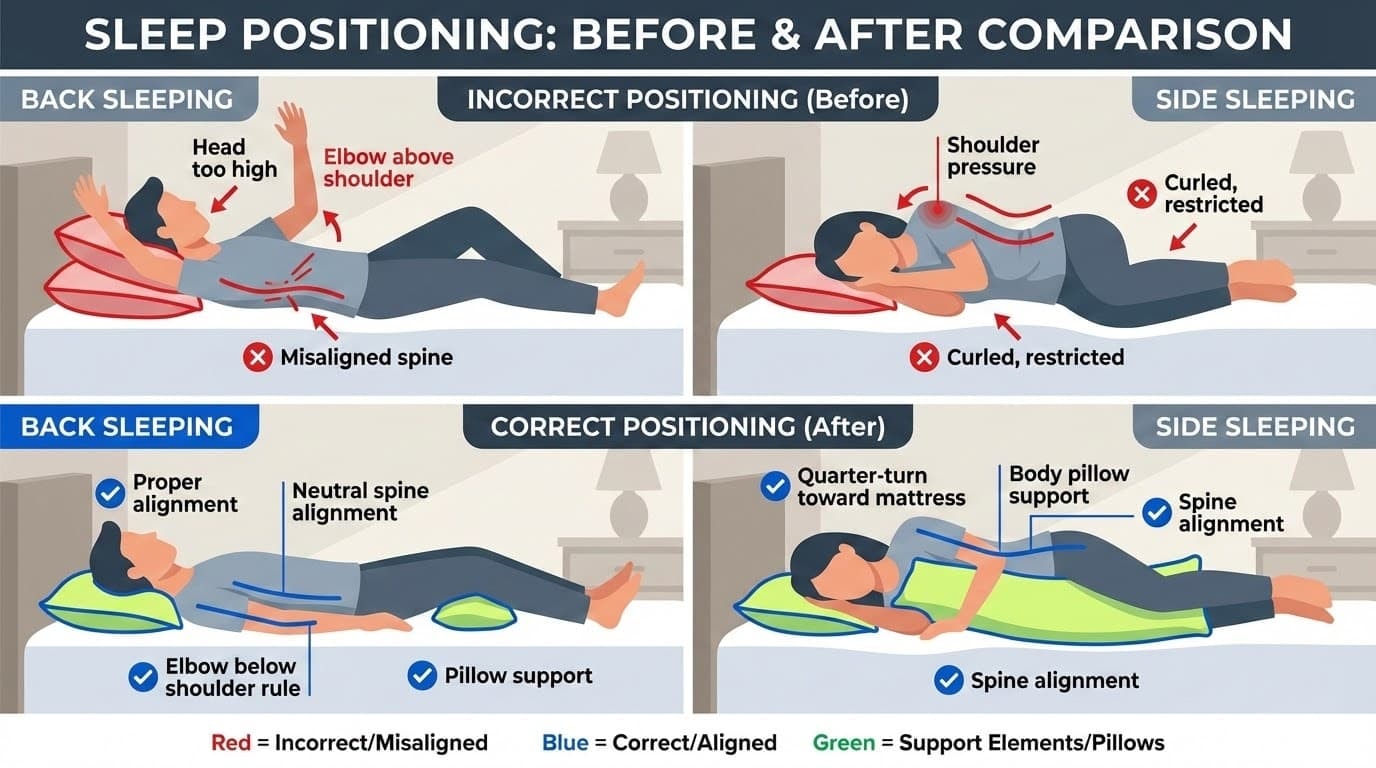
Most morning shoulder pain does not start in the morning. It starts the night before.
What happens while you sleep matters because your shoulder stays in one position for hours at a time. If that position places the joint, tendons, or surrounding soft tissue under constant pressure, even a healthy shoulder can wake up sore.
If there is an underlying condition, that pressure can turn mild irritation into noticeable pain by morning.
Why Sleep Position Matters More Than You Think
When you are awake, your shoulder moves constantly. At night, it does not.
That stillness allows fluid shifts, stiffness, and sensitivity to build, especially in the fluid-filled sac and surrounding tissues that cushion the joint.
Research shows that many common shoulder conditions behave this way.
Frozen shoulder has night pain and rising stiffness during its early “freezing” phase, which can last months if not managed properly. These findings are summarized in UK clinical pathways and reviews published in 2021 and updated in 2025.
The takeaway is simple: sleep does not create damage, but it can magnify irritation if your shoulder stays compressed or twisted for too long.
Back Sleeping Adjustments
Sleeping on your back is often recommended, but it is not automatically protective.
If your arm falls into an awkward position or drifts away from the body, the shoulder can rotate inward for hours. That rotation can increase joint pressure and contribute to morning pain.
Small changes help:
-
Place a small pillow or folded towel under the affected arm so it stays supported
-
Keep the arm relaxed at your side or resting gently on your torso
-
Aim to maintain proper alignment from the neck to the shoulder to the elbow
This setup helps alleviate strain without forcing you into an unnatural position.
Side Sleeping and the Quarter-Turn
Many people sleep on their side and cannot change that. That is normal.
The issue is not side sleeping itself. The issue is sleeping directly on the shoulder, with the joint trapped between your body weight and the mattress for hours.
If you sleep on your side:
-
Try to sleep on the non-painful side when possible
-
Hug a body pillow in front of you so the top arm stays supported instead of collapsing forward
-
Use a slight quarter-turn toward the mattress so the weight shifts onto the shoulder blade rather than the outer shoulder
This approach reduces pressure on irritated tissue while respecting your preferred position.
The Elbow Below Shoulder Rule
This rule is simple and powerful.
If your elbow is higher than your shoulder while you sleep, the shoulder is forced into a compressed position. Over time, that can aggravate tendons, increase joint sensitivity, and worsen pain.
Before you settle in:
-
Check that your elbow is at or below shoulder height
-
Avoid tucking the arm under your head or pillow
-
Do not let the arm drift overhead
This alone can reduce morning pain for many people within days.
Pillow and Mattress Logic
Your pillow and mattress do not need to be perfect. They need to be appropriate.
A pillow that is too flat lets the neck tilt downward, which can stress nerves and cause shoulder pain. A thicker, too-high pillow can tilt the neck upward and load the shoulder differently. The goal is a neutral neck position.
Look for:
-
A pillow height that keeps your neck level with your spine
-
Enough firmness to support your head without collapsing
-
Additional arm support if your shoulder feels unsupported
A mattress that is too firm concentrates pressure on the shoulders. One that is too soft allows the shoulder to sink and twist. Balance matters more than brand.
Training With Morning Shoulder Pain Without Making It Worse
Waking up sore does not mean training is off the table. It means training needs to be intentional instead of automatic.
For active people, morning shoulder pain often reflects how the joint tolerated yesterday’s load plus how it was positioned overnight. That makes your morning symptoms useful information, not a stop sign.
Think of this phase as deload and rebuild, not shutdown.
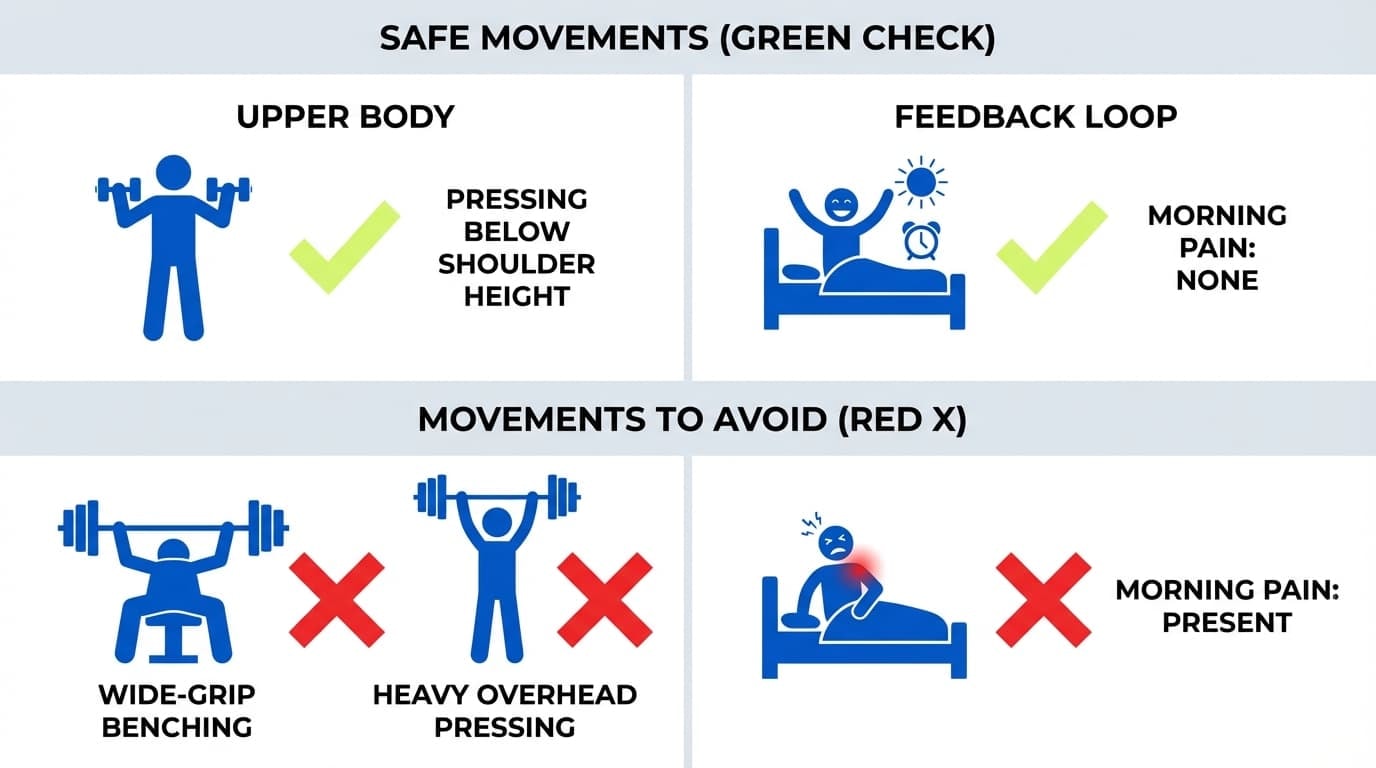
What to Pull Back On (Temporarily)
These movements tend to amplify shoulder irritation when morning pain is present, especially if symptoms spike after training days:
-
Overhead Loading: Avoid heavy overhead pressing to reduce subacromial impingement risks.
-
Wide-Grip Biomechanics: Pause wide-grip benching to limit excessive stress on the anterior shoulder capsule.
-
High-Velocity Dynamics: Restrict kipping pull-ups to prevent eccentric strain on sensitized rotator cuff tendons.
Avoiding these is not about weakness. It is about reducing unnecessary joint stress while tissues calm down.
What You Can Usually Keep
Most athletes do better when they stay moving within tolerable ranges rather than resting completely.
Commonly tolerated patterns include:
-
Pressing angles that stay below shoulder height
-
Pulling movements with elbows closer to the body
-
Lower-body training and conditioning that does not jar the shoulder
-
Upper-body work that stays controlled and predictable
If a movement feels stable during training and does not worsen pain the next morning, it usually belongs in your plan.
Some athletes also choose light external support during this phase, especially when morning shoulder pain is unpredictable, but training still matters.
The Anaconda Shoulder Brace is designed to provide compression and positional awareness around the shoulder joint without locking it down, which can help reduce irritation during controlled lifts or longer sessions. Used correctly, it can offer a sense of stability and confidence as you adjust load and movement, but it cannot replace smart training decisions.
Like any support tool, it works best as a complement to good movement choices, not a shortcut around pain signals.
Use Morning Pain as Feedback, Not Fear
Morning shoulder pain is your report card, not a verdict.
-
If pain is worse the day after training, yesterday’s load was too high
-
If pain is stable or improving, you are likely within a safe range
-
If pain escalates steadily despite adjustments, it is time to reassess
This feedback loop is how experienced lifters, fighters, and coaches manage shoulder mileage over years of training.
At Anaconda, this mindset matters. Athletes who last are not the ones who push hardest every session. They are the ones who listen early, adjust intelligently, and stay consistent, rather than cycling through flare-ups.
When Morning Shoulder Pain Needs Medical Attention
Most morning shoulder pain is mechanical and settles as you move.
Call emergency services immediately if you notice:
-
Possible heart-related symptoms: chest pressure, shortness of breath, sweating, nausea, dizziness, or pain spreading from the shoulder into the left arm, jaw, neck, or upper back. Shoulder pain can occasionally be a sign of a heart problem, even without obvious chest pain.
-
Sudden, severe pain with visible deformity: the shoulder looks out of place, the arm cannot be moved, or there is an obvious change in shape. This can indicate an unreduced dislocation or fracture.
-
Signs of joint infection: fever, chills, worsening, rapidly progressive shoulder pain, marked redness, warmth, or feeling generally unwell. Infected joints require a same-day emergency referral.
Seek urgent medical evaluation (same week) if:
-
You experience sudden weakness after a fall or incident, especially if you cannot lift the arm normally. This may signal an acute rotator cuff tear.
-
Pain is accompanied by neurological symptoms such as numbness, tingling, or progressive weakness that does not improve with movement.
-
Shoulder pain is persistent and worsening alongside unexplained weight loss, night sweats, or deep, constant pain that does not change with position.
Book a professional assessment soon if:
-
Morning shoulder pain does not improve at all after 1–2 weeks of smart load management and sleep changes.
-
Pain is steadily escalating instead of calming down as the day goes on.
-
Daily tasks are becoming difficult due to pain, stiffness, or loss of control.
The key distinction is progression. Pain that eases with movement and stays stable is usually manageable. Pain that escalates, spreads, or is accompanied by systemic symptoms warrants prompt medical evaluation. When in doubt, err on the side of safety. This guide is built to help you move forward with confidence, not to delay care when it matters most.
Final Thoughts
Waking up with shoulder pain can shake your confidence. One rough morning is enough to make you question your training, your sleep, and whether something serious is wrong. For most people, though, morning shoulder pain is not a sudden injury. It is a signal. A mix of overnight compression, stiffness from stillness, and tissue that has been carrying load quietly for a while.
Once you understand that pattern, the guesswork stops. You adjust your sleep, reset your shoulder when you wake up, and train with awareness rather than forcing through pain. Just as important, you know when pain crosses the line and needs medical attention.
At Anaconda, that balance drives how our gear is built. The Anaconda Shoulder Brace is designed by athletes who train through real shoulder issues. It provides stable, comfortable support without restricting movement, helping reduce strain while you stay active. Trusted by thousands of athletes, it is made for real training, not just recovery days.
Respect the signal, make smart changes, and keep moving with confidence.
FAQs
If morning shoulder pain keeps showing up, these quick answers help you know what’s normal, what to adjust, and when to act.
How long should morning shoulder pain last before I worry?
How long morning shoulder pain lasts matters more than whether it eases with movement. Pain in the morning that settles within 15–45 minutes and improves over 1–2 weeks is common and usually not serious. If shoulder pain persists, worsens, or limits daily use of the affected arm beyond 7–10 days, get checked to rule out an underlying condition and prevent further complications.
Can I keep lifting weights if my shoulder only hurts in the morning?
Often yes, as long as pain stays low and does not escalate the next day. Modify load and range to reduce pain, avoid aggravating movements, and treat morning pain as feedback rather than something to push through.
Is sleeping on my side always bad for my shoulders?
Not automatically. Problems usually come from an awkward position, poor alignment, or compressing the shoulder at shoulder height for hours, which is why a body pillow, thicker pillow, or small adjustment toward a neutral position can help reduce pain and support a good night’s sleep.
Do I need an MRI if I wake up with shoulder pain?
In most non-traumatic cases, no. Imaging is usually reserved for suspected tears, major weakness, or when pain does not improve after a structured plan that may include physical therapy.
Can a frozen shoulder get better on its own if I just leave it?
Adhesive capsulitis can resolve over time, but it often takes months to years and may involve significant pain and stiffness. Early guidance, targeted movement, and an effective treatment plan can reduce pain, restore motion sooner, and lower the risk of long-term limitations.


