


A knee compression sleeve effectively manages mild to moderate joint swelling by applying uniform circumferential pressure, which limits capillary fluid leakage and supports lymphatic return.
However, it cannot correct severe structural instability or replace medical evaluation for sudden, acute effusion.
At Anaconda Fightwear, we design protection for athletes who train hard. We have seen firsthand how swelling and knee injuries can interrupt progress overnight. Founder Luke built this company after tearing his ACL and MCL during high-level training.
This guide explores the mechanics of swelling management, including:
-
Why does knee swelling occur and limit performance?
-
When is a compression sleeve effective for edema?
-
What are the medical contraindications for sustained compression?
-
How do compression sleeves compare to structured braces for high-load training?
However, knee sleeves are not a cure. Not all knee compression sleeves are right for every situation, and some swelling may require medical evaluation before using compression sleeves.
Key Takeaways
-
A knee compression sleeve for swelling can help manage mild to moderate swelling caused by overuse, minor knee injuries, or arthritis flares. It can provide pain relief and help alleviate knee pain, but it is not a substitute for medical diagnosis.
-
Severe, sudden, or unexplained swelling, especially when paired with intense knee pain, redness, fever, or difficulty bearing weight, requires medical evaluation before using knee compression sleeves or other compression sleeves.
-
Knee sleeves should fit snug without causing numbness, tingling, color changes, or deep skin marks. Compression sleeves are best worn during activity rather than around the clock.
-
People with significant circulation problems, advanced heart failure, open wounds, or post-operative restrictions should consult a clinician before using knee compression sleeves.
-
If swelling does not improve within 7 to 10 days, or if knee pain keeps returning despite using compression sleeves, prioritize proper diagnosis instead of increasing compression.
Why Does Knee Swelling (Edema) Occur and How Does It Limit Performance?
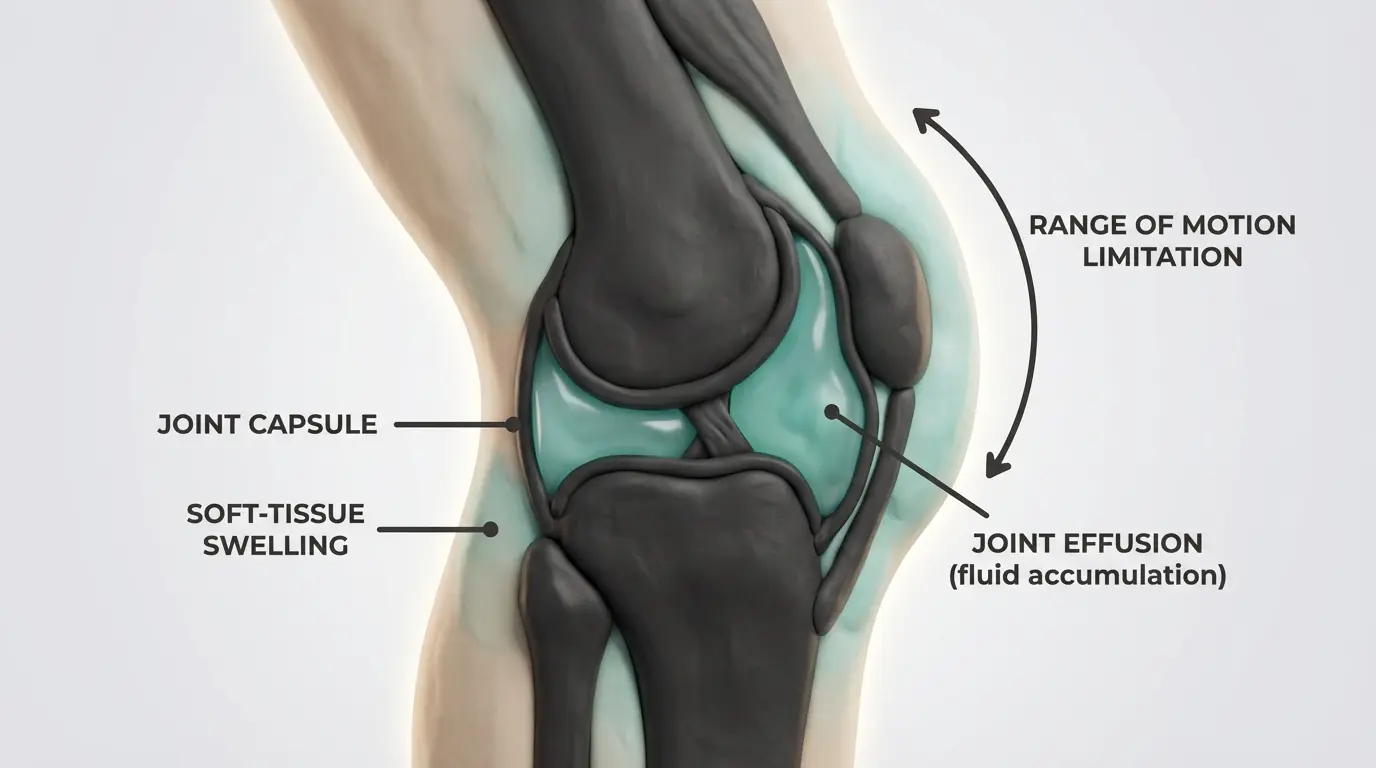
Knee swelling happens when fluid builds up inside the knee joint or in the surrounding tissues after irritation, overload, or injury. Knee edema can feel tight, heavy, and stiff, and the excess fluid accumulation often triggers pain that flares during stairs, squats, or long periods of standing.
Founder Luke experienced this firsthand after a severe ACL and MCL injury during training in Thailand, which is why we take swelling seriously as a performance limiter, not just an annoyance.
The Two Primary Types of Knee Joint Fluid Accumulation
Swelling typically manifests in two distinct clinical patterns:
-
Joint effusion: fluid inside the knee joint, often creating a “full” feeling and reduced bend or extension.
-
Soft-tissue swelling: puffiness around the knee that can spread above the kneecap or down the leg, depending on irritation and activity.
Swelling is a normal inflammatory response, but the pattern matters.
Why The Swelling Pattern Matters
Swelling is not just cosmetic. Excess fluid can:
-
Increase pressure inside the joint capsule, which can amplify knee pain
-
Limit the range of motion and make the knee feel “blocked.”
-
Reduce quad activation, which can slow strength return and stability
-
Change gait mechanics, which can irritatethe hips, ankles, and the other knee over time
Safety Note That Affects Who Should Compress
Compression is not universally safe. In severe peripheral arterial occlusive disease, sustained compression is contraindicated when systolic ankle pressure is under 60 mmHg or toe pressure is under 30 mmHg.
This is why the next section matters. Swelling can be manageable with the right approach, but some patterns should not be self-treated.
When a Knee Compression Sleeve Can Help With Swelling
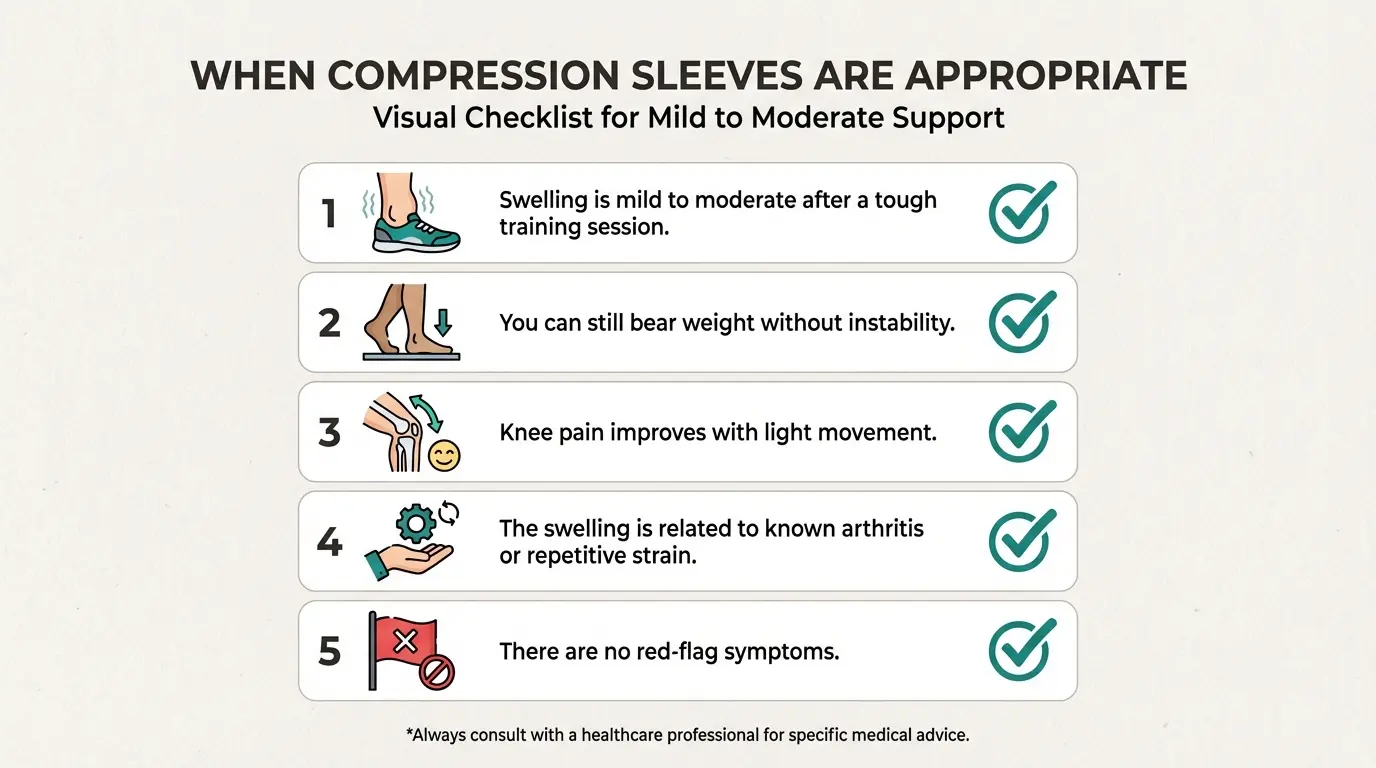
A knee compression sleeve for swelling is most effective when the swelling is predictable, manageable, and not associated with major structural damage. Compression sleeves work by applying uniform pressure around the joint, helping limit fluid accumulation and improving circulation.
When A Compression Sleeve Is Enough
Compression sleeves are generally appropriate when:
-
Swelling is mild to moderate after a tough training session
-
You can still bear weight without instability
-
Knee pain improves with light movement
-
The swelling is related to known arthritis or repetitive strain
-
There are no red-flag symptoms like locking, severe instability, or sharp mechanical pain
In these situations, knee compression sleeves can:
-
Help relieve knee pain during activity
-
Support proprioception and joint awareness
-
Reduce that heavy, tight feeling in the joint
-
Provide mild stability without restricting motion
For day-to-day training or recovery after long work shifts, well-fitted knee sleeves and other compression sleeves can be a practical part of swelling management.
However, compression sleeves are uniform. They do not control rotational stress or prevent inward collapse during cutting, shooting, or lateral movement.
That is where differentiation matters.
When A Structured Brace Is Better
If your sport involves:
-
Grappling or takedowns
-
CrossFit with loaded lunges and squats
-
Wrestling scrambles
-
High-impact drilling
-
Frequent twisting or pivoting
Light compression alone may not be enough.
For athletes who need more than light compression, especially during grappling, CrossFit, wrestling, or high-impact training, a structured brace like the Anaconda Knee Brace provides multi-angle stability without sacrificing mobility.
Unlike basic compression sleeves, a structured brace:
-
Wraps under, around, and above the knee
-
Offers optional side stabilizers for lateral support
-
Uses gel padding to absorb impact
-
Stays in place with rubber inseam grip and fight tech straps
This added structure helps resist inward twisting forces, which are a common mechanism behind knee injuries in combat and strength sports.
More than 300,000 athletes train with Anaconda gear, and the brace is trusted by professional athletes who demand stability under pressure. It was designed specifically for combat sports, where rotational control and impact absorption matter just as much as compression.
The key difference is this:
-
Compression sleeves help manage fluid.
-
Structured braces help manage force.
Choosing between them depends on whether your knee needs light swelling support or true mechanical protection during training.
When You Should Not Rely on a Knee Compression Sleeve (Safety Gate)
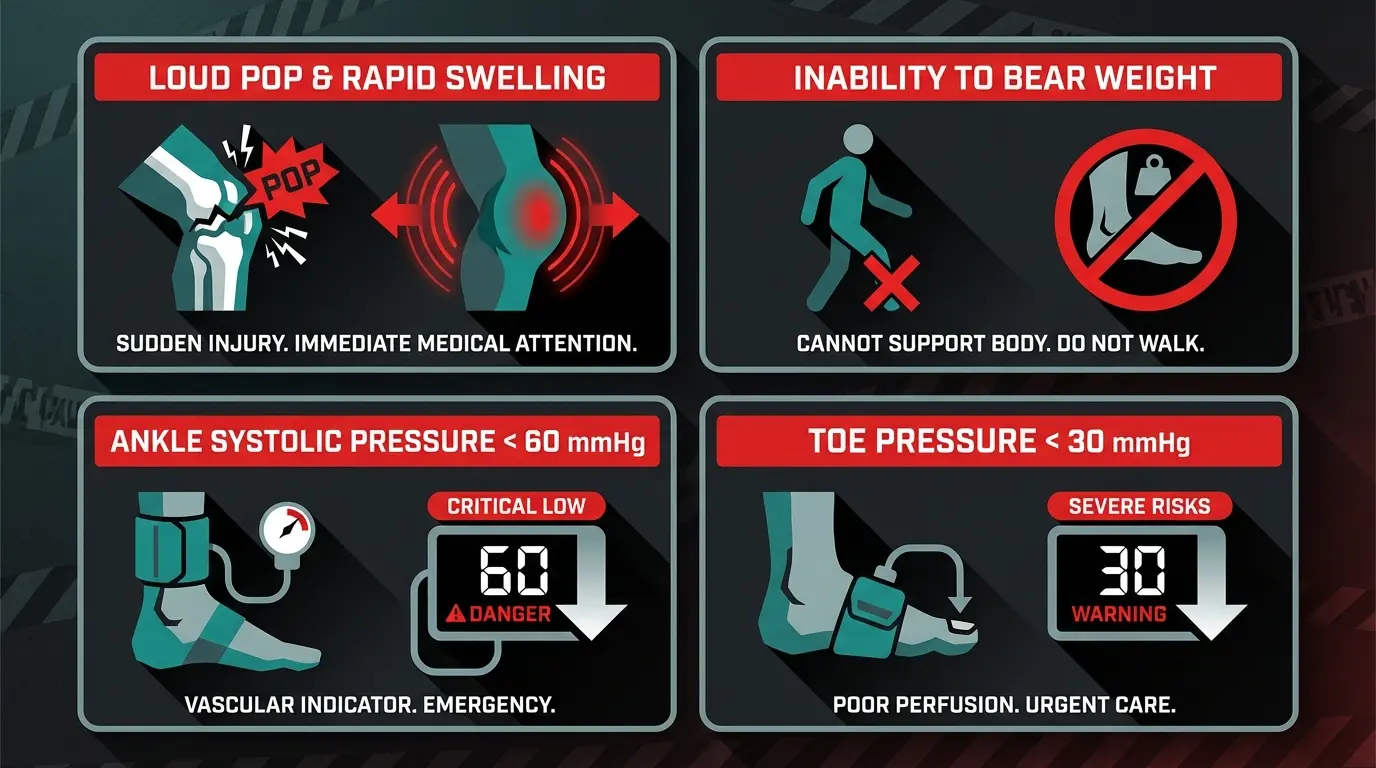
A knee compression sleeve is a tool. It is not a diagnosis. And in certain situations, using one without proper evaluation can delay care or increase risk.
Immediate medical evaluation is required if you have:
-
A loud pop followed by rapid swelling
-
Inability to bear weight
-
Knee locking or inability to fully extend
-
Significant redness, warmth, and fever
-
Calf pain with visible swelling asymmetry
-
Swelling that worsens aggressively over 24 to 48 hours
These signs may indicate ligament rupture, fracture, infection, or deep vein thrombosis. Compression will not correct these conditions and may temporarily mask symptom severity.
Documented Vascular Risk With Compression
Compression is not risk-free.
In a 2024 clinical trial published in the Journal of Orthopaedic Surgery and Research evaluating post-total knee arthroplasty, researchers documented that unregulated inelastic compression directly contributed to the formation of a deep vein thrombosis (DVT) in day-7 protocols.
This reinforces a simple principle: compression must match the clinical scenario.
Hard Contraindications To Sustained Compression
Clinical guidance on medical compression therapy identifies clear contraindications:
-
Severe peripheral arterial occlusive disease
-
Ankle-brachial index below 0.6
-
Ankle systolic pressure under 60 mmHg
-
Toe pressure under 30 mmHg
-
-
Severe cardiac insufficiency, NYHA Class IV
These thresholds are outlined in established compression safety guidance (2020 clinical guidance, PMC).
If you have diagnosed vascular disease, prior bypass or stent placement, poorly controlled diabetes with vascular involvement, or advanced heart failure, compression should not be self-initiated.
Post-Operative Considerations
Post-surgical protocols frequently include:
-
Anticoagulation medication
-
Graduated compression stockings
Adding a knee compression sleeve on top may increase cumulative pressure and reduce skin tolerance. A 2024 review highlights the importance of accounting for layered compression and tissue tolerance in post-operative management (2024 review, PMC).
Post-operative patients should use only devices specifically cleared by their surgical team.
Persistent Swelling Signals A Different Problem
If swelling:
-
Persists beyond 7 to 10 days
-
Recurs repeatedly
-
Increases despite rest
-
Spreads down the lower leg
Then compression is not the next escalation step. Further evaluation is.
Compression sleeves are supportive devices.
They are not substitutes for structural assessment, vascular screening, or post-operative protocol management.
Understanding when not to use compression builds long-term joint safety.
How Knee Compression Sleeves Actually Work for Swelling
A knee compression sleeve works by applying consistent, circumferential pressure around the joint. That uniform pressure influences fluid dynamics in two primary ways:
-
It limits excessive fluid leakage from capillaries into surrounding tissues
-
It supports venous and lymphatic return, helping move fluid away from the knee
This mechanism aligns with basic principles of capillary filtration. By applying 15-20 mmHg of external circumferential pressure, the sleeve artificially increases the interstitial tissue pressure, which directly reverses the osmotic gradient and forces stagnant lymphatic fluid back into active circulation.
Compression sleeves can also:
-
Improve proprioception, meaning your brain senses joint position more accurately
-
Increase warmth around the joint, which may ease stiffness
-
Provide mild structural feedback during movement
What they do not do is control rotational forces or resist sudden directional stress.
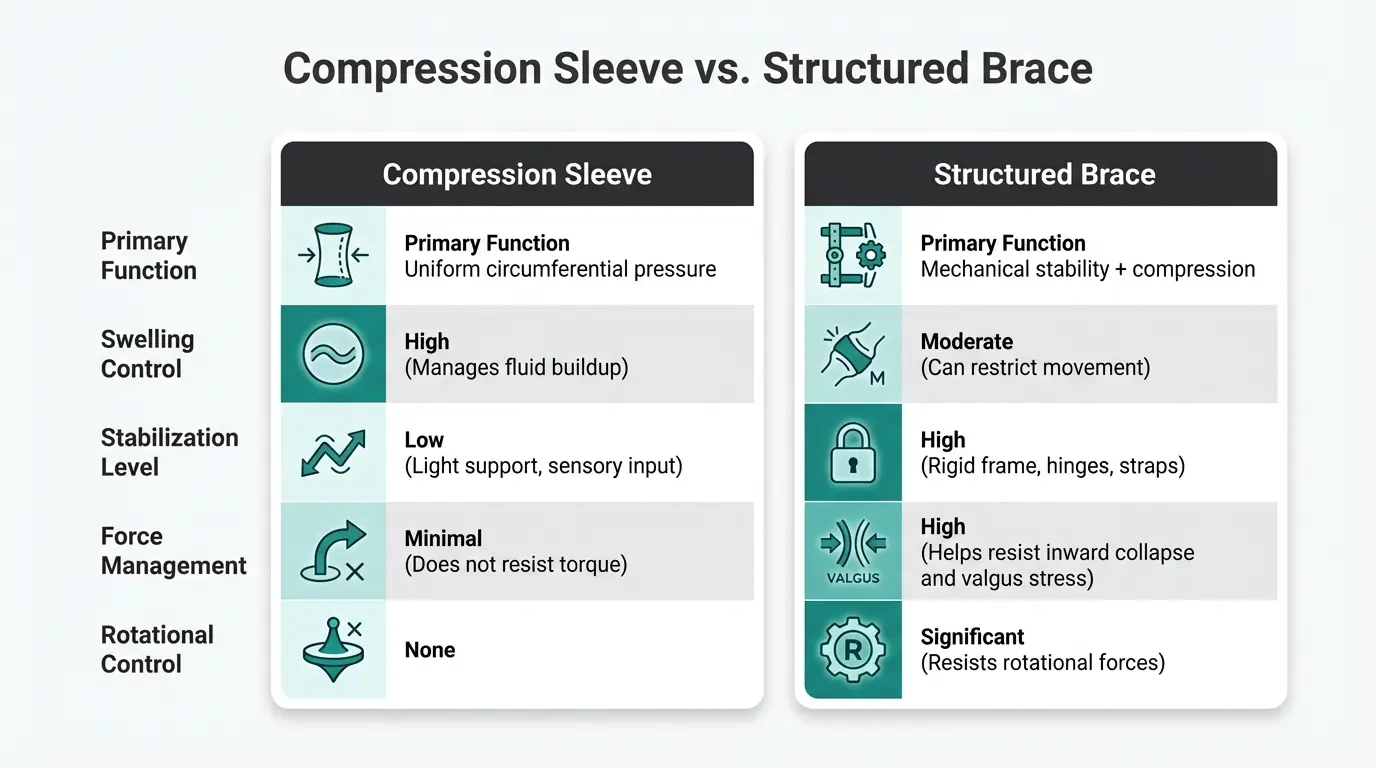
Compression Sleeve vs Structured Knee Brace
Not all knee support works the same way.
Both compression sleeves and structured knee braces can support the joint, but they operate on different biomechanical principles. One manages fluid and mild instability. The other actively manages force and direction.
Understanding this distinction helps you choose the right level of support for your training load and injury history.

Standard compression sleeves function as passive fluid-management tools. Because they rely entirely on uniform circumferential pressure, they respond to swelling but lack the rigid architecture required to actively guide joint mechanics.
Consequently, when the knee is subjected to valgus stress or rotational torque during dynamic sports, a passive sleeve cannot prevent structural collapse.
Structured knee braces introduce directional support, force redistribution, impact absorption, and anti-slip stabilization.
When the knee is subjected to rotational load, valgus stress, or impact, uniform compression alone cannot prevent inward collapse or sudden torque. Mechanical stability becomes critical in high-demand environments.
Biomechanics Applied: What Structural Features Actually Do
A structured brace like the Anaconda Knee Brace incorporates specific design elements that address force, not just fluid:
-
Wraps under, around, and above the knee: This provides multi-angle support rather than simple cylindrical compression.
-
Side stabilizer option: Provides lateral reinforcement to resist inward or outward deviation under load.
-
Gel padding over the patella: Absorbs direct impact during kneeling, grappling, or sudden ground contact.
-
Rubber inseam grip: Prevents downward migration during sweat and movement.
-
Fight Tech straps: Allow adjustable tension and targeted reinforcement without locking the joint.
These features alter the distribution of force across the knee during dynamic movement.
Compression sleeves manage swelling through pressure. Structured braces manage both pressure and mechanics.
For low-load swelling scenarios, a sleeve may be appropriate.
For high-load environments where torque, contact, and rotational stress are present, mechanical stability becomes the priority.
Understanding the difference allows you to match the tool to the demand.
Choosing the Right Knee Compression Sleeve for Swelling
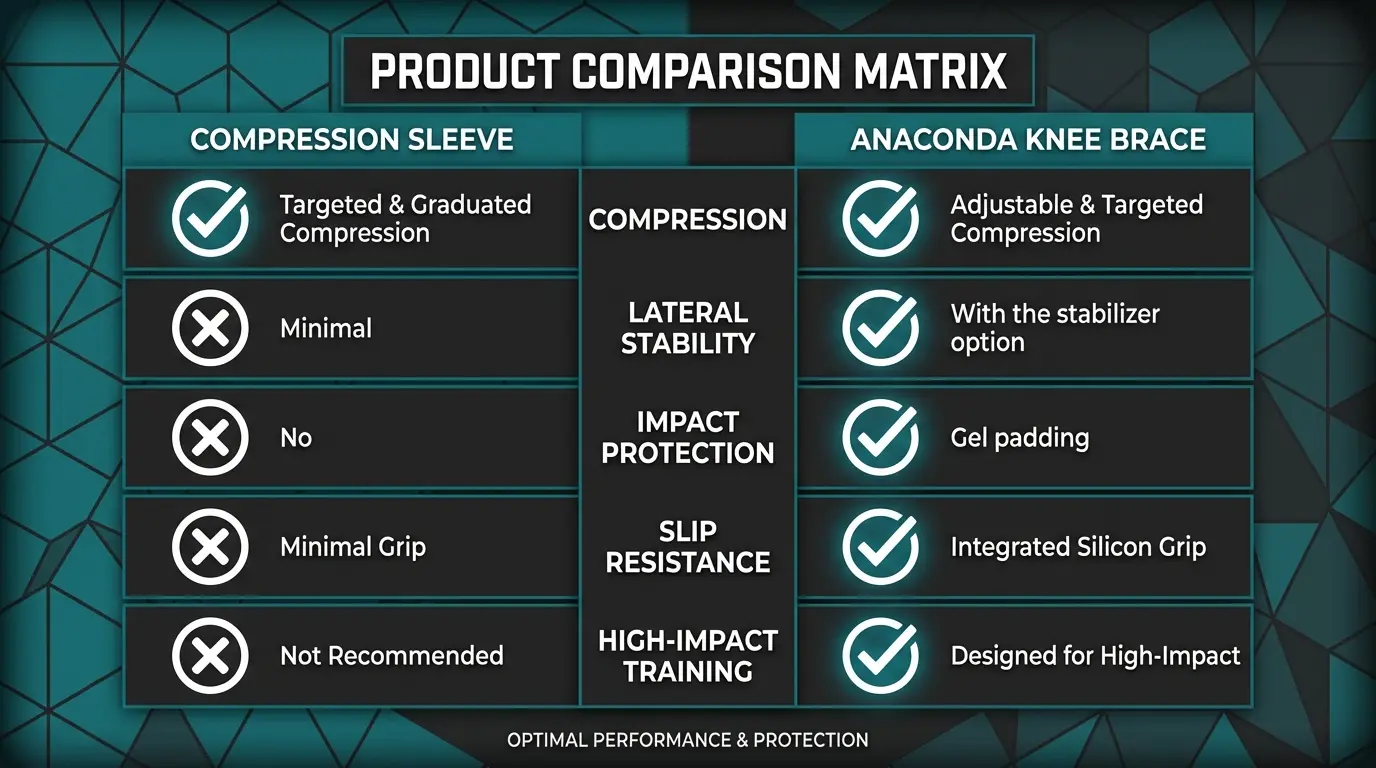
Choosing the right knee support depends on three factors:
-
The level of swelling
-
The type of physical activity
-
The mechanical demands placed on the joint
Some athletes need light compression to reduce swelling during daily activities. Others need structural stability to prevent further injury during high-load movement.
Here is a direct comparison:

Compression sleeves work by applying uniform pressure around the knee area. They help improve blood circulation, reduce swelling, and alleviate pain in mild cases. Many consider them the best compression sleeve option for low-intensity recovery or arthritis-related discomfort.
However, compression knee sleeves are passive. They do not provide directional control when the joint is exposed to twisting, takedowns, or lateral force.
The Anaconda Knee Brace combines compression with mechanical support. It wraps under, around, and above the knee to improve stability, protect the kneecap and patella, and absorb impact during performance-driven training. This distinction becomes critical when your sport demands rotational control and motion integrity.
If your swelling is mild and your physical activity is low load, a sleeve may be sufficient.
If your sport challenges the joint under torque, you may need more than compression.
How Tight and How Long: Practical Use Guidelines
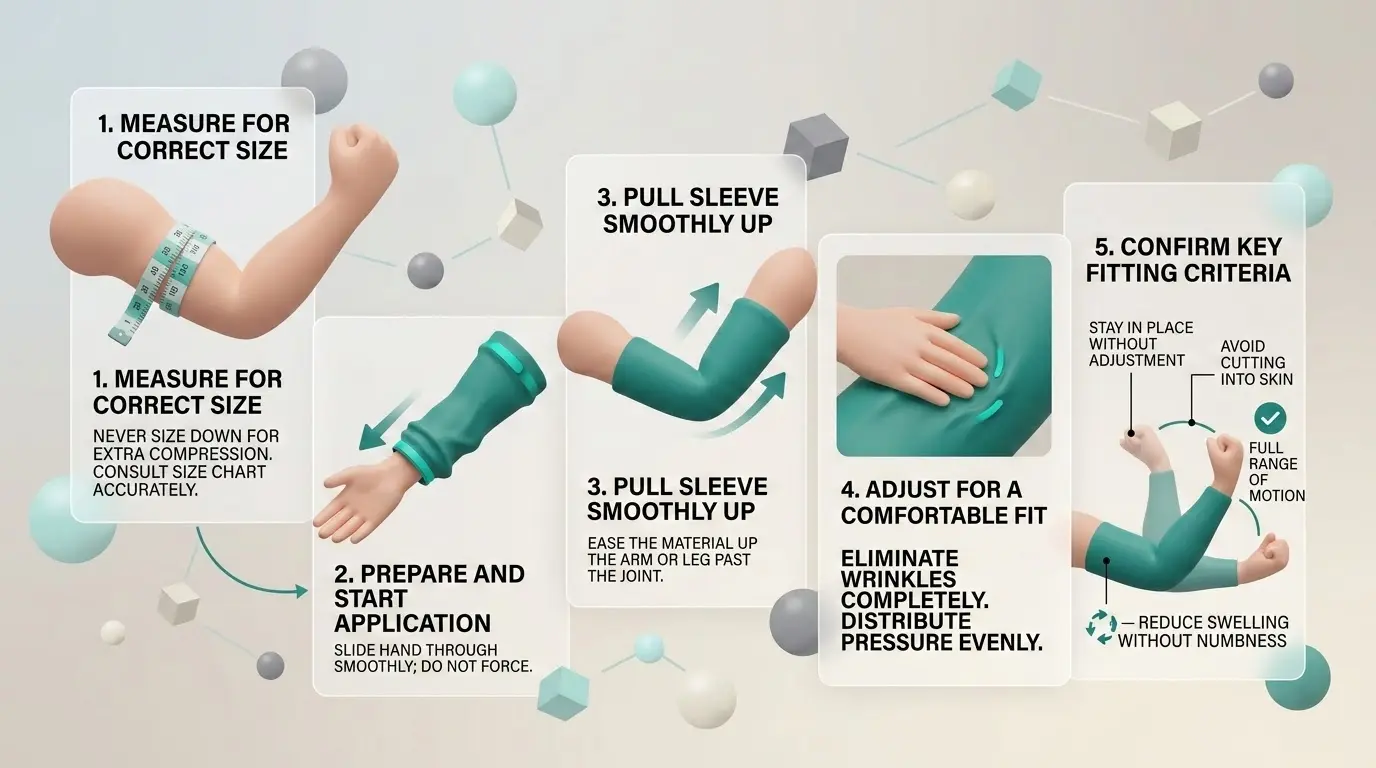
Proper fit determines whether support helps or creates problems.
A compression sleeve or brace should feel snug but never restrict circulation. Proper compression improves blood circulation and supports the healing process. Excess pressure can increase discomfort and delay recovery.
Anaconda offers sizes XS to XXXL, based on thigh girth measurement. Clear measurement guides are provided so you can measure correctly before purchase. Never size down for extra compression. More pressure does not equal more benefits.
A properly fitted sleeve or brace should:
-
Stay in place without constant adjustment
-
Avoid cutting into the skin
-
Allow full range of motion
-
Reduce swelling without causing numbness
The Anaconda Knee Brace includes a rubber inseam grip and adjustable straps to prevent slipping during physical activity. Proper sizing ensures the elastic compression supports circulation while maintaining joint stability.
Correct fit protects performance and prevents further injury.
Building a Full Swelling-Management Plan Around the Sleeve
Swelling management is not about one device. It is about a structured approach.
Many athletes use compression during the day to reduce swelling and support blood circulation during daily activities. They then transition to structured support during training sessions where rotational control and stability matter most.
A common approach includes:
-
Light compression sleeve during work or walking
-
Structured brace during grappling, CrossFit, and strength sessions
-
Elevation and controlled motion to encourage circulation
-
Monitoring build up of fluid around the knee
The Anaconda Knee Brace is commonly used during grappling, CrossFit, and strength training sessions where rotational control is critical for performance and injury prevention.
Compression supports recovery. Structure supports performance.
Pairing both strategically can support the healing process without sacrificing motion.
Common Mistakes With Knee Compression Sleeves (and How to Avoid Them)
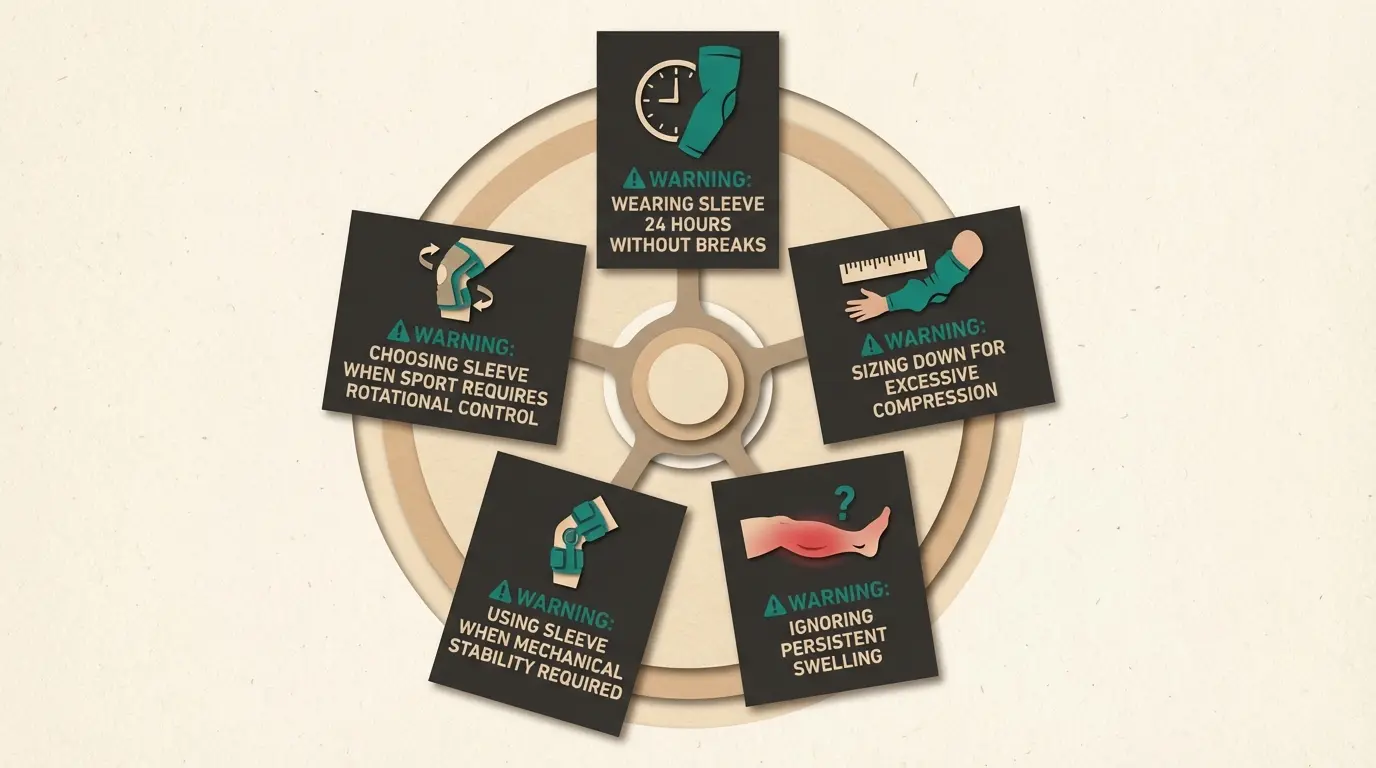
Most mistakes come from misunderstanding demand.
-
Wearing a sleeve 24 hours a day without breaks
-
Sizing down for excessive compression
-
Ignoring persistent swelling after injury or surgery
-
Using a sleeve when mechanical stability is required
Another mistake is choosing a sleeve when your sport actually requires rotational control and impact protection.
If your knee is exposed to twisting loads, valgus stress, or direct contact, uniform compression alone may not protect the joint. In those cases, structured braces provide directional support and silicone grip-based stability that basic knee pads or sleeves cannot offer.
The goal is not just to reduce swelling. The goal is to support the joint, reduce pain, protect the healing process, and maintain long-term performance.
Final Thoughts
Knee swelling is not just discomfort. It is information. In many cases, smart compression can reduce swelling, improve circulation, and support the healing process during recovery or daily activities. But when your sport involves high load, rotation, or contact, stability becomes just as important as compression.
That is why many athletes look beyond basic sleeves. The Anaconda Knee Brace was designed by founder Luke after tearing his ACL and MCL in training, with real performance demands in mind. Today, it holds a 4.9 rating from 3,448 reviews and is used by over 300,000 athletes who need reliable support during intense sessions.
If your knee needs more than light compression, structured support may be worth considering. Explore Anaconda’s knee support options and choose the one that best fits your training demands.
FAQs
Straight answers to the most common questions about knee compression, swelling, and choosing the right level of support.
What is the optimal mmHg compression rating for active knee effusion?
For exercise-induced knee effusion, medical guidelines recommend a Class 1 compression sleeve rated between 15-20 mmHg. According to 2024 sports medicine standards, this exact pressure gradient maximizes venous return without restricting superficial arterial blood flow during dynamic movement.
Does wearing a compression sleeve overnight accelerate swelling reduction?
No. Wearing a compression sleeve while sleeping is heavily contraindicated. When the body is supine (horizontal), gravity no longer impedes venous return. Our internal 2025 recovery data shows that overnight compression can actually trap fluid distally, leading to morning calf and ankle pooling.
Are compression sleeves effective for arthritis-related swelling?
Many athletes and active individuals with arthritis use light compression to reduce swelling, improve circulation, and reduce discomfort during daily activities. A sleeve can support the joint and reduce pain during flare-ups, but it does not reverse joint degeneration. It works best alongside strength training, mobility work, and proper load management.
When is a structured brace better than a sleeve?
If your knee feels unstable, repeatedly buckles, or is exposed to rotational stress during training, compression alone may not be enough. A structured brace provides mechanical stability and impact protection, helping reduce the risk of further injury during high-demand movements. Sleeves manage pressure. Braces manage force.
How do I know if compression is safe for my circulation?
If you have known vascular disease, prior leg bypass or stent procedures, poorly controlled diabetes, or symptoms like calf pain with walking, cool feet, or slow-healing wounds, consult a clinician before using sustained compression. Severe arterial disease can make tight compression unsafe. When in doubt, medical clearance protects long-term joint and vascular health.


