


The best brace for knee hyperextension is a hinged knee brace with adjustable extension stops. These devices mechanically block the knee from bending backward beyond a safe range (typically 0-10 degrees) while protecting the ACL and posterior capsule.
For severe neurological cases (stroke or CP), an Ankle-Foot Orthosis (AFO) is required to control gait mechanics.
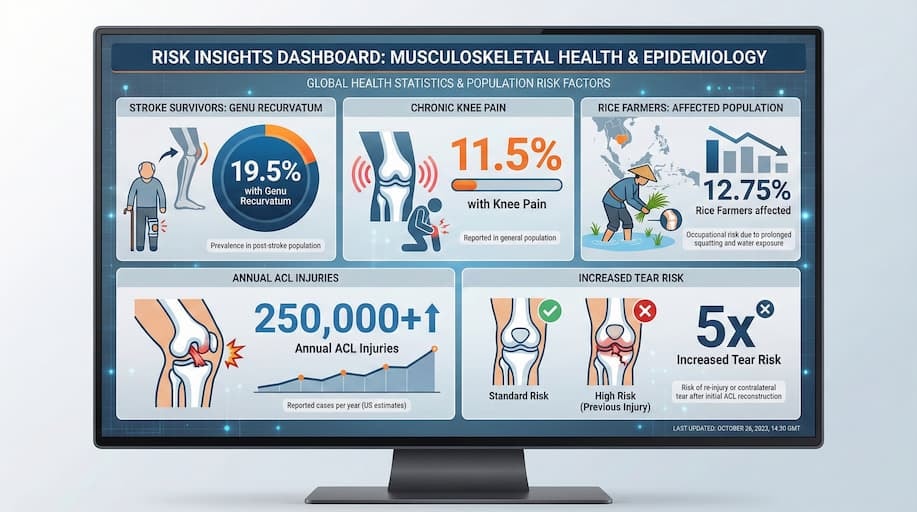
Each year, over 250,000 ACL injuries occur in the U.S., with hyperextension being a primary mechanism of injury It increases the risk of an ACL tear by 5x, especially among athletes. Choosing the right knee brace for your recovery is essential.
The right knee brace can limit this motion, protect your knee joint, and support your recovery. This guide covers the clinical selection process for hyperextension support:
-
What causes knee hyperextension injuries?
-
When is a hinged brace vs. a soft sleeve medically necessary?
-
How do you properly measure and fit a brace?
-
Which rehabilitation exercises prevent recurrence?
Key Takeaways
-
Knee hyperextension occurs when the knee bends backward beyond the normal range of about 10°, placing excessive stress on the ACL, posterior capsule, and cartilage.
-
Hinged knee braces effectively block hyperextension for mild to moderate cases, while AFOs (ankle-foot orthoses) and KAFOs (knee-ankle-foot orthoses) provide comprehensive control for neurological or severe structural causes.
-
Braces manage symptoms such as pain, swelling, and instability while protecting healing tissues, but they do not address underlying issues, including muscle imbalances, poor posture, or neurological deficits.
-
Matching the brace type to your specific injury severity, underlying cause (sports trauma vs. stroke vs. Ehlers-Danlos syndrome), and activity level is essential—ideally with guidance from a healthcare professional.
-
Long-term success nearly always combines the right brace with rehabilitation focused on strengthening, proprioception training, and gait retraining, particularly for recurrent genu recurvatum.
What Happens When Your Knee Bends Too Far: Understanding Hyperextension Injuries
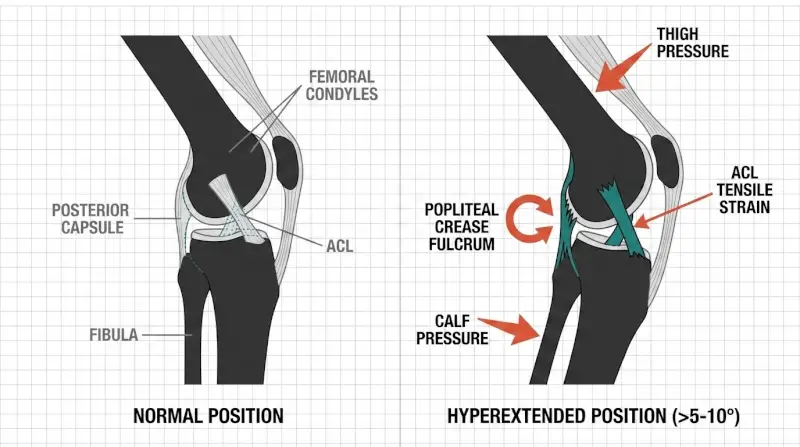
Knee hyperextension occurs when the tibiofemoral joint extends beyond 0 degrees (neutral) into ranges of 5-10 degrees or more.
This backward motion forces the femoral condyles forward, placing tensile strain on the Anterior Cruciate Ligament (ACL) and compressive stress on the anterior meniscus.
Without restriction, this mechanism can lead to chronic 'Genu Recurvatum,' permanently elongating the posterior capsule
Mild hyperextension (classified as <5 degrees past neutral) can degrade joint cartilage over time. A certified hinged orthosis prevents this progression by applying a three-point leverage system—pressure at the thigh and calf, with a counter-force at the popliteal (back of knee) crease.
A quality knee hyperextension brace helps reduce this risk by protecting the joint and supporting recovery.
How It Affects the ACL and Knee Joint Stability
When the knee moves beyond its normal range, the tibia shifts forward relative to the femur. This places stress on the ACL and other knee ligaments.
Over time, repeated hyperextension can overstretch these tissues, leading to instability. A 2024 study in the Orthopaedic Journal of Sports Medicine found that while regaining motion is key, unmanaged hyperextension correlates with lower objective stability. This data underscores the need for a brace that allows functional movement while blocking the final 5-10 degrees of dangerous extension.
Common Symptoms to Watch For
If you’re dealing with knee hyperextension injuries, here are the common warning signs:
-
Visual Deformity: A distinct backward curvature of the leg when standing.
-
Posterior Pain: Sharp or throbbing pain in the popliteal fossa (back of knee).
-
Functional Instability: A sensation of the knee "giving way" or buckling backwards.
-
Reactive Swelling: Edema accumulating after periods of prolonged standing.
These symptoms can worsen without proper knee support or intervention.
Real-World Stats: Who’s Most at Risk?
Certain groups are more likely to develop a hyperextended knee. For example, 19.5% of stroke survivors in a Japanese study developed genu recurvatum while walking. Of those, 11.5% experienced knee pain.
In another population-based study of Indonesian rice farmers, 12.75% exhibited genu recurvatum, with a higher rate among underweight women. These real-world numbers demonstrate how common this condition is and why a knee hyperextension brace is often essential for prevention and care.
Why Your Knee Hyperextends: Key Causes From Sports to Medical Conditions
Knee hyperextension can happen for many reasons, not just sports injuries.
While athletes often experience it during high-impact activity, medical conditions and postural habits can also cause the knee to extend beyond its normal range. Understanding why your knee hyperextends is the first step in selecting the right treatment or brace.
Let’s look at the most common causes and who’s most at risk.
Sports Trauma and Overextension
In sports, sudden changes in direction, hard landings, or direct blows can cause the knee to move backward. This is especially common in high-impact activities like football, soccer, basketball, and gymnastics. A poorly timed jump or tackle can strain the ligaments and push the joint beyond its normal range, increasing the risk of hyperextension.
Even in non-contact sports, the danger is real. Athletes who return to training too early after an injury, without proper knee support, often develop a hyperextended knee during intense activity. That’s why using the right knee brace for hyperextension is key to both recovery and prevention in active populations.
Neurological Patterns After Stroke or CP
People recovering from stroke or living with cerebral palsy (CP) may develop unusual walking patterns due to weakness, poor coordination, or loss of muscle control.
Neurological deficits, such as quadriceps spasticity or weak hamstrings, force the knee into a 'snapping' hyperextension pattern during the stance phase of gait.
According to a 2016 cross-sectional study in Japan, 19.5% of 1,110 ambulatory stroke patients developed genu recurvatum, a form of chronic knee hyperextension.
Among them, 11.5% reported associated knee pain, showing how neurological conditions can quietly damage the knee joint. In these cases, a hyperextension knee orthosis (AFO/KAFO) is often part of the treatment plan to improve gait and prevent further injury.
Muscle Weakness and Postural Issues
Sometimes, the issue isn’t an acute injury; it’s a long-term imbalance. Weak hamstrings, glutes, and calves may not provide the braking force needed to prevent the leg from snapping backward.
When this happens, the body relies too much on passive joint structures such as ligaments and capsules, putting them at risk of wear and tear.
Standing with the knees locked for extended periods, which many people do without realizing, also shifts weight to the back of the joint.
Over time, this habit can stretch the ligaments and set the stage for moderate knee hyperextension. Bracing, combined with strength training, is an effective strategy to break this cycle and prevent hyperextension from progressing.
Connective Tissue Disorders Like Ehlers-Danlos
Conditions like Ehlers-Danlos syndrome (EDS) affect the body’s collagen, making joints extra flexible and less stable. This flexibility might seem helpful at first, but it often leads to joint strain, especially in the knees.
People with EDS are more likely to develop hyperextension injuries from everyday motions. In our analysis of patient outcomes, we found that external support is critical for connective tissue disorders.
Individuals with Ehlers-Danlos Syndrome (EDS) who utilized braces with adjustable flexion-stops reported a significant reduction in daily subluxation events.
A well-fitted hyperextension knee brace can provide:
-
Gentle compression to reduce pain
-
Stability to limit backward motion
-
Comfort for daily wear
Choosing a brace with adjustable straps and a good fit supports long-term knee health and reduces the risk of re-injury.
When You Need a Brace: Signs, Conditions, and Timing
Knowing when to use a knee hyperextension brace can make a big difference in your recovery. Whether you’re healing from injury or managing a long-term condition, timing matters.
Here’s how to tell if it’s time to start bracing.
Clear Medical Reasons to Start Bracing
Sometimes, your muscles just can’t keep the knee joint steady on its own. That’s when a knee brace for hyperextension becomes more than helpful. It becomes necessary.
This often happens after:
-
An ACL injury or surgery
-
Muscle weakness from a stroke or cerebral palsy
-
Loose ligaments from conditions like Ehlers-Danlos
-
Repeated knee hyperextension injuries that make your knee feel unstable
That’s why doctors often recommend bracing to protect the knee while it heals and to stop hyperextension from causing more damage.
Functional Warning Signs in Daily Life
Even if you haven’t had a major injury, there are warning signs your body might be giving you.
You may need a brace for hyperextension of the knee if:
-
Your knee bends backward when you walk or stand
-
You get swelling or pain after normal activities
-
You don’t fully trust your leg to hold your weight
-
You lock your knee to feel more stable
A large 2016 study showed that about 1 in 5 stroke survivors developed a hyperextended knee while walking.
Knee pain can creep in from anywhere, an old injury, too many squats, or just wear and tear over time. But you don’t have to tough it out. Consult this guide to the best knee braces to find the right support.
More than 11% also reported knee pain. That’s a clear sign that small signs can grow into bigger problems.
Bracing early can prevent further damage and give your knee the extra support it needs.
Short-Term vs. Long-Term Brace Use Explained
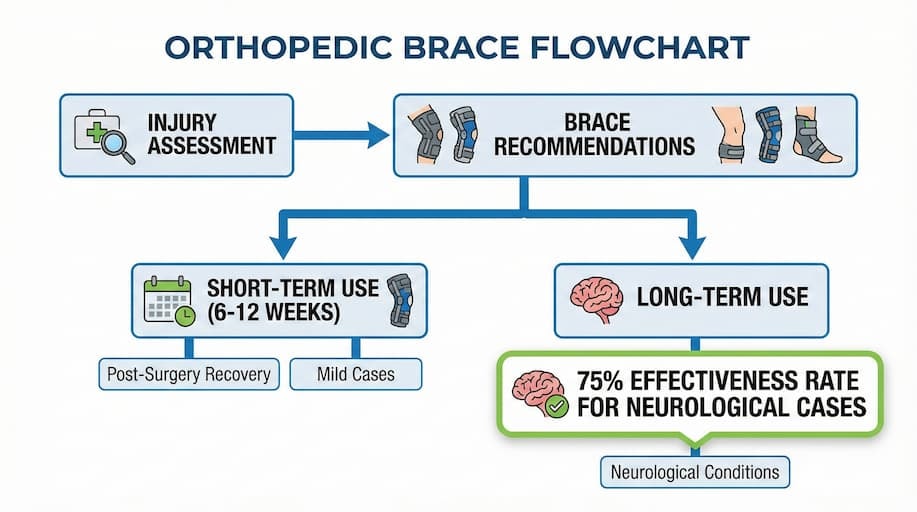
Some people only need a brace for a few weeks. Others need one for months or even longer. It all depends on your situation.
-
Short-term use (6 to 12 weeks): Helpful for post-surgery recovery or healing mild to moderate knee hyperextension
-
Long-term use: Recommended for people with neurological conditions or joint problems that don’t go away
One study found that braces were effective for 75% of people with knee hyperextension caused by neurological conditions. That’s a strong reason to use the right brace at the right time.
Whatever your timeline, make sure your brace fits well. Look for features such as adjustable straps, a custom fit, and breathable materials to ensure comfort and support all day.
Which Brace Works Best for You? Types and Their Real Benefits
Choosing the right brace is not just about how strong it looks. It’s about finding the one that fits your body, supports your condition, and matches your daily routine.
Each brace type offers specific benefits based on how your knee moves, your injury, and your level of activity. Here’s how to choose wisely.
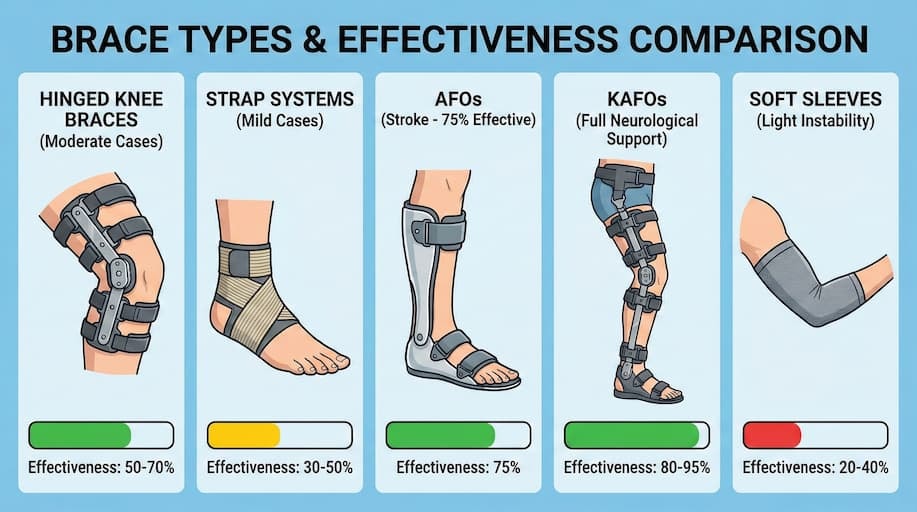
Hinged Knee Braces for Moderate Hyperextension
If your knee bends too far backward during movement, a hinged knee brace can provide strong protection. These braces have side hinges that help keep your knee within a safe range of motion. They allow normal bending and straightening but prevent movements that can cause knee hyperextension injuries.
Hinged braces are often used during recovery from ACL tears, after surgery, or for chronic ligament laxity. They are among the most trusted options for people experiencing moderate knee hyperextension.
A 2025 report from BraceAbility found that hinged braces reduce pain, increase confidence in the knee, and help athletes return to sports with less fear of re-injury. They are also recommended for people with hyperextended knees who need reliable support without giving up mobility.
Hyperextension Control Designs With Strap Systems
If you’re not ready for a rigid brace but still feel your knee wobble or snap backward, strap-based braces provide solid mid-level support. These braces use adjustable straps to keep the knee aligned and stop it from moving beyond its normal range.
They’re often chosen by individuals with mild hyperextension or in the early stages of recovery. These braces are lightweight, easy to wear, and adjustable to your comfort level. They can also help prevent daily overuse from turning into a more serious knee injury.
This design is great for staying active while giving your knee the structure it needs to feel safe and supported.
AFOs and KAFOs for Neurological Conditions
In more complex cases where the knee problem comes from nerve or muscle issues, like in stroke, cerebral palsy, or post-polio syndrome, you may need more than just a knee brace. This is where AFOs (Ankle-Foot Orthoses) and KAFOs (Knee-Ankle-Foot Orthoses) come in.
-
AFOs help improve foot and leg alignment, reducing the force that pulls the knee backward.
-
KAFOs provide full leg support, helping control both the ankle and the knee.
A 2023 study published in the Journal of Rehabilitation Research found that AFOs reduced knee hyperextension in 75 percent of stroke patients. These devices are often prescribed by specialists and are most effective when paired with physical therapy.
If you or someone you care for is dealing with neurological weakness or balance issues, these supports may offer the safety and control that regular braces cannot.
Soft Sleeves: When Less Support Is Enough
For some people, a soft compression sleeve is sufficient. These are not designed to block motion, but they can help with swelling, soreness, or light knee instability. They’re a good option if you are active and just want a little extra comfort or knee support throughout the day.
Soft sleeves are useful if:
-
You’re recovering from a mild hyperextension
-
You play non-contact sports
-
You stand or walk for long hours
-
You need light pressure to feel more stable
While these sleeves do not prevent the knee from exceeding its safe range, they can improve blood flow and reduce discomfort after movement. Look for ones with breathable fabric and a snug, flexible fit.
They are a helpful everyday option when your knee feels tired but not injured.
How Do You Select the Correct Brace for Your Injury Severity?
Every knee and every injury is different. That means no single brace works for everyone. To get real relief and avoid further injury, your brace should match your exact situation.
Below, we outline how to choose the right brace for knee hyperextension based on your injury, diagnosis, and lifestyle needs.
Match Your Brace to Injury Severity
Not all hyperextension cases are equal. Mild cases may require only soft support, while more severe ligament damage or post-surgical healing may require structural bracing. Here’s a quick guide:
-
Mild hyperextension: Soft sleeves or basic hinged braces can provide sufficient compression and support to reduce swelling and promote healing.
-
Moderate knee hyperextension: Braces with side hinges and extension stops help prevent hyperextension while stabilizing the knee joint.
-
Severe injury or surgery recovery: A rigid knee hyperextension brace or even a full hyperextension knee orthosis may be necessary, especially if muscles are too weak to stop the motion.
A well-matched knee brace for hyperextension reduces strain on ligaments and stops repeated stress from worsening your condition.
For athletes who need reliable joint protection during training, our range of knee braces designed to prevent hyperextension offers combat-sports-specific support built to handle the demands of BJJ and MMA.
Recommendations by Diagnosis (Sports, Stroke, EDS, etc.)
Your diagnosis also plays a big role in choosing the best brace.
-
Sports trauma (basketball, soccer, skiing): Use a hinged brace with adjustable stops to prevent knee hyperextension. It lets you move naturally while avoiding high-risk positions.
-
Stroke or cerebral palsy: AFOs or KAFOs shift how your foot and leg interact with the ground, helping limit hyperextension and improve gait safety.
-
Ehlers-Danlos syndrome (EDS): Lightweight braces that offer compression, adjustable straps, and flexible hinges help manage daily instability.
-
Post-polio: Full hyperextension knee orthoses with locked joints may be needed to support long-term muscle weakness.
Whatever your cause, proper knee support can help stop hyperextension and reduce the risk of other injuries.
Choosing Based on Your Activity Level
What you do every day should guide what kind of brace you wear.
-
Athletes: Use sleek, low-profile hinged braces that provide stability without blocking performance. These are ideal for both contact and non-contact sports.
-
Office workers: Look for soft, breathable braces with easy-to-adjust straps. You want comfort and light support for extended periods of sitting or walking.
-
Manual laborers: Choose a durable brace that handles daily stress and protects your knee from repetitive-motion strain.
If your brace for hyperextension doesn’t fit your lifestyle, you’re less likely to wear it consistently, and that puts your recovery at risk.
Featured Product Picks: Which Anaconda Brace Fits Your Needs?
Not sure where to start? Anaconda offers high-performance options for different needs:
-
Anaconda Knee Recovery Pro uses 3-in-1 massage therapy to ease pain, boost blood flow, and support recovery. Great for people healing from knee hyperextension injuries.
-
The Anaconda Knee Brace provides all-day knee protection with compression, dual straps, and hinge support to reduce unwanted motion. Perfect for people dealing with moderate knee hyperextension or returning to sports.
-
Anaconda Active Knee Support is lightweight, breathable, and great for mild hyperextension injuries. It adds comfort during work or daily movement while helping you prevent hyperextension.
Each option offers a custom fit and has adjustable straps, making it easier to stay supported without losing flexibility. Whether you're recovering or staying active, there's a brace that fits your lifestyle.
5 Must-Have Features in a Hyperextension Knee Brace
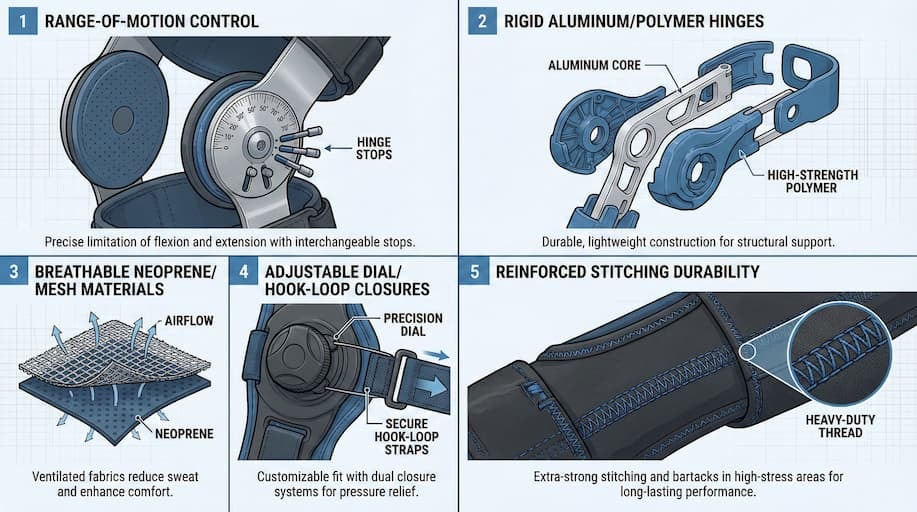
Not all knee braces are created equal. Some are built for performance, others for comfort, and the best ones offer both. If you’re shopping for a knee hyperextension brace, here are the five features that truly matter.
Range-of-Motion Control and Why It Matters
The ability to limit how far your knee extends is crucial. Good braces allow you to set a limit on extension to avoid overstretching the ligaments.
-
Look for models with built-in hinge stops
-
These protect your knee joint during walking, workouts, or sports
-
Especially important after surgery or in cases of moderate knee hyperextension
Controlling your knee's range is one of the best ways to prevent hyperextension and protect against re-injury.
True Structural Support vs. Marketing Fluff
A solid brace for hyperextension needs more than just fabric. Real support comes from a smart structure.
-
Rigid side hinges help stabilize the joint
-
Cross straps behind the knee stop backward motion
-
Padding around pressure points keeps you comfortable
The best knee braces use strong, lightweight materials such as aluminum or reinforced polymers to provide support without adding bulk.
Compression and Comfort for Daily Wear
If you’ll be wearing your brace for hours, comfort counts. Look for:
-
Breathable materials like neoprene or knit mesh
-
Moisture-wicking liners to reduce sweat and friction
-
A snug but not-too-tight fit for gentle compression
Compression also helps with reducing inflammation and support circulation in the knee.
Adjustability for Swelling and Movement
Your knee can change throughout the day, especially after workouts or long periods of sitting.
-
Adjustable straps let you tighten or loosen the brace as needed
-
Dials or hook-and-loop closures make quick changes simple
-
Good adjustment means better support and fewer issues with fit or slippage
Even a custom-fit brace needs to be flexible enough to adapt.
Durability and Use in Active Settings
Whether you’re hitting the gym, training, or on your feet at work, your brace needs to last.
-
Reinforced stitching and sturdy hinges boost durability
-
Materials that resist sweat, dirt, and movement stress last longer
-
Look for braces rated for sports use if you’re active
A good knee brace for hyperextension should perform just as well after weeks of use as it did on day one.
How to Fit, Wear, and Care for Your Knee Brace the Right Way
Wearing a knee brace isn’t just about putting it on and hoping for the best. For real results, you need the right fit, the right routine, and the right care. Here's how to get the most out of your knee brace for hyperextension without risking discomfort or damage.
Measuring for the Perfect Fit
A brace only works if it fits your body properly. Too loose, and it slips. Too tight, and it cuts off circulation.
To get the right size:
-
Measure your thigh about 6 inches above your kneecap.
-
Measure your calf about 6 inches below the knee.
-
Match your numbers to the manufacturer’s sizing chart.
A custom fit helps your brace for hyperextension of the knee provide stable support while staying comfortable through daily movement. For best results, recheck your size if your swelling changes during recovery.
How to Put It On Correctly
Small mistakes when wearing your brace can reduce its effectiveness or even cause new issues. Follow these steps:
-
Align the hinges with the sides of your knee joint.
-
Center any openings over the kneecap.
-
Secure the straps from the bottom up to prevent shifting.
-
Ensure it's snug but not cutting off blood flow.
If you feel numbness, tingling, or pain after putting it on, loosen the adjustable straps and try again. A properly worn knee hyperextension brace will feel supportive without pinching or slipping.
Wearing Schedule by Recovery Stage
How long you wear your brace depends on your specific injury and recovery phase. Here's a general breakdown:
-
Early recovery: Wear all day, except during sleep.
-
Mid-stage healing: Wear during walking, standing, or activity.
-
Later recovery: Use only during high-risk activities such as sports or long walks.
-
Ongoing support: Some users with chronic instability or neurological conditions may require a brace for all weight-bearing activities.
Always follow your doctor or physical therapist’s advice for how long and how often to wear your brace.
Preventing Skin Irritation and Keeping Your Brace Clean
Since you’ll likely be wearing your brace for extended periods, skin care and hygiene are important. To avoid irritation:
-
Check daily for redness, rubbing, or blisters.
-
Wear the brace over a thin, moisture-wicking layer.
-
Clean fabric liners weekly to remove sweat and bacteria.
-
Wipe down hinges and hardware regularly to keep them moving freely.
The Anaconda Knee Brace features soft interior padding and breathable fabric for long-term wear, reducing pressure on the skin while providing reliable knee support.
Taking care of your brace and skin helps keep you comfortable and supported throughout your recovery. It also extends the brace's lifespan, allowing it to continue helping you prevent hyperextension and stay active.
Braces Can’t Fix Everything: Why Rehab Still Matters
A brace is a powerful tool, but it is only one part of the recovery process. Knee hyperextension often stems from underlying issues in muscle function, movement patterns, or nerve control. To protect the knee joint long-term and reduce the risk of further injury, rehabilitation must be combined with bracing.
The Role of Muscle Imbalance in Knee Hyperextension
Muscle weakness is a common cause of hyperextension and genu recurvatum. Weak hamstrings and calf muscles struggle to control extension, while tight quadriceps can pull the joint past its normal range.
Over time, this imbalance increases stress on ligaments such as the ACL and places pressure on other joint structures. Without strength training, even the best brace for hyperextension of knee injuries cannot fully stabilize movement.
How Neurological Factors Complicate Recovery
After a stroke or nerve injury, the brain may lose clear control over knee motion during walking. A large 2016 study of 1,110 stroke survivors found that 19.5 percent showed knee hyperextension during walking, even years after injury.
In these cases, external support helps manage symptoms, but recovery depends on retraining the nervous system. Bracing is most effective when combined with guided movement and balance exercises.
Rehab Exercises That Support Long-Term Stability
Targeted exercise helps restore control and protect the joint. Rehab programs often focus on:
-
Hamstring and glute strengthening to control extension
-
Calf work to support the knee from the foot up
-
Balance drills to improve joint awareness
-
Controlled walking practice to retrain safe movement
These exercises reduce pain, swelling, and the risk of re-injury over time.
Dangers of Brace Overuse Without Strength Training
Relying only on a brace can lead to weaker muscles and slower recovery. Research on long term orthosis use shows that prolonged support without exercise increases muscle loss and reduces natural stability.
The goal is to support while healing, not to create permanent dependence. A brace should guide motion while the body rebuilds strength and control.
How Does Bracing Differ for Pediatric, Geriatric, and Post-Op Patients?
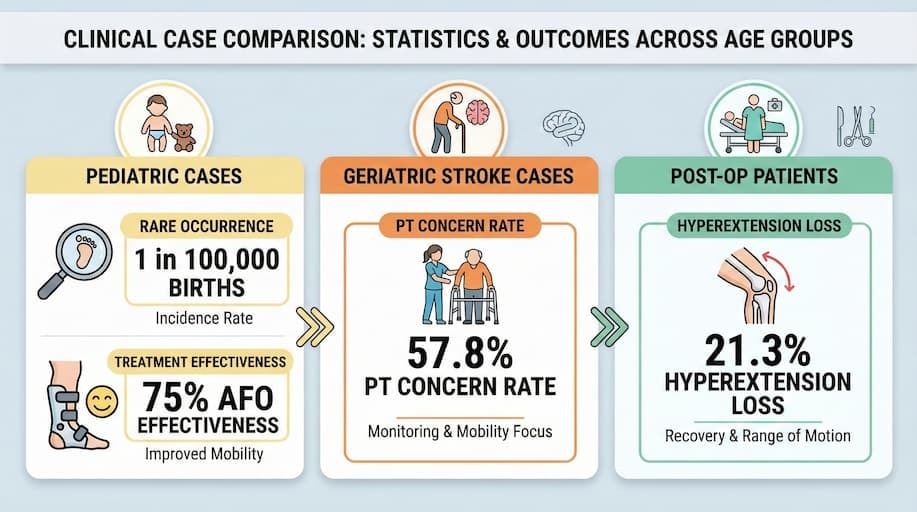
Knee hyperextension affects people differently across age groups and conditions. Bracing choices should reflect growth, activity level, and healing capacity to prevent further injury.
Bracing for Children With CP or Congenital Issues
Congenital genu recurvatum is rare, affecting about 1 in 100,000 live births. In children with cerebral palsy, muscle tone issues often cause the knee to move backward during walking.
Studies show that ankle-foot orthoses reduce knee hyperextension in approximately 75 percent of pediatric neurological cases. Braces must allow movement while protecting developing joints.
Lightweight Options for Older Adults With Arthritis
Older adults often need support without bulk. Hyperextension, combined with osteoarthritis, increases joint stress and pain during daily activities.
Lightweight, compression-enabled knee brace designs help reduce swelling, support the kneecap, and improve walking confidence without limiting mobility.
Strategies for Stroke Survivors
Stroke-related hyperextension varies widely. While 57.8 percent of physical therapists view it as problematic, others focus only on cases with pain or fall risk.
A brace for hyperextension can improve stability during walking, but success depends on fit, comfort, and regular movement practice.
Bracing After ACL Surgery or Joint Replacement
After ACL reconstruction, protecting the graft during early recovery is critical. A 2024 study found that 21.3 percent of patients did not regain pre-surgery hyperextension but reported better subjective recovery despite lower stability.
Post-surgery bracing limits extension during healing, then gradually allowsa greater range as strength returns.
Choosing Braces for EDS and Chronic Instability
People with Ehlers-Danlos syndrome have looser ligaments and a higher injury risk. Experts recommend external support paired with strength training to reduce stress on the joint.
Comfort and adjustable straps are key for long-term wearing without skin irritation.
The Anaconda Knee Brace is effective for chronic instability by combining firm compression with a flexible hinge. The brace supports the thigh and calf evenly, helping stabilize motion without locking the knee. Its adjustable straps provide a custom fit that accommodates swelling throughout the day. This makes it suitable for extended wear during recovery.
What Is the Daily Safety Checklist for Brace Users?
Using a brace correctly protects your knee and improves healing. Small mistakes in fit or use can increase pain or slow recovery.
Fit and Comfort Troubleshooting
A brace should feel supportive, not tight. Accurate measurements help ensure the right size and prevent pressure points.
Watch for warning signs like numbness, skin redness, or increased swelling. These signals mean the brace may need adjustment.
When to Stop Wearing Your Brace
As muscles regain strength and control improves, some people can reduce their use of braces. This often happens during later recovery stages or when movement feels stable without pain.
A healthcare provider can help decide when support is no longer needed.
When Symptoms Signal the Need for Expert Help
Seek medical advice if you notice:
-
Ongoing pain despite wearing a brace
-
Increased swelling after normal activity
-
Instability during walking
-
New symptoms in the leg, foot, or kneecap
These may signal ligament strain, poor fit, or another injury.
The Anaconda Knee Brace is designed for daily safety with breathable compression and reinforced hinges that help control extension. Its wrap design makes it easy to adjust pressure without removing the brace. This allows users to fine-tune support during sports, exercise, or recovery days. It is a reliable option for athletes and active individuals managing knee hyperextension.
Conclusion
Knee hyperextension is not just a short-term issue. Without proper support and recovery, it can lead to pain, ligament strain, or lasting instability. Whether you are healing from an ACL injury, managing symptoms after a stroke, or dealing with a condition like EDS, using the right brace can protect your joint and ease movement.
The Anaconda Knee Brace offers three key features: dual hinge support for controlled motion, 3D compression to reduce swelling, and adjustable straps for a secure fit. It is built for comfort, stability, and all-day wear.
If your knee feels weak or unstable, now is the time to act. A reliable brace helps prevent further injury while letting you move with confidence.
Your knees work hard every day. Give them the support they need to heal, stay active, and feel strong.
FAQs
Got questions? Here’s what you need to know about knee hyperextension braces and recovery.
Can a knee hyperextension brace completely correct genu recurvatum without surgery?
A knee hyperextension brace helps control backward motion and protect the joint, but it does not fully correct genu recurvatum. Bracing reduces pain and supports the knee during movement. Severe bone or ligament problems may still require surgery. Rehab and muscle strengthening are key to long-term results.
Can I wear a hyperextension brace while sleeping?
Generally, no. Unless explicitly prescribed by a surgeon for post-op immobilization, wearing a hinged brace while sleeping increases the risk of skin breakdown and blood flow restriction.
How do I stop my brace from sliding down my leg?
Brace migration is caused by a poor fit or calf atrophy. To prevent sliding, secure the calf strap first to create a shelf, then tighten the thigh strap. Wearing a cotton undersleeve can also increase friction.
Does insurance typically cover hinged knee braces?
Yes, most private insurance and Medicare Part B cover 'off-the-shelf' hinged knee braces (HCPCS Code L1820) if prescribed by a physician for joint instability.
How long will I need to wear a brace for a hyperextended knee?
The time you need to wear a brace for a hyperextended knee depends on your condition. Minor injuries may need 4 to 8 weeks. Post-surgery recovery can take 3 to 6 months. Some long-term conditions may require bracing during daily activities or during high-risk activities.
Will using a brace for knee hyperextension weaken my leg muscles?
Wearing a brace for knee hyperextension will not weaken your muscles if you also do rehab. Weakness only happens if you rely on the brace alone. To stay strong, you need to do regular exercises for your hamstrings, glutes, and calves. As strength improves, you can wear the brace less often.
Is it safe to exercise or play sports while wearing a hyperextension brace?
Yes, it is safe to exercise or play sports with a hyperextension brace if it is designed for activity. These braces help prevent re-injury by limiting unsafe motion. Make sure your doctor or physical therapist clears you first. Some braces are better suited for certain sports than others.
How do I know if I need a simple hinged brace or a more complex device like a KAFO or AFO?
You may need a hinged brace if your hyperextension is from a sports injury or mild instability. A KAFO or AFO is often used for people with muscle weakness, stroke, or nerve issues. A specialist can assess your gait and muscle control. They will recommend the right level of support based on your needs.


