


Shoulder pain has a way of creeping into training and daily movement. What starts as mild discomfort can quickly affect strength, mobility, and confidence.
It’s a common issue, too. An estimated 6,689,422 shoulder injuries were reported during the study period, making up 4.35% of all injuries treated in US emergency departments.
At Anaconda, we’ve spent years listening to athletes who are doing everything right in their training, yet still struggle when their shoulder doesn't feel stable or reliable.
That’s why we see shoulder support as more than temporary relief. It’s about helping the shoulder joint stay protected while allowing safe movement during injury recovery to continue.
Anaconda shoulder braces are built and tested during real gym and combat sessions, focusing on stability without sacrificing mobility.
In this guide, we’ll explain what a shoulder brace does, when it’s most useful, and how it can support recovery so you can move with confidence again.
Key Takeaways
-
A modern shoulder brace is designed to stabilize the shoulder joint, enhance proprioception (your body’s sense of joint position), and reduce pain so you can keep training, not lock you in place like a post-op immobilizer.
-
Full immobilization devices (rigid slings, sling + swathe systems) are reserved for acute trauma and surgical recovery. Every day braces for active people are lighter, more mobile, and built for lifting, throwing, and overhead motions.
-
Over-immobilizing the shoulder increases stiffness and frozen shoulder risk. The goal for most active users is guided, supported motion, not wearing a brace around the clock.
-
Shoulder braces make sense for sprains, overuse pain, post-dislocation confidence, and return-to-sport phases. You should see a clinician immediately for suspected fractures, visible deformity, sudden severe weakness, or heavy swelling after trauma.
-
A brace is a tool, not a cure. Long-term shoulder health depends on targeted strengthening exercises, load management, and often professional guidance—not just external support.
How Does a Shoulder Brace Work?
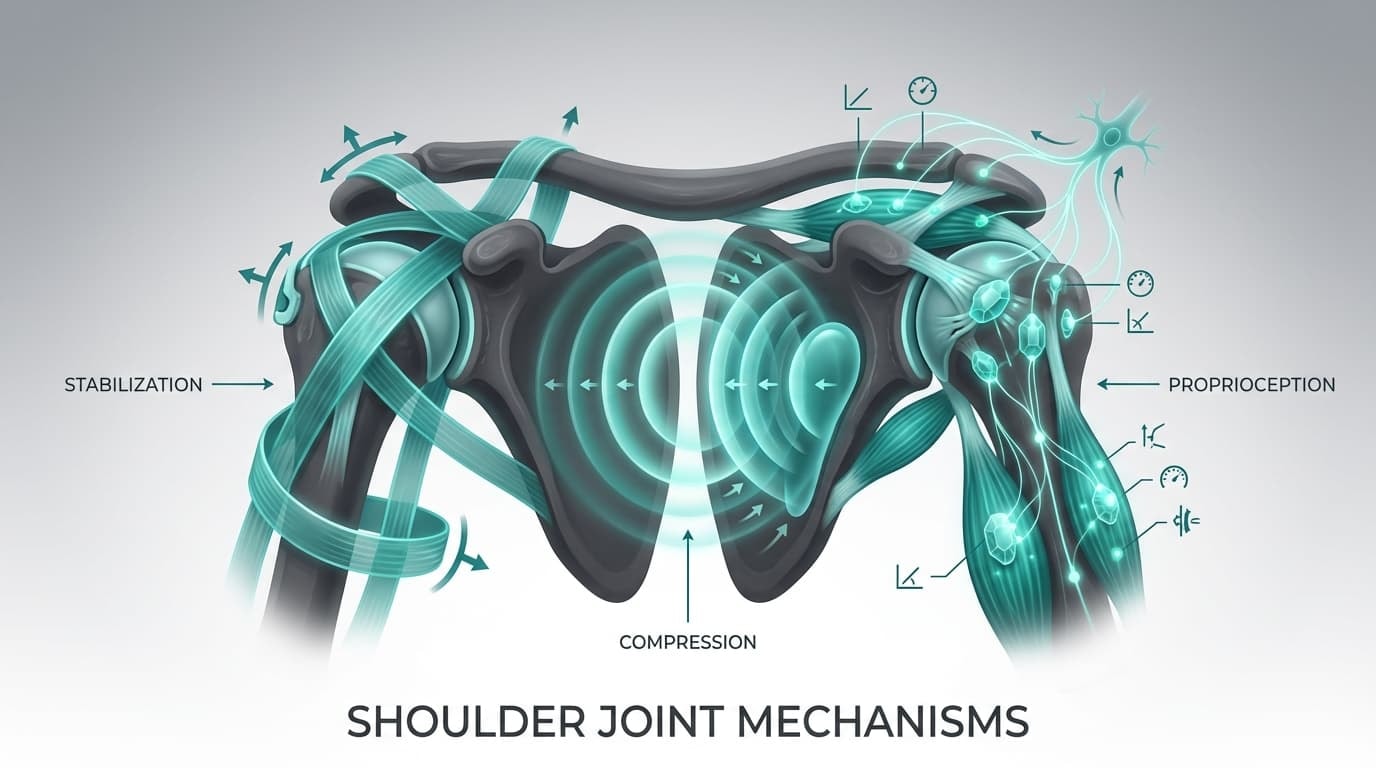
We’ve seen a lot of confusion around how shoulder braces work. Many people assume that putting something on the arm automatically locks the shoulder in place. In practice, that is not how most braces function.
A shoulder brace works by supporting movement rather than eliminating it. Instead of forcing the arm to stay still, it helps guide the shoulder joint into safer positions while reducing unnecessary strain. This is especially important for people dealing with shoulder pain, recurring shoulder injuries, or returning to training after time off.
Once you understand how a shoulder brace works, choosing the right one becomes much easier — our shoulder braces engineered for combat sports protection are built to deliver stability and compression through the full range of grappling and striking movements.
There are three core ways shoulder braces work.
Stabilization
Stabilization is about controlling risky shoulder movement.
Clinical guidance states that a basic arm sling supports the arm's weight but does not fully prevent shoulder motion, including internal and external rotation.
To truly limit shoulder movement, a swathe or commercial immobilizer is required. This is why many shoulder braces feature adjustable straps that wrap around the torso and upper arm, helping keep the shoulder more stable during activity.
For active users, stabilization is not about complete restriction. It is about reducing the extreme positions that place stress on the shoulder blade, the upper arm bone, and the surrounding soft tissues during lifting, grappling, or overhead motion.
This added structure can be especially useful after a dislocated shoulder, during early return to sport, or when managing instability from rotator cuff injuries or a torn rotator cuff.
Compression
Compression plays a different role.
Compression braces apply gentle, even pressure around the shoulder joint and surrounding muscles. This pressure can help:
-
improve comfort
-
reduce swelling during flare-ups
-
support circulation and blood flow
-
assist the healing process
Unlike rigid immobilizers, compression braces are designed to move with the body. That is why many shoulder braces combine elastic materials with adjustable tension, providing support without locking the arm down.
In practice, we often notice athletes prefer compression support because it provides stability while still allowing training to continue at a modified level.
Proprioception
Proprioception is your body’s awareness of where a joint is positioned.
When shoulder injuries occur, especially involving the rotator cuff tendons, that awareness can be reduced. The shoulder may feel unstable even when strength has partially returned.
Wearing a shoulder brace stimulates receptors in the skin around the joint. This feedback helps the body sense shoulder position earlier during movement, allowing stabilizing muscles to engage sooner.
For athletes, this matters. Improved joint awareness can support shoulder function during fast transitions, overhead lifts, and contact situations.
It is one reason many shoulder braces work well, not just for recovery, but also during training phases where confidence has not fully returned yet.
Why Modern Braces Focus on Guided Motion
Medical guidance consistently warns that full immobilization carries risks.
As mentioned above, Merck Manual notes that prolonged immobilization can quickly lead to stiffness and frozen shoulder.
Post-operative NHS guidance also states that wearing a sling continually increases the risk of stiffness and reduced movement at both the shoulder and elbow.
This is why many shoulder braces are designed to support controlled motion rather than total restriction.
A research study comparing immobilization methods after a dislocated shoulder found that external-rotation bracing had lower recurrence rates than traditional internal-rotation slings (25% versus 40%).
For younger athletes, the same analysis showed that wearing a sling for more than 1 week did not significantly reduce the risk of recurrence. This reinforces the idea that smarter positioning and movement guidance matter more than simply wearing a sling longer.
What This Means in Real Training
In practice, shoulder braces help by:
-
supporting the shoulder joint without fully stopping movement
-
guiding shoulder movement away from vulnerable positions
-
assisting pain relief while training volume is reduced
-
helping athletes stay active during recovery
-
restoring confidence after severe shoulder injuries or rotator cuff surgery
That balance between stability and mobility is why many shoulder braces are used during training rather than only during rest.
At Anaconda, this principle matters. Our gear is tested in real gym sessions and combat training, where shoulder support must hold up under pressure without restricting performance.
The goal is simple. You do not stop training. You adapt.
Types of Shoulder Braces
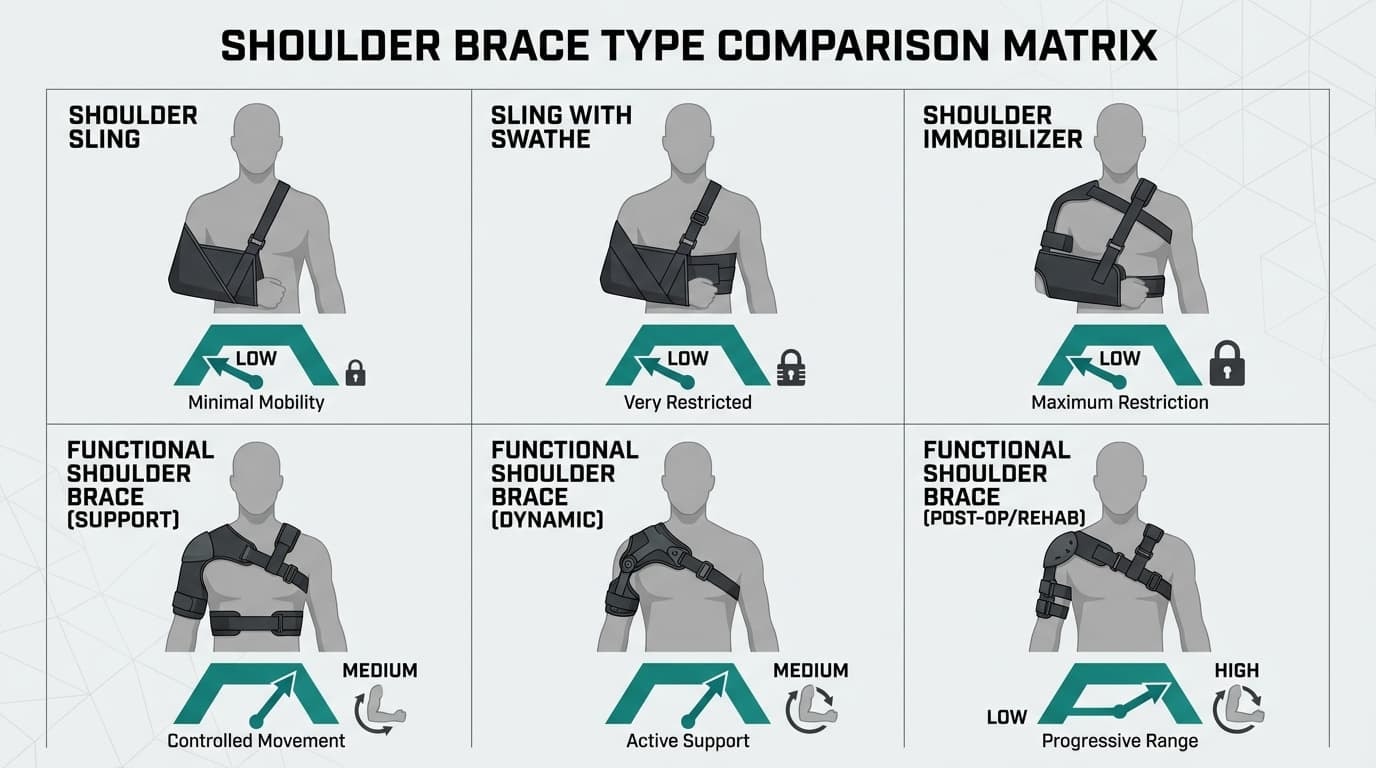
Not all shoulder braces are designed for the same job. The right option depends on your specific injury, the amount of movement you need to allow, and where you are in the healing timeline.
We’ve seen many athletes make recovery harder by choosing the wrong brace.
Below is a clear breakdown of the most common options and what each one actually does.
Shoulder Slings
Shoulder slings are often the first form of support used after injury.
They are designed to support the weight of the arm and reduce movement, allowing the injured area to rest during early recovery.
However, clinical guidance explains that a sling does not fully prevent shoulder movement, especially internal and external rotation.
Because of this, slings are typically used short-term after trauma, surgery, or severe shoulder injuries rather than during training.
Here are a few important considerations. Wearing a sling continually can increase stiffness and limit the range of motion. Also, a poor fit may increase the risk of ulnar nerve compression if the wrist hangs unsupported
Sling With Swathe
A sling with a swathe adds an extra strap that wraps around the torso.
This design helps limit shoulder movement more than a sling alone, particularly rotation.
These are typically used when:
-
Rotation needs to be restricted
-
Early joint recovery requires more control
-
A healthcare professional recommends additional support
Because this setup further restricts movement, it is usually reserved for short-term conservative treatment rather than active use.
Shoulder Immobilizers
Commercial shoulder immobilizers combine a sling and a swathe into a single, structured system.
They are designed to restrict shoulder motion more effectively than basic slings.
As noted earlier, certain brace positions may offer advantages over traditional slings in managing shoulder instability.
These braces are most commonly used after:
-
a dislocated shoulder
-
rotator cuff surgery
-
severe instability
They are not designed for training and should only be used under professional guidance.
Abduction Braces
An abduction brace holds the arm slightly away from the body at a fixed angle.
This positioning is often prescribed to:
-
protect surgical repairs
-
support proper healing
-
reduce stress on the affected area
Abduction braces are frequently used after rotator cuff surgery or to manage a large partial tear or a torn rotator cuff.
Because they significantly limit the range of motion, they are typically worn only during early recovery and under a healthcare professional's direction.
Functional Shoulder Braces
Functional braces are designed for people who need external support while still moving.
These are the braces most athletes recognize. They often include:
-
adjustable straps
-
flexible materials
-
lightweight structure
They are commonly used during:
-
training modifications
-
return-to-sport phases
-
overhead motions
-
confidence rebuilding after injury
Rather than stopping movement, these braces help manage shoulder pain, improve pain control, and protect vulnerable positions while staying active.
At Anaconda, we’ve seen many athletes try to push through shoulder problems because they don’t want to miss training. But constant pressure from lifting, grappling, and repeated movement builds up fast, making the shoulder more vulnerable to sudden injury.
That’s why more than 300,000 athletes now train with Anaconda, using shoulder support that stays in place during real training.
The Anaconda Shoulder Brace is tested on the mats and in the gym, offering stable support that does not shift mid-session. Many athletes rely on its 3D compression to reduce discomfort and keep training with confidence, even when the shoulder is not at 100%.
Compression Braces and Sleeves
Compression braces provide low-profile shoulder support and are often worn under clothing.
They are commonly used to:
-
alleviate pain
-
reduce swelling
-
maintain warmth
-
support blood flow
These braces are popular during light training, warmups, and recovery days. While they do not replace more structured support, they can make all the difference for mild irritation or flare-ups.
Specialized Braces
Some conditions require more targeted designs.
Examples include braces created for:
-
the acromioclavicular joint
-
postural correction
-
sport-specific shoulder stress
These specialized braces are usually recommended by a physical therapist when a generic brace does not adequately support the injured area.
What Shoulder Braces Help With
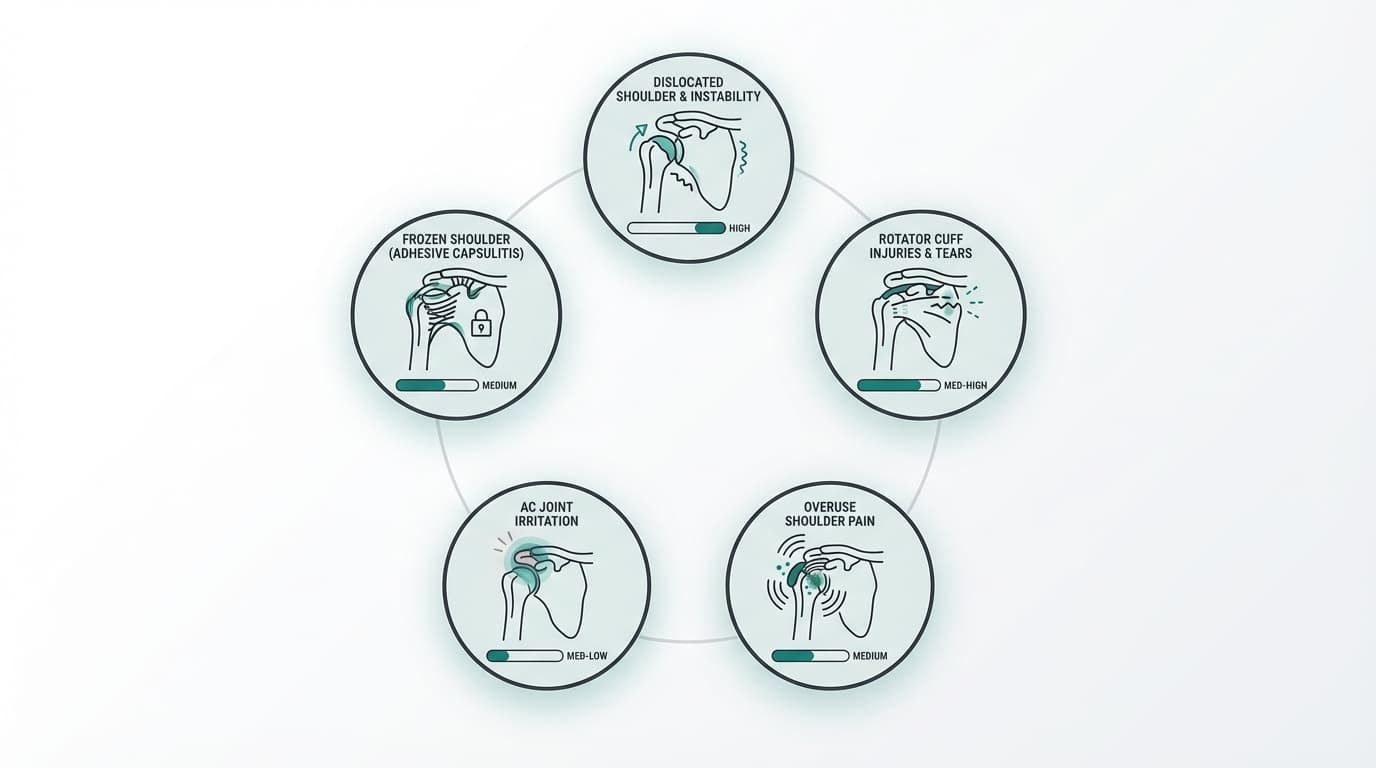
Shoulder braces are used differently depending on the type of injury involved. The shoulder is a complex system, and support needs vary depending on which structures are affected, the amount of movement allowed, and whether the goal is protection, recovery, or a gradual return to activity.
Below are the most common shoulder injuries for which bracing may provide support.
Dislocated Shoulder and Instability
A dislocated shoulder occurs when the upper arm shifts out of the main shoulder joint, often during falls, contact, or awkward overhead positions.
Even after the joint is reduced, many athletes experience lingering instability in the injured shoulder, especially when reaching overhead or rotating under load.
In these cases, shoulder braces are commonly used to:
-
Limit high-risk positions during movement
-
Support the upper arm as stability rebuilds
-
Reduce pain while training volume is adjusted
Research comparing immobilization approaches found that external-rotation bracing produced lower recurrence rates than traditional sling positioning, suggesting that positioning support matters more than extended immobilization alone.
Rotator Cuff Injuries and Tears
The rotator cuff controls shoulder rotation and helps keep the upper arm centered during movement. When these tissues are irritated or damaged, strength and coordination can decline quickly.
Bracing is often considered during:
-
rotator cuff injuries managed without surgery
-
partial tears with ongoing training demands
-
early recovery following rotator cuff surgery
In cases involving severe tears or a complete tear, more restrictive support may be required early on. As symptoms improve, lighter functional braces are sometimes introduced to provide protection without eliminating movement.
For many athletes, this approach is part of conservative treatment combined with gradual strengthening and mobility work.
Overuse Shoulder Pain
Overuse injuries develop gradually through repetitive loading rather than a single event. These are among the most common shoulder injuries seen in gym and combat-sport athletes.
They are often linked to:
-
High-volume pressing
-
Repeated overhead work
-
Fatigue of the stabilizing muscles
Braces may help reduce pain during flare-ups by supporting the injured area and limiting unnecessary strain on the shoulder during movement.
This type of support is commonly used alongside temporary load reduction, recovery strategies, and movement adjustments rather than full immobilization.
AC Joint Irritation
The acromioclavicular joint sits where the collarbone meets the shoulder blade. It absorbs impact during falls and experiences compression during bench pressing and grappling.
Irritation in this joint may be associated with inflammation, ligament strain, or small bony spurs that increase discomfort during movement.
Bracing in this scenario is often used to:
-
Offload pressure from the joint
-
Protect the injured shoulder during activity
-
Support training modifications
When general braces do not provide adequate relief, specialized braces may be recommended to better target this specific location.
Post-Surgical and Severe Shoulder Injuries
Following surgery or trauma, early recovery often requires greater control of movement.
Immobilizers and abduction braces are commonly used to:
-
Protect surgical repairs
-
Stabilize the main shoulder joint
-
support proper healing in the early phase
As tissues strengthen, athletes typically transition away from rigid support to avoid stiffness and restore normal shoulder function.
Functional braces may then be introduced to assist with controlled activity during the later stages of joint recovery.
Performance and Training Use
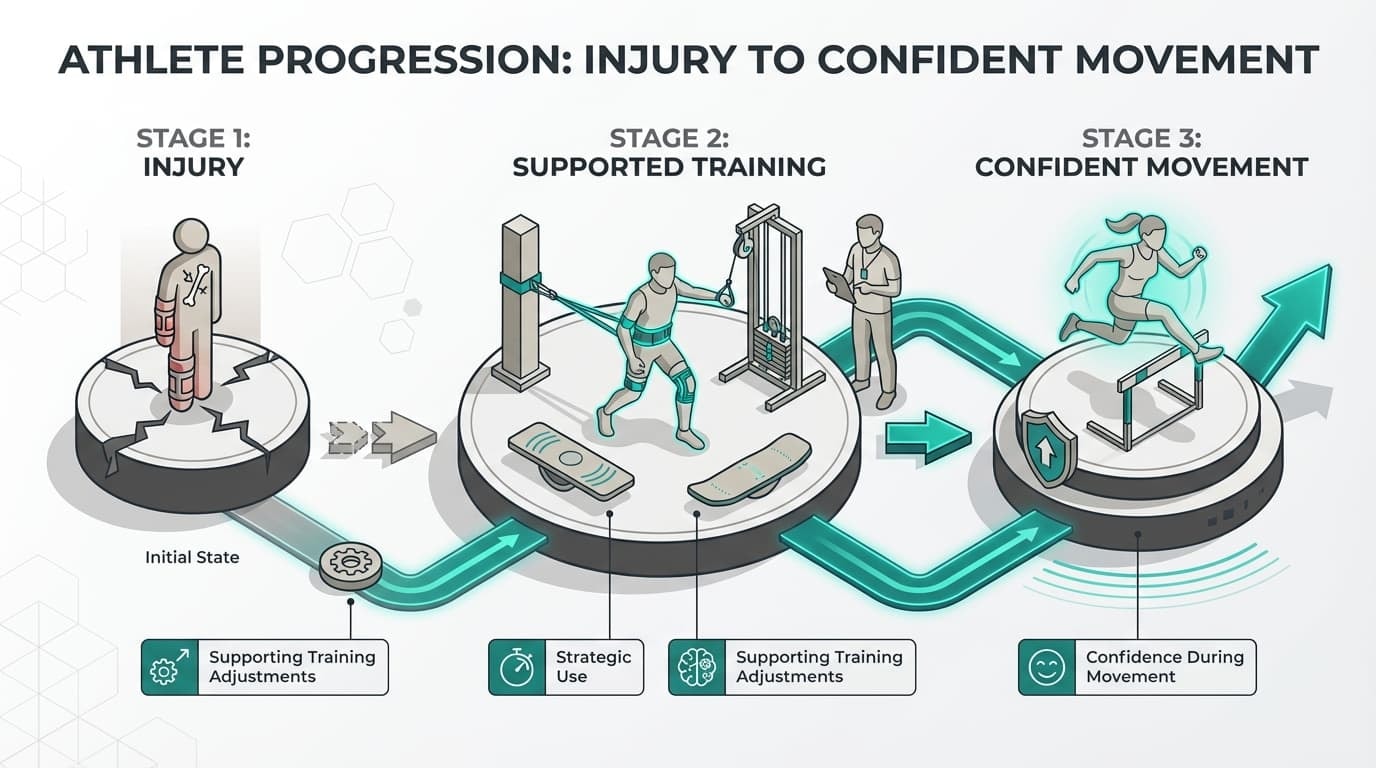
For most of us, shoulder braces are not just for resting. We usually use them as part of a training strategy that lets us keep moving while managing risk.
In combat sports and strength training, completely stopping is not always realistic. Instead of stepping away entirely, we adjust our training while the shoulder rebuilds.
A shoulder brace supports that approach by adding structure during periods when strength, stability, or confidence has not fully returned.
This training-first mindset is exactly how Anaconda approaches recovery. The gear is designed to hold up in real gym sessions, not just during rest days.
Supporting Training Adjustments
When a shoulder is not at 100%, training rarely looks the same.
Most of us start modifying sessions by:
-
lowering weight
-
reducing volume or total rounds
-
slowing movement speed
-
avoiding deep or unstable positions
We might keep pressing but drop intensity. We might drill techniques without live scrambles. We might focus on conditioning while limiting upper-body load.
During these adjustments, a shoulder brace provides external support that helps stabilize the upper arm and reduce stress on the shoulder during controlled movement.
This makes it easier to stay consistent without repeatedly aggravating the injured area.
Confidence During Movement
One of the biggest challenges after a shoulder injury is confidence.
Even when pain improves, hesitation often shows up during pressing, pulling, posting, or overhead motions. That hesitation can change mechanics and place extra strain on other joints.
A shoulder brace helps by:
-
supporting the joint in unstable positions
-
limiting unwanted movement under fatigue
-
allowing smoother motion through the range
When the shoulder feels supported, we are more likely to move normally rather than guard every rep.
Strategic Use Over Full-Time Wear
We get the most benefit from shoulder braces when we use them intentionally.
Common situations include:
-
heavy lifting days
-
sparring or contact sessions
-
overhead-dominant workouts
-
early return-to-training phases
Outside of high-demand sessions, reducing brace use helps maintain mobility and prevents unnecessary stiffness.
The goal is not to wear a brace all day. The goal is support when training stress is highest.
Understanding how we use a shoulder brace in training is only part of the picture. Next, we’ll break down what shoulder braces actually help with and how support needs vary depending on the type of shoulder problem.
Risks and Limitations
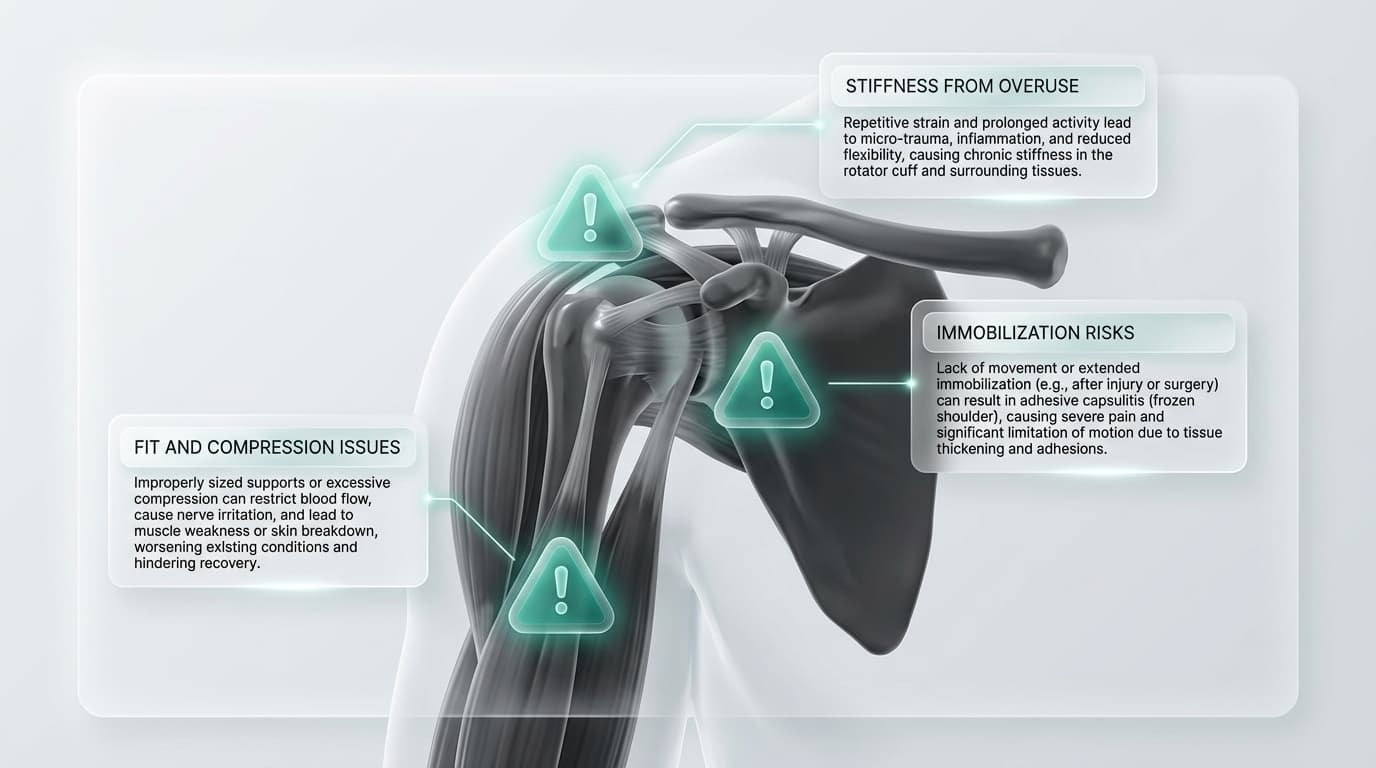
Shoulder braces can be extremely helpful, but they are not a perfect fix. Knowing their limits helps us use them smarter and avoid setbacks that slow progress.
Most problems do not come from the brace itself. They come from wearing it incorrectly, relying on it too heavily, or using the wrong type for the injury.
Stiffness From Overuse
One of the most common issues is stiffness.
The Merck Manual provides clinical guidance that extended shoulder immobilization can quickly reduce mobility and increase the risk of frozen shoulder. NHS guidance following surgery also warns that wearing a sling continuously may limit movement in both the shoulder and elbow.
When we stop moving entirely for too long:
-
Flexibility drops fast
-
The joint tightens
-
Strength returns slower than expected
This is why braces intended for training are designed to support movement rather than eliminate it. The goal is control, not shutdown.
Immobilization Risks
Research discussed earlier shows that slings and immobilizers reduce arm movement but may not fully control shoulder rotation without additional support.
The same research also highlights an important point.
Longer immobilization does not automatically lead to better outcomes. In younger athletes, wearing a sling for more than one week did not significantly lower recurrence compared with shorter use.
In simple terms, staying locked in place for too long can impede proper healing.
Fit and Compression Issues
Fit matters more than most people realize.
Medical guidance notes that a poor sling fit may increase the risk of ulnar nerve compression, especially when the wrist hangs unsupported.
With functional braces, problems usually appear when:
-
The compression is uneven
-
The straps are overtightened
-
The brace does not match the specific injury
If numbness, tingling, or increasing discomfort appear, the brace likely does not fit properly or is being worn longer than needed.
How to Choose and Use One
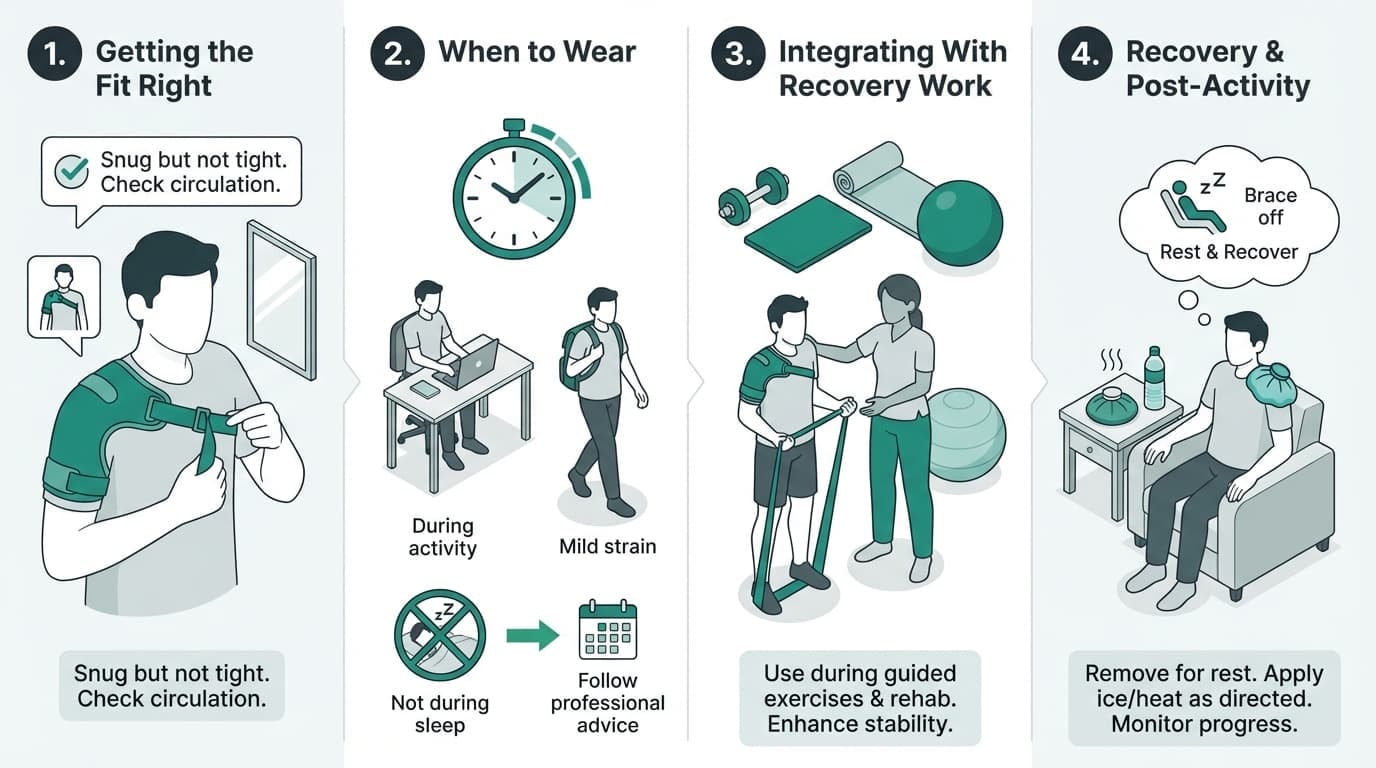
Choosing a shoulder brace is not about maximum restriction. It’s about finding support that matches how we actually train.
Getting the Fit Right
A brace should feel supportive the moment it’s on, not restrictive.
When it fits well:
-
The upper arm stays supported without being pulled inward
-
Compression feels balanced across the injured area
-
Movement remains controlled but natural
-
The brace stays in place once training starts
Braces that feature adjustable straps make it easier to fine-tune tension as soreness and workload change week to week.
A poorly fitted brace can create more problems than it solves.
When to Wear a Shoulder Brace
Most athletes do not benefit from wearing a brace all day.
It is usually worn during:
-
Pressing or pulling workouts
-
Grappling, clinching, or sparring
-
Sessions with repeated overhead motions
-
Early return-to-training phases
Outside these sessions, removing the brace allows the supporting muscles to remain active and helps preserve the range of motion.
This balance supports recovery without creating dependence.
Integrating With Recovery Work
A shoulder brace works best when it supports what we’re already doing for recovery.
That often includes:
-
targeted strengthening exercises
-
gradual reloading of the joint
-
controlled mobility work
-
cold therapy during flare-ups
Many athletes also work with a physical therapist to identify which movements need protection and which should remain active.
This approach is common with overuse injuries, partial tears, irritation from small bony spurs, and discomfort around the acromioclavicular joint.
How the Anaconda Shoulder Brace Supports Joint Health
When we’re training through shoulder issues, support needs to do more than just hold things in place. It has to work with the body, not against it.
The Anaconda Shoulder Brace is built around targeted 3D compression, designed to contour naturally to the shoulder rather than sit flat or shift during movement. This allows the brace to apply steady, balanced pressure across the shoulder area instead of concentrating force in one spot.
That consistent compression helps encourage circulation around the joint. Improved blood flow supports the delivery of oxygen and nutrients to stressed tissues while assisting the body’s natural cleanup process after training.
For athletes, this matters because better circulation supports joint health, helps manage soreness, and allows the shoulder to move more comfortably during sessions that still require effort.
The result is not restriction, but controlled support that fits naturally into training.
Why This Approach Matters
At Anaconda, the goal has never been to tell athletes to stop.
The mission is simple: help athletes keep doing what they love while protecting their bodies.
Injuries happen. Some are minor. Some take time. But with the right approach, training need not disappear completely.
That mindset shapes how Anaconda designs its gear. Products are built to support recovery, reduce setbacks, and help athletes stay consistent without pushing recklessly through pain.
The focus is not on replacing rehab or treatment. It’s about giving athletes the confidence to train smart, adapt when needed, and keep moving forward.
When to See a Professional
A shoulder brace can help manage training and support recovery, but there are times when pushing through is not the right move.
If any of the signs below show up, it’s time to pause training and speak with a healthcare professional.
Get professional help if you notice:
-
Sudden or severe shoulder pain after impact or a fall
-
Visible deformity or the shoulder sitting out of place
-
Inability to lift the upper arm or rotate the shoulder at all
-
Rapid swelling, bruising, or warmth around the joint
-
Ongoing pain that does not reduce after rest or bracing
-
Sharp weakness that makes everyday movement difficult
-
Tingling, numbness, or loss of grip strength in the arm or hand
-
Pain that worsens at night or interrupts sleep
These symptoms may indicate issues such as:
-
a dislocated shoulder
-
a complete tear rather than a mild strain
-
severe tears that require imaging or guided care
-
joint damage involving the main shoulder joint or acromioclavicular joint
A brace should never be used to mask serious pain or delay diagnosis.
In many cases, early assessment allows for conservative treatment instead of long layoffs or surgery. A qualified professional can help determine whether rest, structured rehab, or additional support is needed for proper healing.
If something feels unstable, unusually painful, or different from normal training soreness, trust that signal.
Final Thoughts
A shoulder brace is a practical tool for protecting the shoulder while you stay active. It adds stability, supports the joint, and helps reduce pain during training and everyday movement.
Whether you’re dealing with overuse discomfort, rebuilding confidence after a dislocated shoulder, or managing more demanding recovery phases like rotator cuff injuries, the right support can make a real difference in how you move and train.
The goal is not to lock the shoulder in place. It’s to guide movement, protect vulnerable positions, and support joint recovery as strength and control return.
If you’re ready to find support built for real training environments, Anaconda shoulder braces are designed to move with you, not hold you back.
FAQs
Quick answers to help you keep training while protecting your shoulder.
How long should I wear a shoulder brace each day?
How long you should wear a shoulder brace depends on your injury type and recovery stage. Acute injuries and post-surgical cases often require longer use as advised by a healthcare professional. For training-related discomfort, instability, or rotator cuff tears, many athletes wear a brace only during workouts or demanding sessions. The long-term goal is to rely on the brace less as shoulder joint strength and control improve.
Can I sleep in a shoulder brace?
Sleeping in a shoulder brace is sometimes recommended during the early postoperative period or after a recent dislocation. Outside of those situations, overnight use is usually unnecessary and may contribute to stiffness if overused. If pain disrupts sleep or the shoulder feels unstable at rest, it is best to speak with a healthcare professional. Night-time bracing should remain temporary unless specifically advised.
Will a shoulder brace fix my shoulder without exercises or therapy?
A shoulder brace alone will not fix underlying shoulder problems. It provides external support, helps stabilize the shoulder joint, and often relieves pain during movement. Long-term recovery depends on strengthening the rotator cuff muscles, restoring mobility, and managing training load. A brace supports recovery but does not replace proper rehabilitation.
Is it safe to lift weights or play sports while wearing a shoulder brace?
It can be safe to train while wearing a shoulder brace once activity has been cleared. The brace should support movement without restricting mechanics or shifting stress to other areas. Many athletes use a brace strategically to reduce the risk of reinjury during overhead lifts, grappling, or contact training. Starting with lighter loads and gradual progression helps protect the shoulder joint during return to sport.
How do I know if my shoulder brace fits correctly?
A shoulder brace fits correctly when it feels secure without causing numbness, tingling, or sharp pressure. It should stay in place during movement and provide consistent support across the shoulder joint. Proper compression often relieves pain, but discomfort or circulation issues are signs the brace is not right. Finding the best brace means choosing one that supports your activity while staying comfortable throughout training.


